A red lantern, a warm snack and a river view: Asakusa makes a rewarding half-day in Tokyo when you leave time between its famous sights.
THE QUICK ANSWER
For a first visit, allow about four to five hours in Asakusa. Start at the tourist information center, walk through Kaminarimon and Nakamise to Senso-ji, visit neighbouring Asakusa Shrine, then choose lunch and the Sumida River. If kitchenware is your priority, replace the river finish with Kappabashi. An early temple visit, a shopping visit and an evening photography walk have different opening-hour needs.
Official information checked 18 October 2026. Timings below are our suggested sightseeing allowances, not measured walking times or a promise about queues, weather or shop availability.
01 · A SMALL AREA, SEVERAL DIFFERENT VISITS
The best things to do in Asakusa for your first visit
Asakusa sits in eastern Tokyo, with the Sumida River on one side and a network of shopping streets around Senso-ji on the other. Its appeal comes from the changes of scale: the huge temple gates, tiny food counters, a quiet side street, then an open stretch of water. You can experience those contrasts without crossing the city between every stop.
Begin with the temple approach if you have never been. Then choose one addition that fits your interests rather than treating every nearby attraction as compulsory. A food-focused visitor may spend longer around the side streets; a photographer may prefer the river; a keen cook may want the kitchenware shops west of the temple.
| Your priority | Suggested shape | What to leave for another time |
|---|---|---|
| About two hours | Kaminarimon → Nakamise → Senso-ji, with one snack stop. | A boat trip, a long sit-down meal and Kappabashi. |
| A relaxed half-day | Temple approach, Asakusa Shrine, lunch and a river walk. | An additional distant Tokyo neighbourhood before lunch. |
| Food and shopping | Temple first, then two snack stops, side streets and a seated meal. | Trying every shop in a viral food list. |
| Photography | An early outdoor walk or an evening return, with a separate shopping window. | Assuming the main hall and shops stay open because the gates are visible. |
| Kitchenware and souvenirs | Temple plus Kappabashi as your main extension. | Crossing east to Skytree and then doubling back west. |
02 · LOOK AT THE DISTRICT BEFORE WALKING IT
Start with the view from Asakusa Culture Tourist Information Center
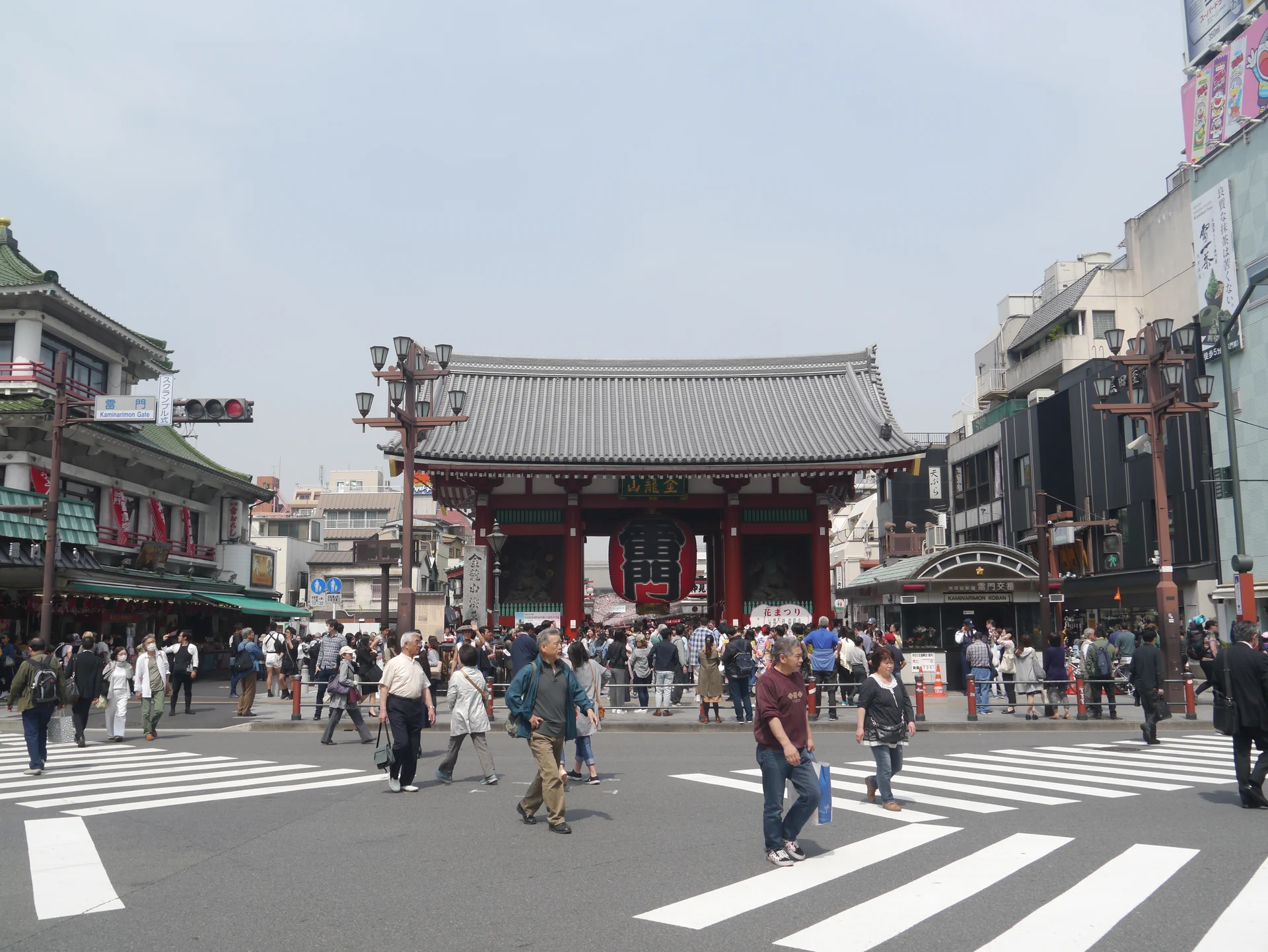
Across the road from Kaminarimon, the information center is a useful first stop. Its free eighth-floor viewing terrace lets you see the temple approach from above. Use that perspective to understand where Nakamise ends and the larger temple precinct begins, then return to street level for the walk.
According to Taito City’s facility guide, the information counter operates 09:00–20:00 and the viewing terrace 09:00–22:00. These are different from Senso-ji’s main-hall hours. The city also lists a second-floor nursing room and accessible toilets. Check facility notices for temporary changes, and ask staff about an appropriate step-free route if that matters to your group.
The terrace works particularly well at the beginning of a daytime visit: you get your bearings before following the crowds. If you arrive before 09:00, do the outdoor temple approach first and return after the center opens. Do not build an early-morning plan around an observation terrace that has not opened yet.
03 · FOLLOW THE TEMPLE APPROACH
Visit Senso-ji: Kaminarimon, Hozomon and the main hall
Kaminarimon and Nakamise: the approach is part of the visit
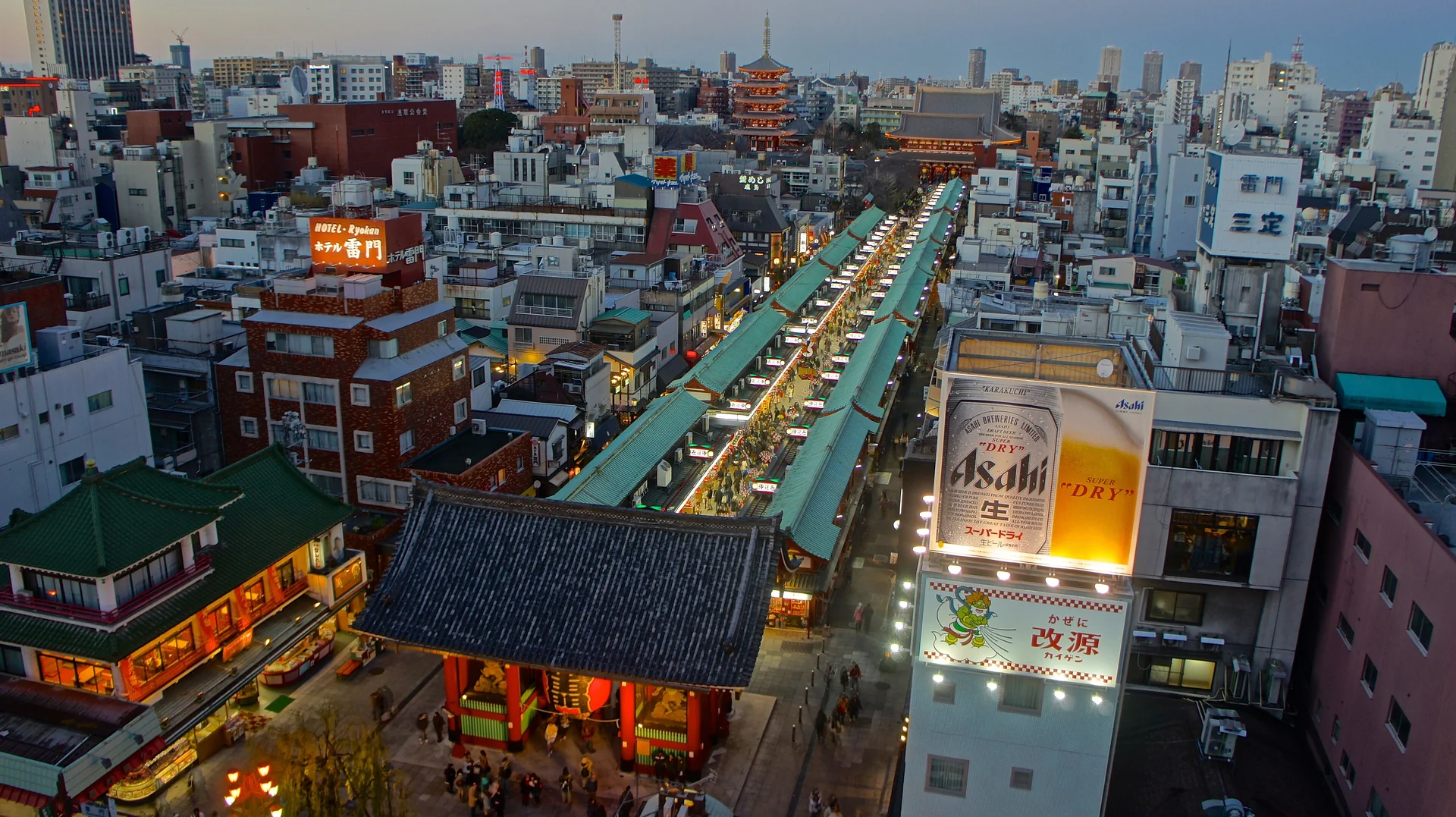
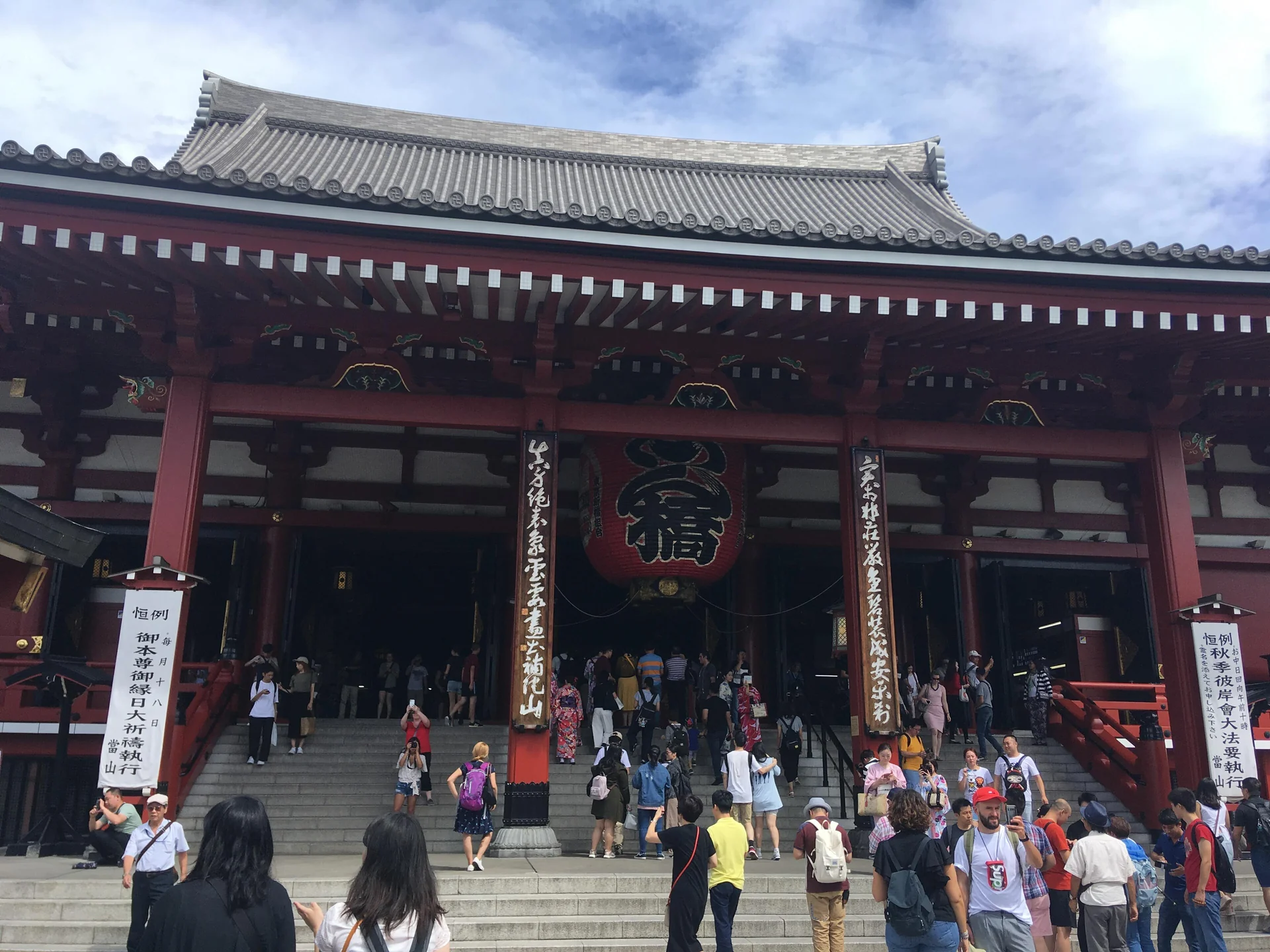
Kaminarimon is the gate with the enormous red lantern that appears in so many Asakusa photographs. Step aside for your picture rather than stopping in the narrowest part of the entrance. On the other side, Nakamise runs north towards Hozomon, the second monumental gate. Taito’s tourism office describes the shopping approach as roughly 250 metres long; allow much longer than the distance suggests if you want to browse.
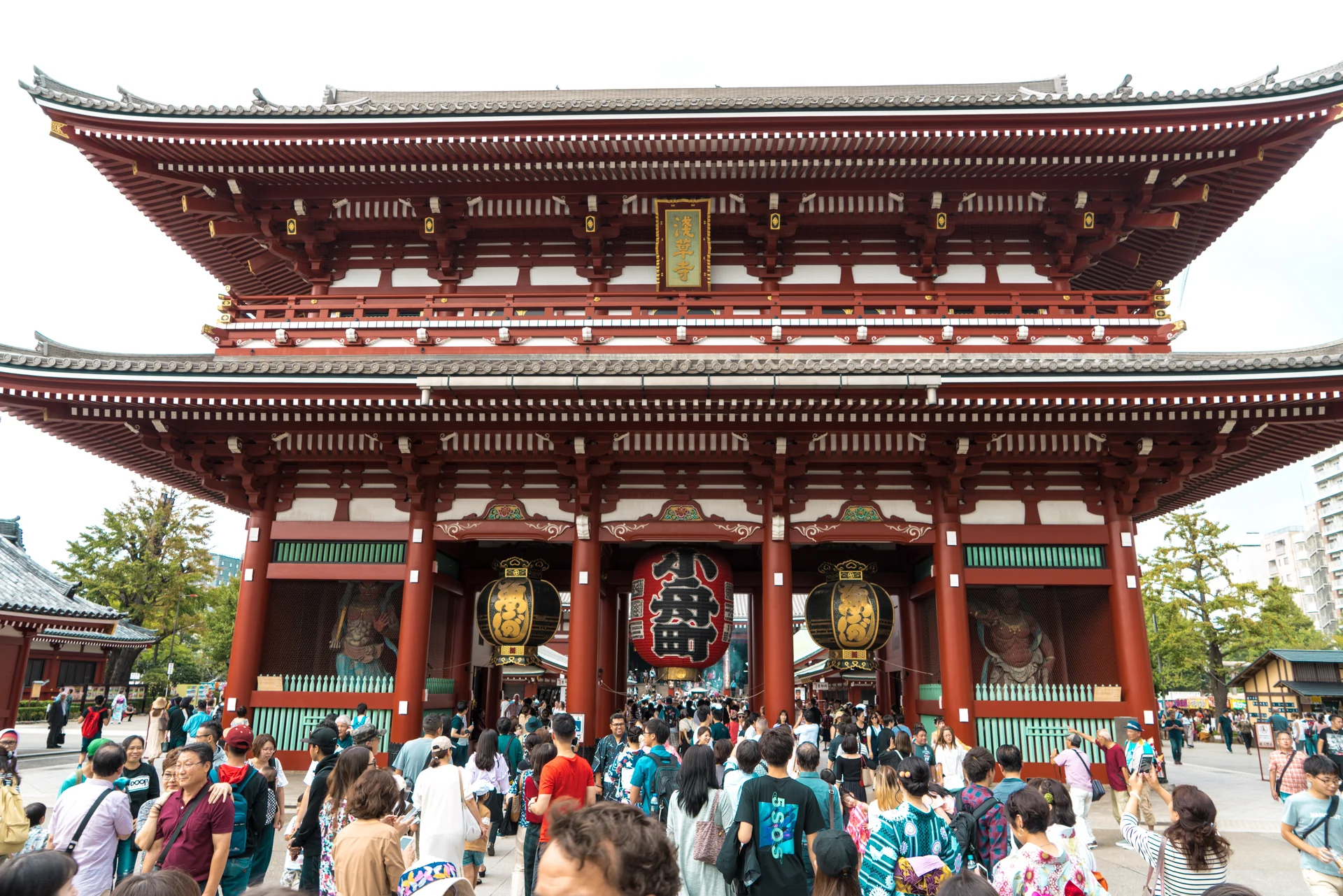
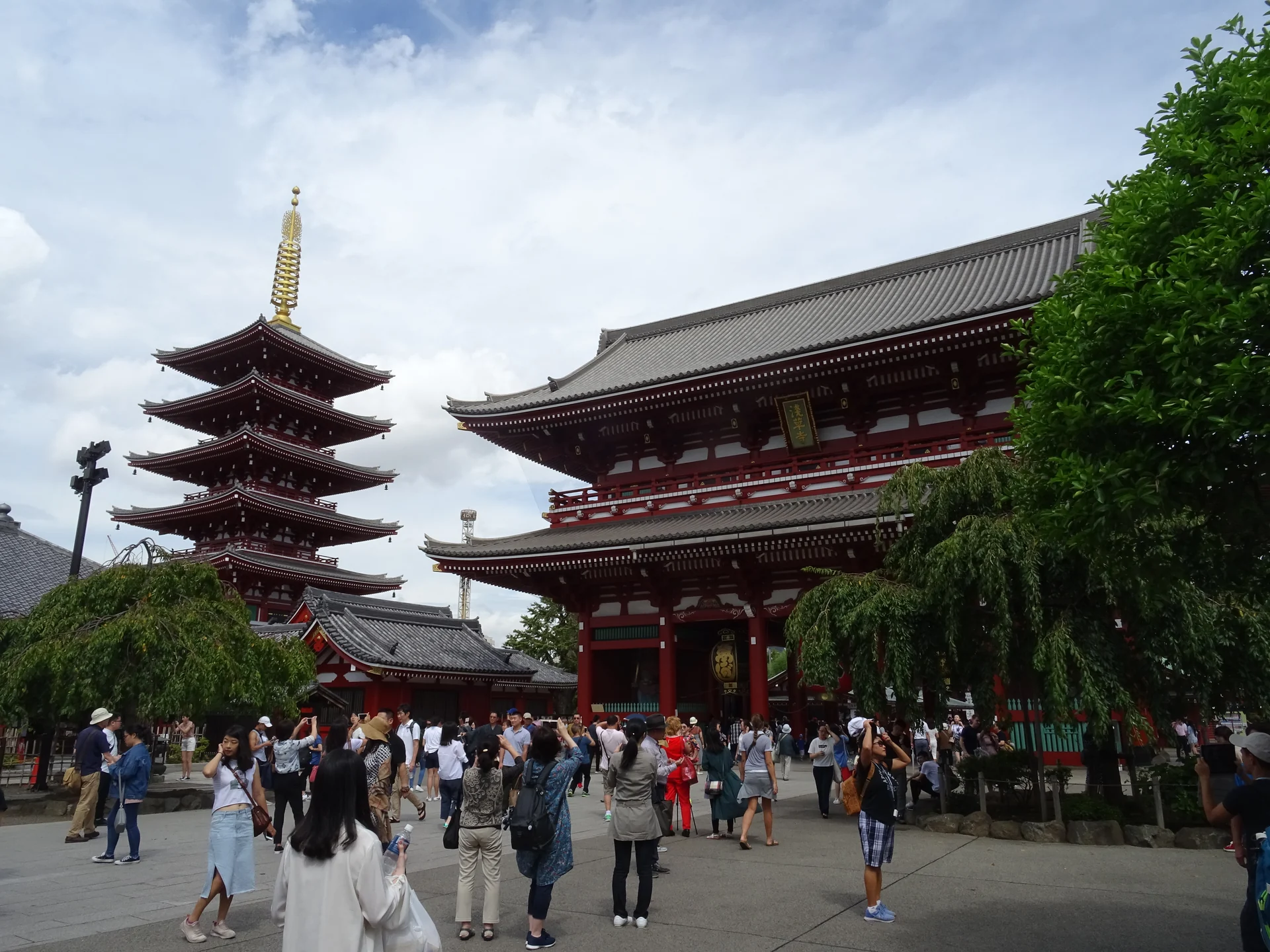
Look at the gates as individual buildings instead of hurrying straight through both. From Nakamise, Hozomon frames the transition into the temple precinct. Once through it, pause to take in the broad main hall and the pagoda off to the side. The outdoor setting rewards a slow look even if you do not buy a charm or draw a fortune.
Senso-ji main-hall hours are different from the outdoor precinct
Senso-ji is a Buddhist temple dedicated to Kannon. The temple’s own account traces its origins to a discovery in the Sumida River in 628; the present main hall was rebuilt in 1958 after wartime destruction. That distinction helps explain why a place with a long history also contains substantial modern reconstruction.
The official main-hall page lists opening hours of 06:00–17:00 from April to September and 06:30–17:00 from October to March. Do not translate “the grounds can be visited outside those hours” into “everything at Senso-ji is open 24 hours.” Interior access, counters, shops and individual buildings each have their own arrangements.
Enter as a visitor to an active place of worship. Keep your voice low around prayer, observe posted photography instructions and avoid putting a camera in someone’s face. At the Buddhist main hall, do not assume the clapping associated with some Shinto shrine visits is appropriate. Follow the temple’s guidance and give worshippers room.
See the pagoda, then leave room for a quieter corner
The five-storey pagoda is one of the easiest landmarks to recognise from the precinct. Enjoy it from the public paths without assuming that a tower interior is part of a standard visit. Turn away from the busiest central line for a wider composition of the gate and pagoda, while staying within public areas and respecting barriers.
Denboin Street and Denboin’s garden are different places. The street can be part of an ordinary neighbourhood walk; the garden should only enter your plan when a current special opening is explicitly announced. A photograph of the garden or an old blog visit is not evidence of access on your date. Consult the temple’s Denboin information and current announcements before treating it as an attraction you can enter.
04 · TWO NEIGHBOURING RELIGIOUS SITES
Make a separate stop at Asakusa Shrine
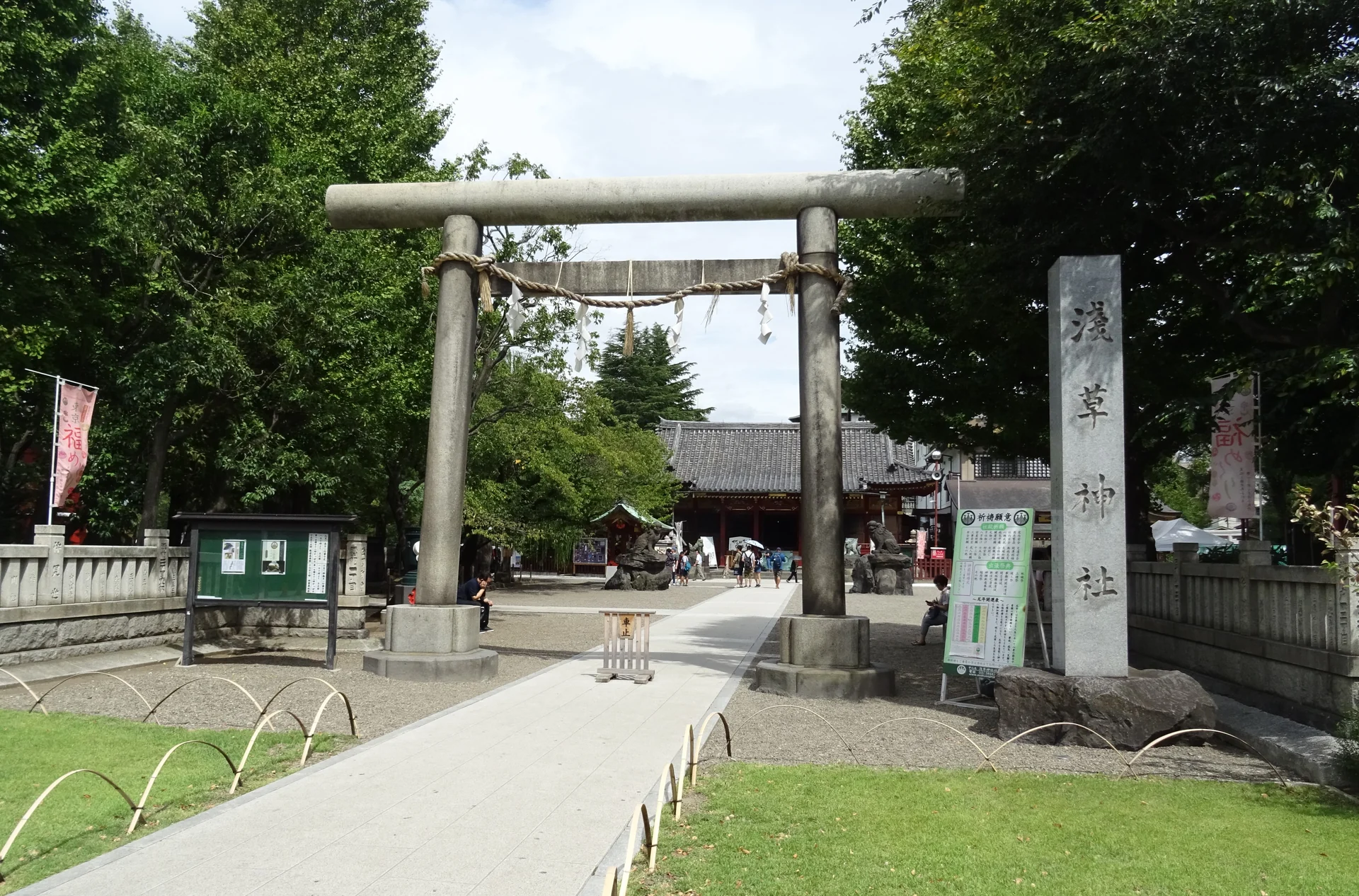
Asakusa Shrine is beside the temple precinct, to the east of the main hall. Its torii marks a Shinto shrine rather than another entrance to the Buddhist temple. The shrine’s official introduction connects it with the three figures involved in Senso-ji’s founding tradition. A short visit adds meaning to the neighbourhood without requiring a journey elsewhere.
Keep temple and shrine practices separate and follow the guidance at each site. Shrine office services are not the same as walking through the grounds. If you want a particular ceremony, stamp or service, check its own hours and arrangements rather than applying the temple’s opening time.
For a first visit, give the shrine a short, unhurried block after the main hall. If there is a ceremony or the entrance is busy, be prepared to wait or move on. It is better to see fewer places respectfully than turn every religious space into a hurried photo stop.
05 · CHOOSE A FEW THINGS YOU ACTUALLY WANT TO EAT
Asakusa street food: Nakamise snacks and a proper lunch
Nakamise is a good place to recognise traditional sweets, but the food part of Asakusa extends into the streets around it. Start by deciding whether you want a tasting break or a full meal. Two snacks and a seated lunch often make a more comfortable outing than joining a succession of queues until everyone is tired.
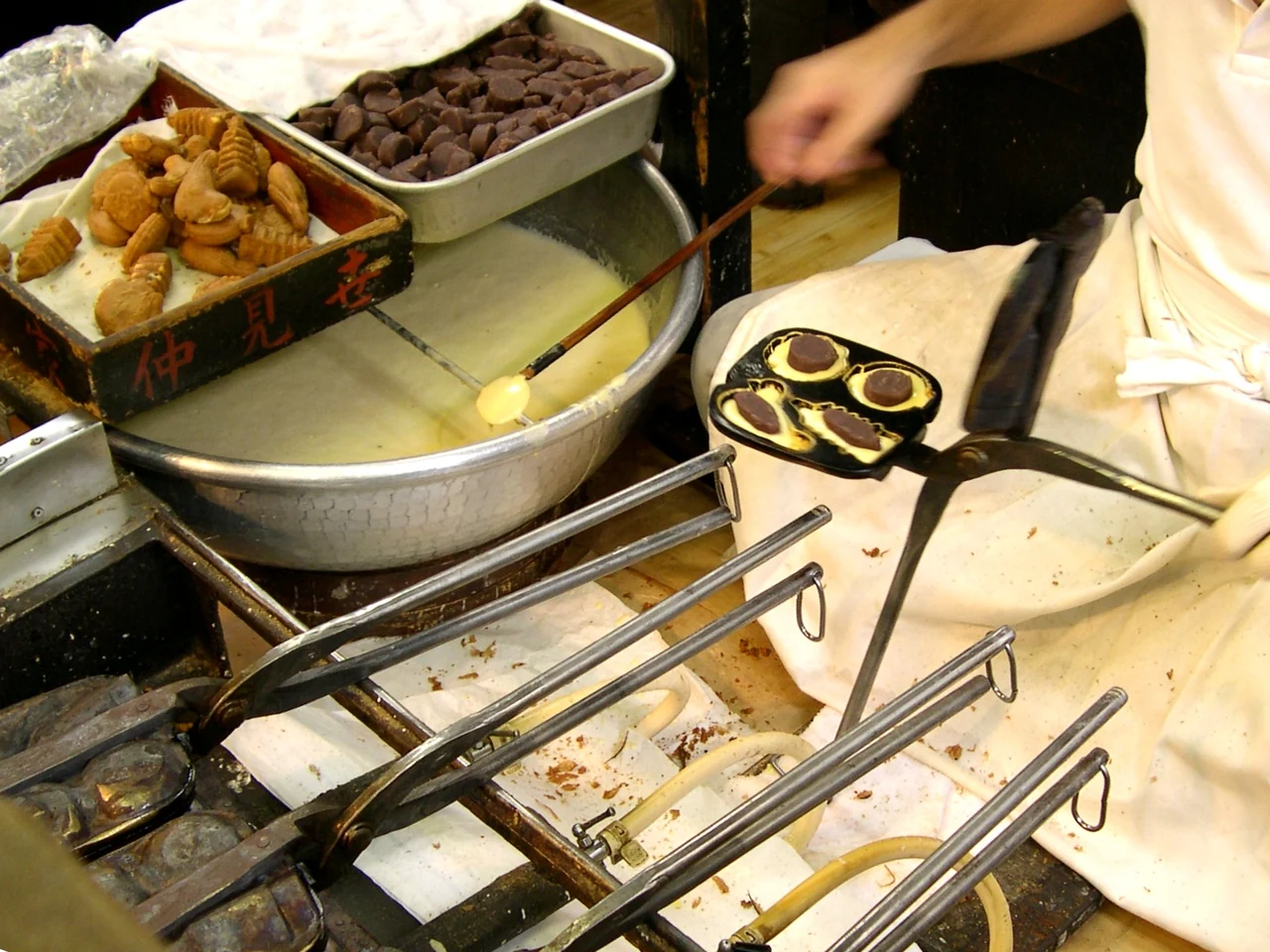
The official Taito guide to Nakamise highlights ningyo-yaki, rice crackers, dango, fried manju and kaminari-okoshi. It also confirms that shop hours and closing days vary. There is no single opening time for the whole shopping street. A quiet dawn walk and a visit when the stalls are trading are different experiences.
| Look for | What it is | A useful decision before ordering |
|---|---|---|
| Ningyo-yaki | Small moulded cakes, often with sweet bean filling. | Watch a batch being made if the shop is demonstrating; check fillings and pack sizes. |
| Senbei | Rice crackers, with different seasonings and textures. | Choose one you want to eat now or a packaged souvenir; ask about ingredients. |
| Age-manju | Manju fried in batter; Kokonoe is a named example on Nakamise. | Check the displayed flavours, current price and where the shop asks you to eat. |
| Melonpan | Sweet bread with a patterned crust; Kagetsudo is a named example west of the temple. | Confirm the branch and opening notice; the head shop advertises closing when sold out. |
| A seated meal | Choose a menu that suits your group, rather than another takeaway queue. | Check seating, dietary requirements, payment and last orders before committing to a wait. |
Two named examples, without promising the same hours everywhere
For fried manju, Asakusa Kokonoe publishes its shop information and current product range. Its English and Japanese pages show different starting times, so confirm directly if opening time determines your route. The Japanese homepage also carries an October 2026 price-revision notice: an old food-video price is not a reliable current budget.
For melonpan, Kagetsudo’s official English branch guide places the head shop at 2-7-13 Asakusa and lists a 09:00 start with closing when sold out. Other branches have different details. Treat that as a reason to check the specific branch, not a guarantee that a particular bread will be available when you arrive.
These are product examples to help you navigate, not claims that the editorial team has eaten there or ranked them against every competitor. Use the menu and current queue to make your decision. If a short visit is disappearing into a long wait, choose an alternative and keep the rest of the afternoon.
Eat where the seller directs you; check dietary needs individually
After buying something, stop in the eating area indicated by the seller rather than weaving through the crowds with hot food. Ask before standing in front of the neighbouring shop. Keep wrappers until you find an appropriate bin, and never use a temple offering area as a picnic table. These are practical courtesy suggestions; they are not a claim that all street eating is covered by one district-wide legal rule.
“Bean-filled,” “rice-based” or “vegetable” does not establish that a snack meets an allergy, vegan, vegetarian or halal requirement. Recipes, frying oil, sauces and shared equipment need checking with the business. Carry a clear written explanation of any essential requirement and choose a seated meal if that makes communication easier.
06 · STEP OFF THE MAIN APPROACH
Explore Denboin Street and choose a Kappabashi extension
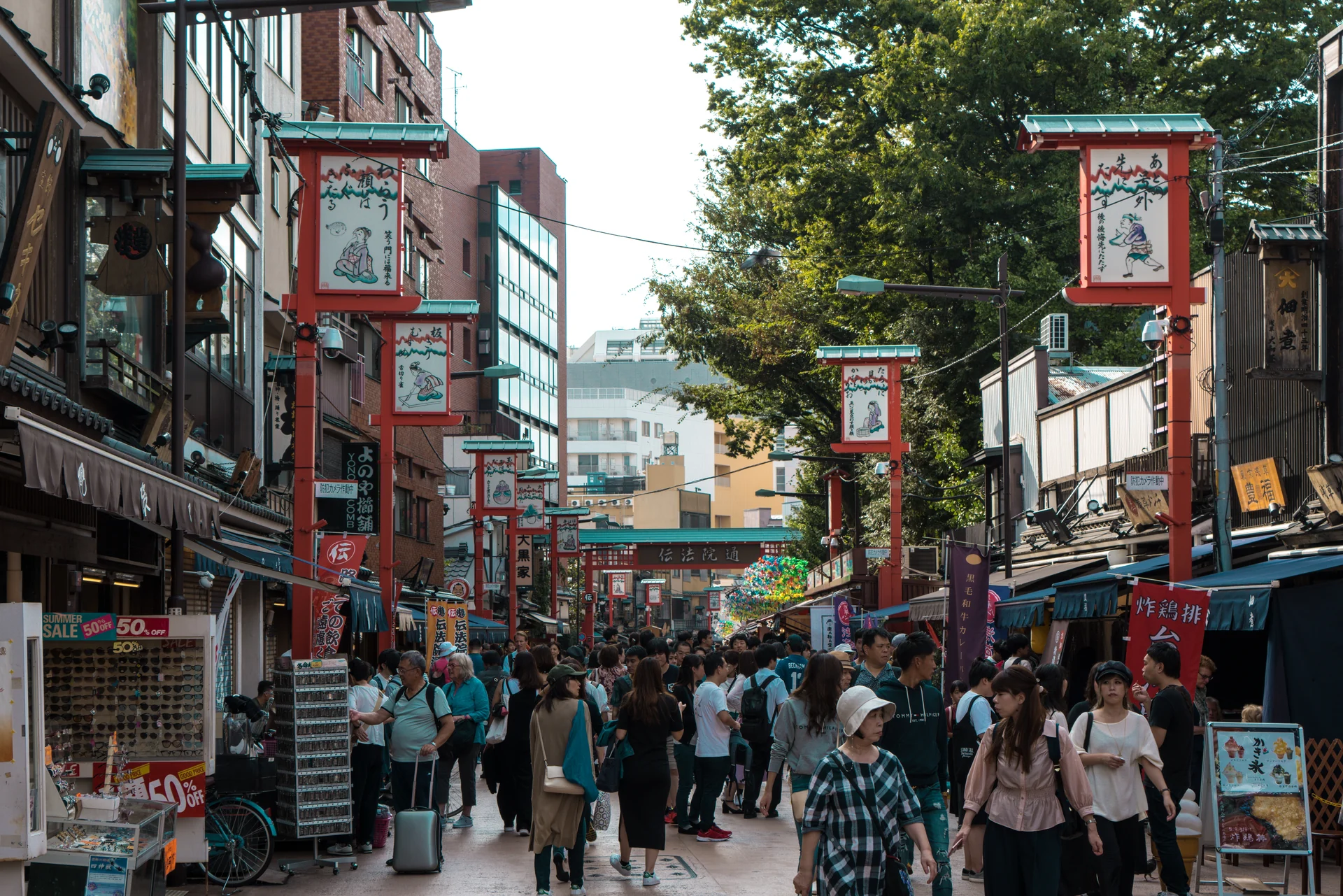
After the temple, leave the straight Nakamise corridor for the surrounding shopping streets. Denboin Street is a useful change of scene: take time to look at shopfronts instead of treating it purely as a shortcut to a famous snack. Shin-Nakamise, which crosses the main approach, offers another browsing option and some cover in wet weather. Neither turns the whole district into an indoor attraction.
Set a simple rule for this part of the visit: one short shopping loop and one food stop, then reassess your energy. This is where a flexible half-day can easily become a rushed full day if every interesting doorway produces another detour.
Kappabashi suits cooks, tableware shoppers and a longer visit
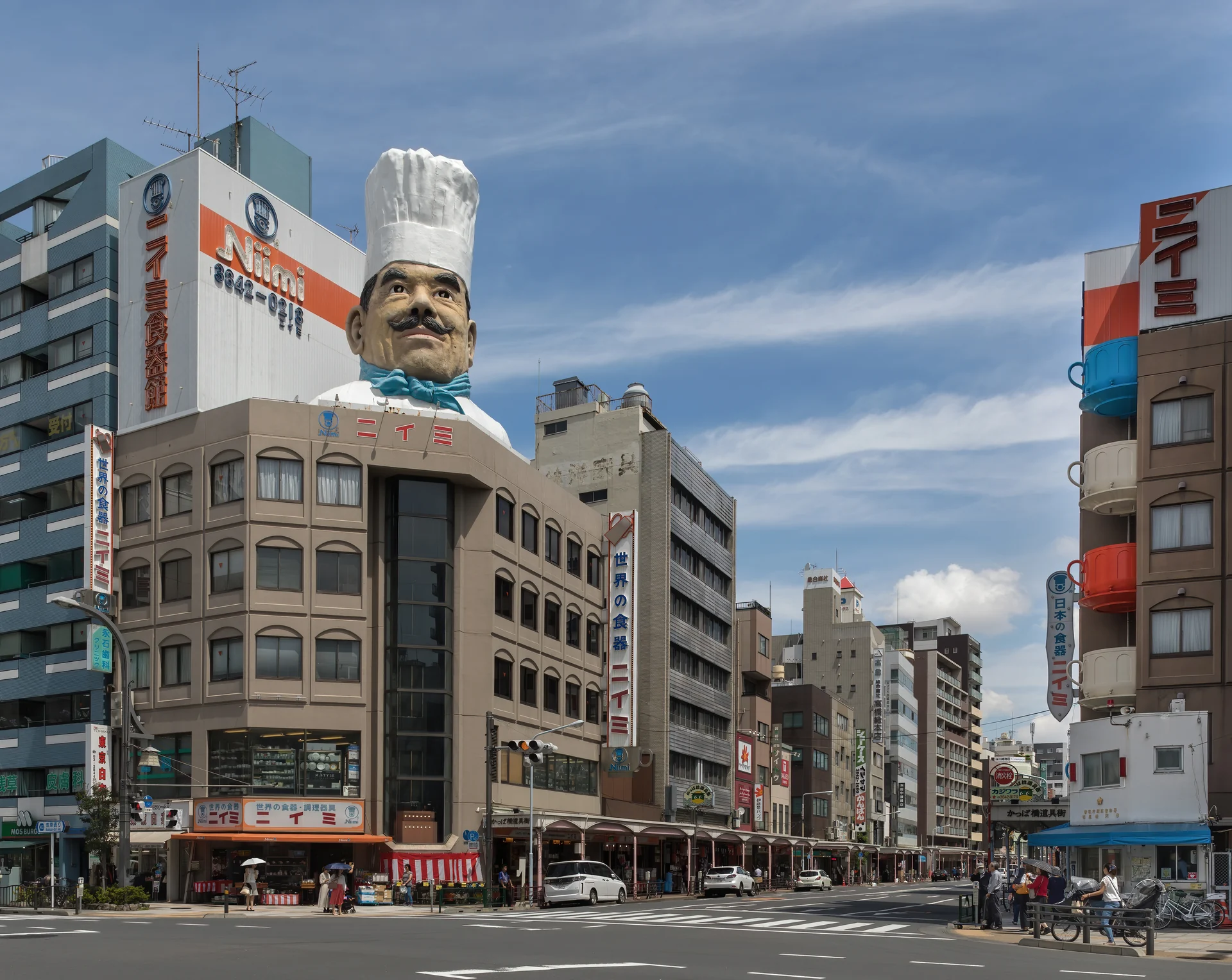
West of the Senso-ji area, Kappabashi Kitchenware Town is known for restaurant supplies, ceramics, utensils, knives and realistic food samples. This is the extension to choose if you enjoy browsing objects and comparing styles. It has a different purpose from the temple approach: give it a real shopping window instead of allowing a token ten minutes.
For this guide’s half-day plan, allow an additional 60–90 minutes for the extension, including getting there and browsing a small selection. That is an editorial allowance rather than a verified end-to-end walking time. Check the individual businesses you want to visit; their trading days and hours are not identical. If you buy something bulky or fragile, account for carrying it through the rest of the day.
Kappabashi lies west while the river and Skytree lie east. Choosing one direction after the temple keeps the day coherent. You can do both on a longer day, but the relaxed half-day model below does not depend on doubling back across Asakusa.
07 · FINISH WITH A LITTLE MORE SPACE
Walk beside the Sumida River and see Tokyo Skytree
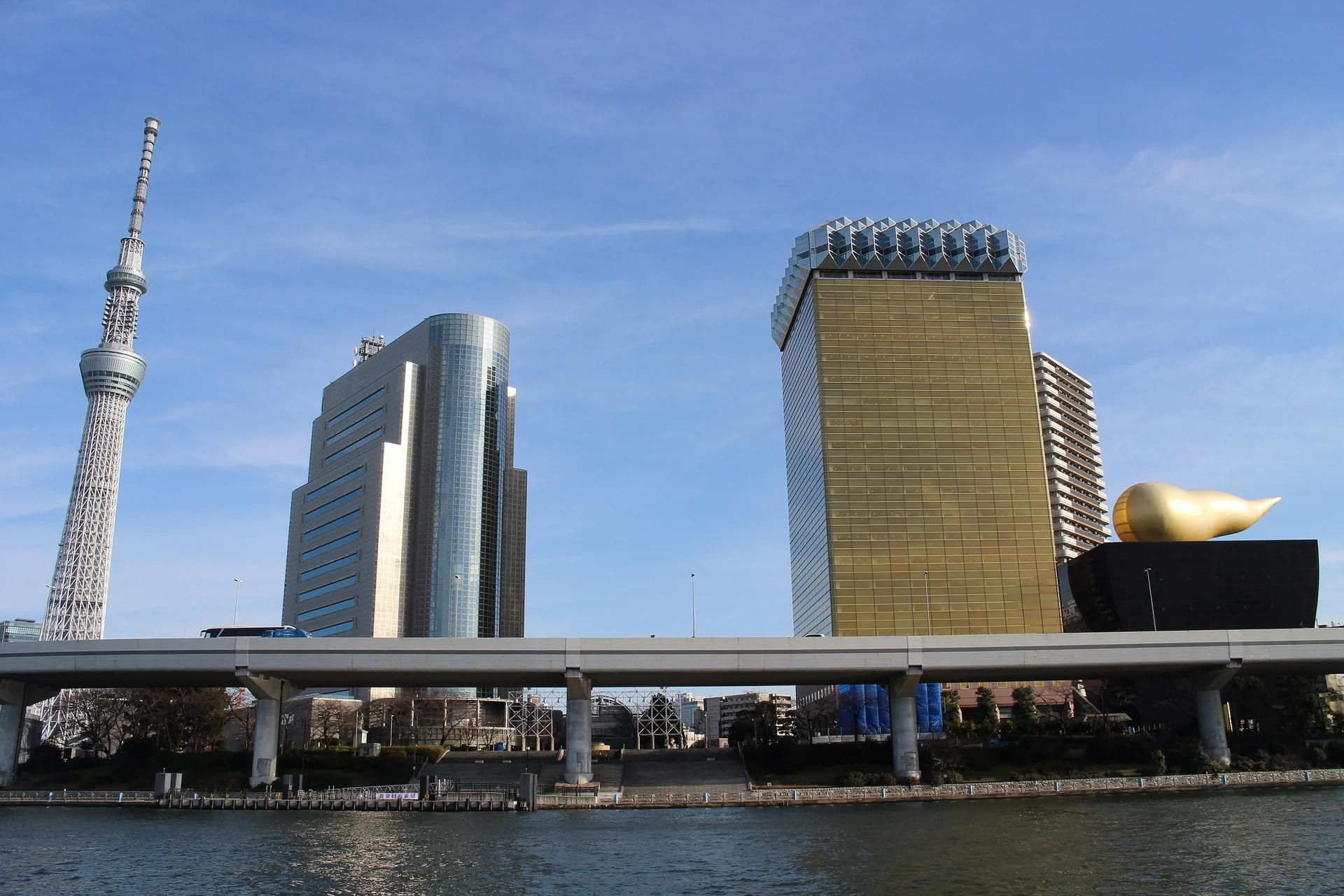
For a river finish, head east from the temple area towards the water. The Asakusa side is the west bank; Skytree and the Asahi buildings are across on the east side. Around Azuma-bashi, the red road bridge, the skyline gives you a very different photograph from Nakamise’s close shopfronts.
A simple visit can stay on the Asakusa bank: look across the river, walk a comfortable section of the waterside and return towards your station. Keep track of where you enter and leave the lower path if steps or slopes matter. A view of Skytree from the river does not require a tower observation ticket.
Azuma-bashi and SUMIDA RIVER WALK are different crossings
If you want to continue east, distinguish the road bridge from SUMIDA RIVER WALK, the pedestrian connection beside the railway towards Tokyo mizumachi and the Skytree area. Crossing the river is an extension, not the end of a tower visit. Add time for the onward walk, shopping, any booked attraction and your next transport connection.
For the half-day route, the river view is the finish. If Skytree is your second major attraction, turn the plan into a longer eastern-Tokyo day and check its own tickets and opening conditions separately. Do not reserve a tight tower entry immediately after an unpredictable food queue.
A boat trip needs a departure plan of its own
TOKYO CRUISE lists its Asakusa pier at 1-1-1 Hanakawado, on the Asakusa side. Use the operator’s pier instructions, timetable, fares, reservation information and operating status for your chosen date. Do not walk across to the Asahi buildings simply because a general guide says that boats are “by the river.”
A cruise can be a satisfying way to continue elsewhere, but it changes the shape of the day. Count the wait before boarding, the actual sailing, the arrival pier and the onward journey. Avoid adding it spontaneously if the group has a fixed train, meal reservation or airport return time.
08 · AN ORIGINAL WALKING PLAN
An Asakusa half-day itinerary from Tokyo
This model starts once you reach Asakusa, rather than pretending everyone’s Tokyo hotel is the same distance away. Check your complete journey from the hotel for the travel date, and add it before and after the visit. The blocks include sightseeing and pauses; they are not point-to-point walking forecasts.
| Time block | Suggested stop | How to keep it comfortable |
|---|---|---|
| 09:00–09:25 | Information center and eighth-floor terrace. | Use the view and maps to orient yourself; skip if there is a delay. |
| 09:25–10:15 | Kaminarimon and Nakamise. | Take photos, browse and choose one snack if the desired shop is open. |
| 10:15–11:15 | Hozomon, Senso-ji main hall, pagoda views and Asakusa Shrine. | Allow for worshippers and a slower group member; follow local signs. |
| 11:15–12:10 | Side-street browsing and an early seated lunch. | A planning slot, not a restaurant booking. Check opening and last-order times. |
| 12:10–12:45 | Sumida River around Azuma-bashi. | Stay on the Asakusa side for the short version; cross only with extra time. |
| 12:45–13:00 | Return towards the appropriate station or agreed meeting point. | Keep this buffer rather than using every minute for one more shop. |
The four-hour outline becomes a five-hour visit with a longer meal, more shopping or slower walking. If lunch cannot fit the suggested block, shorten the side-street loop or move the river walk. The plan is successful when it fits your party, not when you reproduce every line of the table.
Three useful variations
- Early photography: arrive before the shops, prioritise the outdoor approach and the hall within its seasonal hours, then return to trading shops later. The information center starts at 09:00.
- Food-first: choose two specific snacks, then a seated meal. Drop an optional extension if queues expand; early arrival does not guarantee no queues.
- Kitchenware-first: replace the river finish with Kappabashi and add a 60–90-minute shopping allowance. Choose the return station after you know where your browsing ends.
A two-hour visit should concentrate on the temple approach and one short break. A full day can support a larger extension, but choose that deliberately. Ueno, Skytree and Akihabara are not interchangeable “nearby extras” that all fit into the same half-day.
09 · COME FOR THE EXPERIENCE YOU WANT
Morning, afternoon or Asakusa at night?
Early morning works well for looking at the buildings with fewer shopping distractions, although festivals and special events can change the atmosphere. Late morning and afternoon suit a combined temple, snack and browsing visit. Choose the latter if the businesses are central to your reason for coming, and confirm any must-visit shop individually.
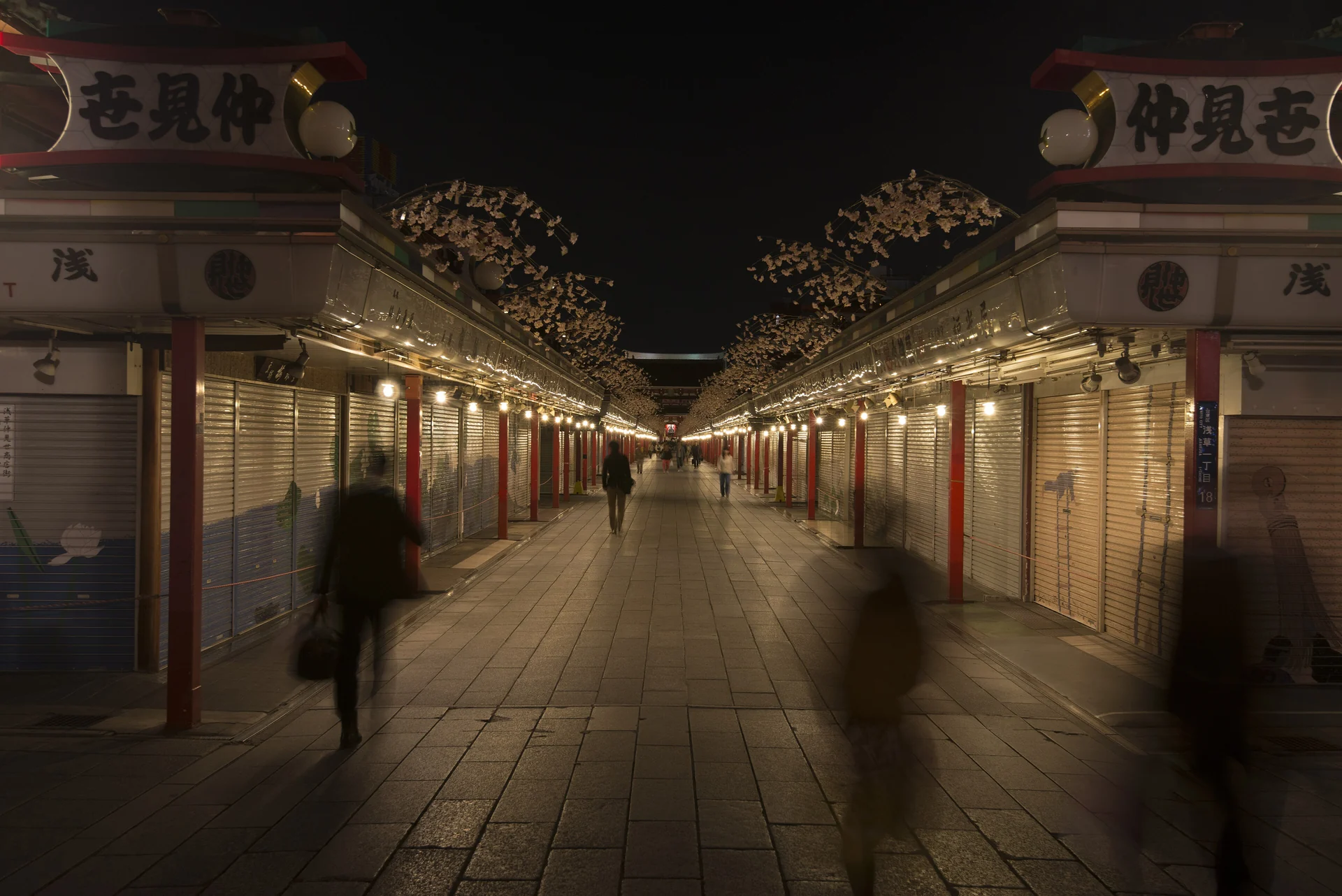
After dark, the scene changes again. Senso-ji’s official illumination notice gives a usual schedule from sunset until around 23:00. That lighting does not extend the main hall’s 17:00 closing time or keep Nakamise shops trading. Closed shutters can be part of the evening streetscape; a night visit should not depend on being able to repeat a daytime food crawl.
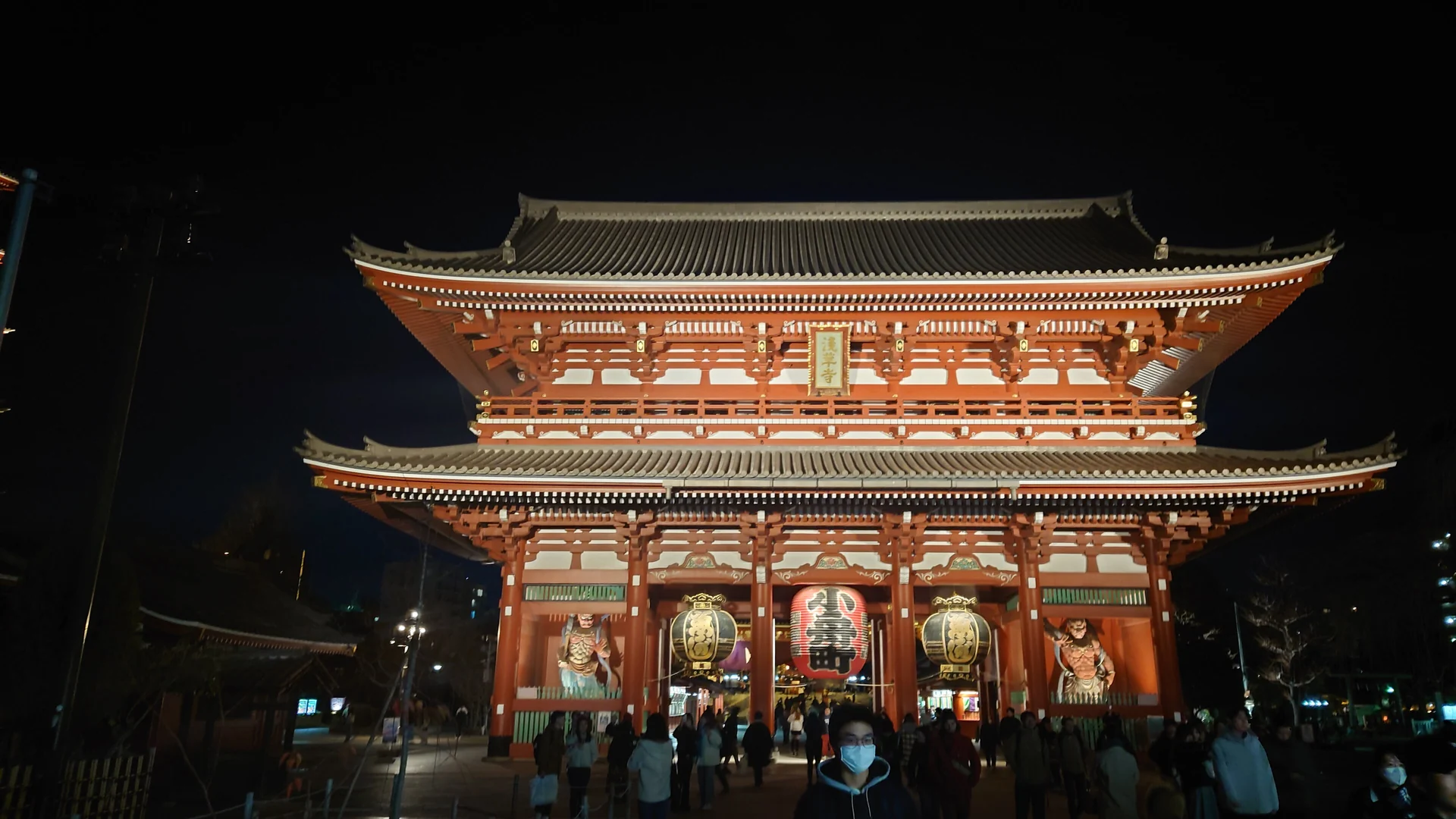
For photography, plan one daylight visit or a separate evening return instead of waiting all afternoon solely for a particular sky colour. Weather and seasonal sunset times matter. Keep equipment out of the main flow, follow restrictions and ask before making people the subject of a close photograph.
10 · MAKE THE WALK WORK FOR YOUR GROUP
Getting to Asakusa, rainy days and visiting with children
Choose the correct Asakusa Station
Tokyo Metro’s Ginza Line, the Toei Asakusa Line and Tobu serve stations around the river side of the district. Tsukuba Express also has an Asakusa Station, farther west. Taito’s Nakamise listing distinguishes an approximately three-minute approach from the Metro, Toei and Tobu stations from approximately ten minutes from Tsukuba Express. Those are area access estimates, not a guarantee for every exit or walking ability.
Use the operator and line name in a meeting message, not simply “Asakusa Station.” If you need a lift, choose an accessible exit through the operator’s current station map; the nearest stair exit may be the wrong choice. Avoid publishing a single taxi fare or hotel-to-temple time as if it applied to every Tokyo starting point.
Rain, heat and a slower walking pace
In rain, reduce the river section and use a short covered-shopping section or a seated break. Nakamise and the temple grounds still involve outdoor movement. Keep umbrellas out of crowded faces, and do not stand beneath a working shopfront solely to shelter without considering access.
With children, assign one adult to navigation and agree on an easily identified meeting place. Use a few interesting landmarks rather than constant stops for photographs. Build in water, toilets and a seated meal before the group is exhausted. In hot weather, shorten exposed stretches and take breaks; in cold or wet weather, make the open riverside optional.
For a wheelchair user, stroller or anyone who finds steps difficult, check the actual station exit, temple approach, hall access and river-path entrance. A compact district is not the same as a guaranteed step-free itinerary. The information center’s published facilities can help with planning, but any loan equipment or assistance needs its own availability check.
What to budget and what to confirm
You can design a visit around the public temple approach and a river view, then choose how much to spend on food and shopping. Keep separate lines for transport, snacks, a seated meal, purchases and optional activities. Check current admission and reservation conditions for any paid attraction you add; a sightseeing guide’s historical price should not become your booking assumption.
- Have the correct station, line and exit, or a precise private pickup point.
- Check the main hall separately from shops and terrace hours.
- Choose one optional extension and one stop you can drop.
- Check the menu, dietary needs and current price before ordering.
- Allow return travel time before any fixed reservation or onward journey.
11 · WHEN ASAKUSA IS PART OF A WIDER DAY
Visiting independently or adding Asakusa to a private Tokyo itinerary
The central Asakusa visit works naturally on foot. A vehicle is most useful for the journeys around that walk: a hotel departure, travel with luggage, a group with particular mobility needs, or a wider Tokyo day with another district. Agree where the vehicle can legally stop and where the group will meet afterwards. Do not expect to be driven through a crowded pedestrian shopping approach.
If you want someone to interpret the religious sites and walk with you, specify an accompanying guide rather than assuming that a driver arrangement includes it. Our private driver or tour guide comparison explains that choice. For an airport connection, use the separate Tokyo layover planning guide before deciding that there is time for Asakusa.
A USEFUL STARTING POINT FOR A REQUEST
We are staying in [Tokyo area] on [date], with [adults and children, ages]. We would like an unhurried Asakusa visit with [temple / food / shopping / river] as our priority. We have [walking or accessibility needs] and want to combine it with [one other area, if any]. Please advise on a practical route, meeting points, guide options and a quotation.Discuss a wider Tokyo day
Availability, vehicle, language support, any accompanying guide, parking, waiting and the total charge need confirmation in the quotation. An inquiry receipt is not a confirmed booking. For a different historic-town day outside Tokyo, see our Kawagoe private tour; it deserves its own itinerary rather than being squeezed into this walk.
12 · QUESTIONS BEFORE YOU GO
Asakusa sightseeing FAQs
Is Asakusa worth visiting on a first Tokyo trip?
Yes if you want a temple district, traditional snacks, small shops and a river view in one part of the city. Prioritise the temple approach and choose one extension rather than expecting every nearby attraction to fit into a short visit.
How many hours should I spend in Asakusa?
About four to five hours is a useful editorial allowance for the temple, browsing, lunch and a river finish. Two hours suits a shorter temple-focused visit. Add your hotel journeys separately and allow extra time for queues, children or slower walking.
Is Senso-ji open 24 hours?
The main hall is not: the official hours are 06:00–17:00 in April–September and 06:30–17:00 in October–March. Outdoor views, lighting, counters and shops have different arrangements. Do not use a statement about the grounds as a promise of indoor access.
What time does Nakamise open?
There is no single opening time for every shop. Taito City lists hours and closing days as varying by business. Check the particular seller if you are planning around a snack or purchase, especially for a very early or evening visit.
What should I eat in Asakusa?
Ningyo-yaki, senbei and fried manju are good starting points for recognising the traditional snacks; melonpan is another option around the side streets. Choose a small shortlist and a meal that suits the group, checking ingredients, prices and eating space at the shop.
Can I combine Asakusa and Tokyo Skytree?
Yes as a deliberately longer eastern-Tokyo plan. The river view is an easy finish to this guide’s half-day, while crossing, walking on, visiting the tower and returning need extra time. Check any tower booking separately.
Can I visit Asakusa in the rain?
You can shorten the route and include covered shopping and seated breaks, but the temple approach and river are outdoor settings. Make the river optional and check the actual accessible route if steps, umbrellas or slippery surfaces affect your party.
Do I need a private car for Asakusa?
The main sights form a walking visit. A private arrangement may help with travel from the hotel or a wider multi-district day. Agree the legal stopping point, walking requirements and whether an accompanying guide is included before booking.
Official sources and what to recheck
Information checked 18 October 2026. Check current notices, shop and attraction hours, routes, reservations and prices before your visit. The route blocks, shortlist and comparisons are original editorial planning suggestions; they are not a transport timetable or an account of a personally tested tour. Some official references are in Japanese.
- Senso-ji: official English visitor introduction
- Senso-ji: main hall, rebuilding history and seasonal opening hours
- Senso-ji: usual evening illumination schedule
- Senso-ji: Denboin precinct information
- Asakusa Shrine: founding tradition and shrine information
- Taito City tourism: Nakamise shops, access and varying hours
- Taito City: information counter, viewing terrace and visitor facilities
- Kagetsudo: official English shop and branch information
- Kokonoe: products, Japanese hours and October 2026 price notice
- Kokonoe: English information; opening-time discrepancy noted above
- GO TOKYO: Kappabashi Kitchenware Town
- GO TOKYO: SUMIDA RIVER WALK and Tokyo mizumachi
- TOKYO CRUISE: Asakusa pier, timetable and operating-information links