A garden pond, a city seen from above, then streets coming alive after dark. Shinjuku has several moods. Choose the ones you want to experience.
THE QUICK ANSWER
For a first visit, choose one side of Shinjuku for a half-day. The east-side route combines Shinjuku Gyoen, a meal around Shinjuku-sanchome, Hanazono Shrine and an early-evening look at Kabukicho. The west-side alternative combines the Tokyo Metropolitan Government observation rooms, Central Park and dinner near the station. Allow roughly five to six hours for either relaxed outing. Add both sides only with a longer day, and put the garden before its seasonal last-entry deadline.
Official information checked 20 October 2026. Routes and time blocks below are editorial planning suggestions, not measured walking times or guarantees about queues, weather or entry.
01 · START WITH A DIRECTION
The best things to do in Shinjuku: choose east or west first
The station is the organising point, but it is not a sightseeing stop that you need to repeatedly pass through. Before leaving your hotel, save the first attraction on a map and decide which side of the railway you want. This small decision makes a bigger difference than adding another famous name to your list.
East and southeast of the main station, the garden and Shinjuku-sanchome provide a daytime start. Farther north are Hanazono Shrine and the entertainment streets of Kabukicho. West of the railway, office towers, the metropolitan government complex and Central Park make a different outing. Omoide Yokocho sits close to the northwest side of the station; Golden Gai is a separate area to the northeast. They are not two names for the same alley.
| Your priority | A sensible focus | What to leave for another visit |
|---|---|---|
| Garden and an evening walk | East: Gyoen → Shinjuku-sanchome → Hanazono → a short Kabukicho look. | The government observation deck across the station. |
| City views and an easier green break | West: government observation room → Central Park → meal near the station. | A rushed garden visit just before last entry. |
| Only two hours after dark | Dinner and one short street loop on the same side of the railway. | Assuming a closed garden can be an evening activity. |
| A family afternoon | One outdoor focus, a seated meal and a clear finish. | Several tiny bars or a late entertainment-area outing. |
| A full day | Garden in the morning, west-side views later, then one chosen evening area. | An additional distant Tokyo district between Shinjuku stops. |
02 · A SLOWER START
Visit Shinjuku Gyoen before the afternoon deadline
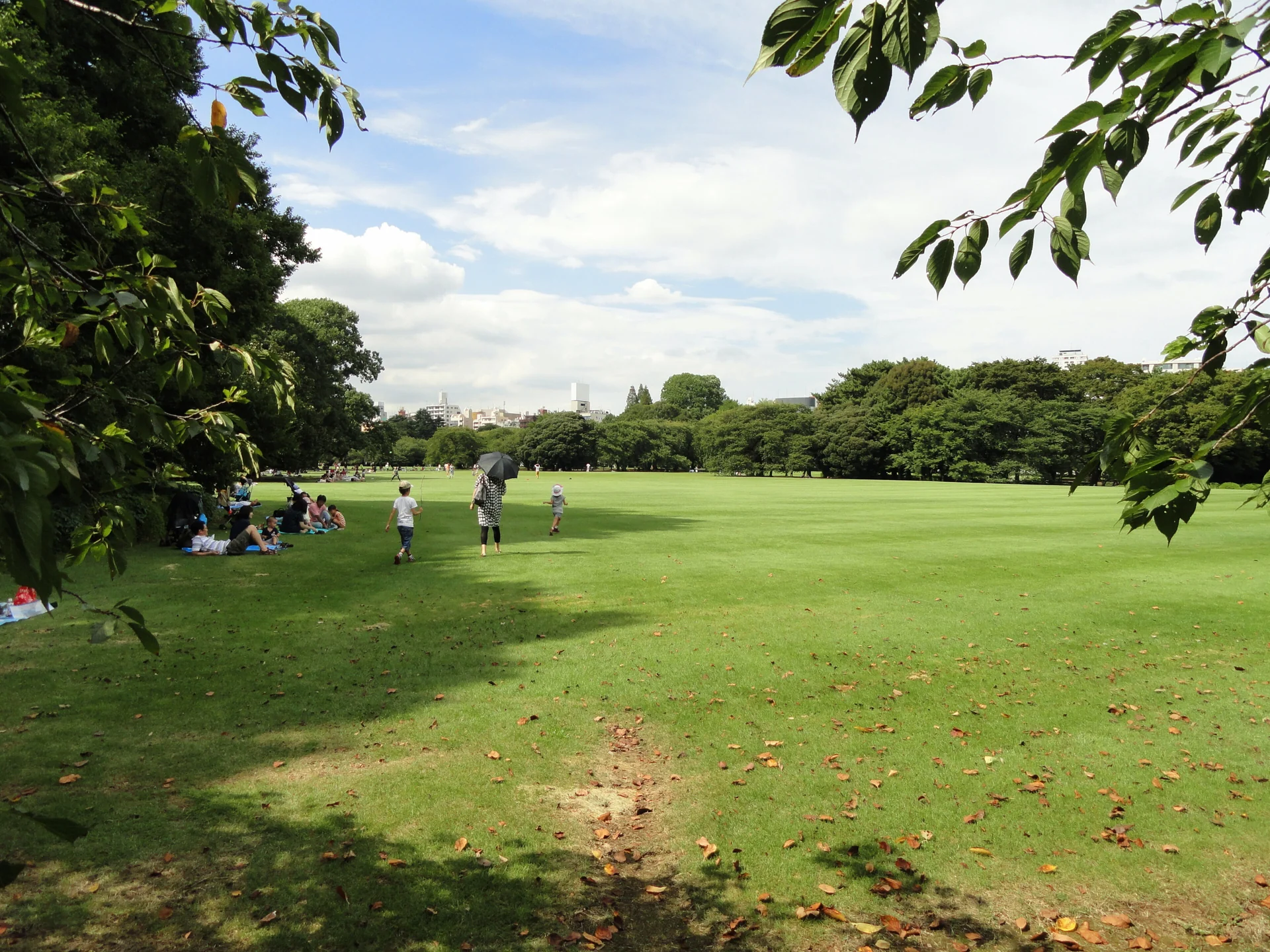
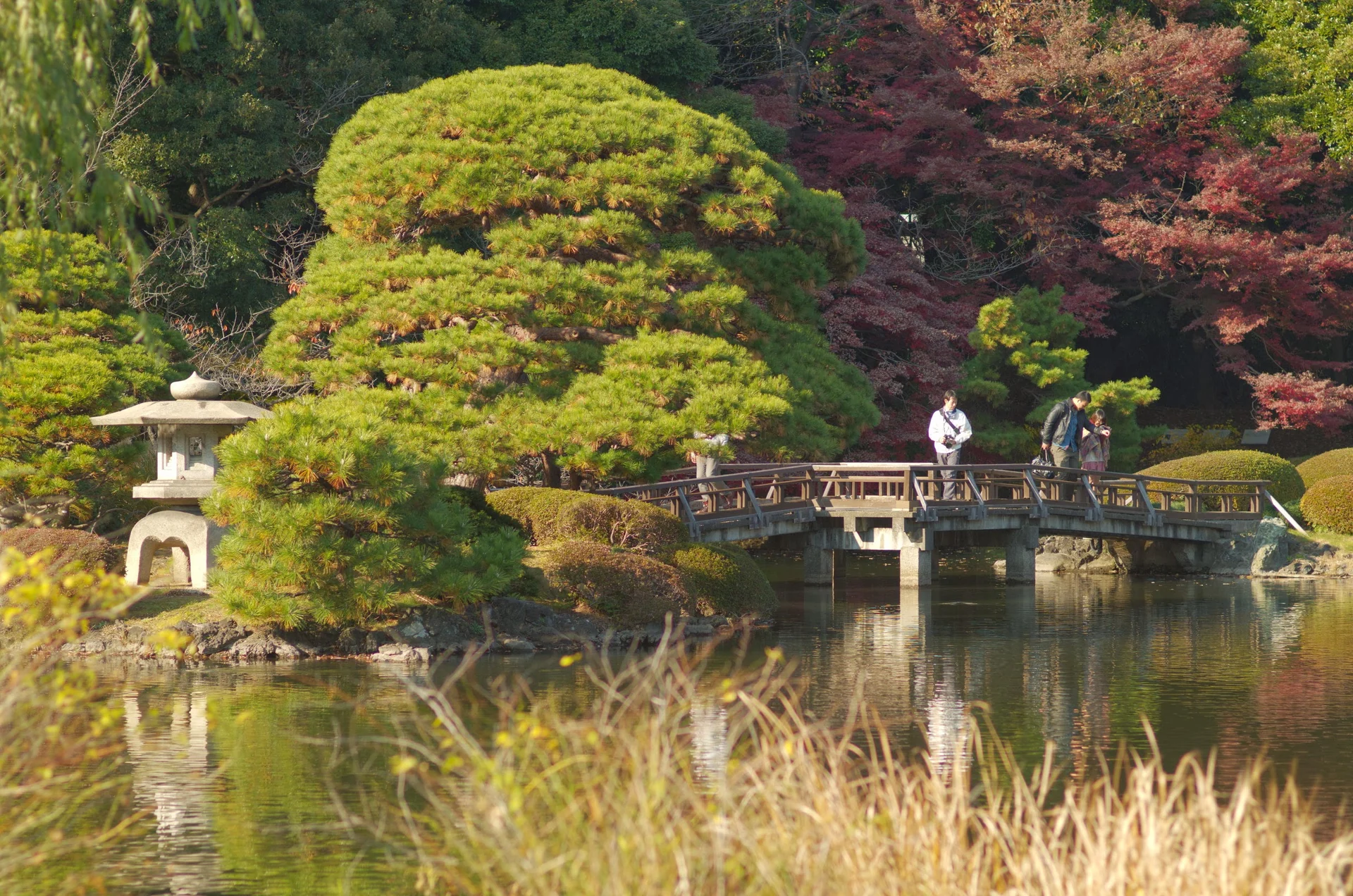
Give the garden its own stretch of time rather than treating it as a shortcut to the nightlife streets. Choose a gate, follow a loop that returns you to a useful exit, and leave room to stop beside the water. An hour spent looking closely can be more rewarding than a hurried circuit of every labelled feature.
For a first visit, allow about 90 minutes to two hours as a planning allowance. Start with the area that most interests you, then shorten the loop if the group needs a break. A map helps you avoid discovering at the end that you have drifted towards a gate far from your next stop. Consult the Ministry of the Environment’s current admission information before choosing your start time.
Opening hours and last entry are different
| Period | Garden open | Last entry |
|---|---|---|
| 15 March–30 September, except the summer period below | 09:00–18:00 | 17:30 |
| 11 June–31 July | 09:00–19:00 | 18:30 |
| 1 October–14 March | 09:00–16:30 | 16:00 |
Regular closure is Monday, or the following weekday when Monday is a public holiday, plus 29 December–3 January. The official exceptions keep the garden open daily during 25 March–24 April and 1–15 November. Busy blossom dates may require advance reservation. Check the notice for your actual year and date.
Standard adult admission is ¥500; children aged 15 and under enter free. Discount categories and eligibility are set out on the official admission page. Individual facilities can close earlier than the garden. These details were checked on 20 October 2026 and can change.
For an October afternoon, aim to arrive well before 16:00. Last entry is a deadline for getting inside, not a suggested arrival time for a satisfying visit. If you reach the area late, choose a meal and evening walk instead of paying for a garden circuit that has become a race against closing time.
Choose a garden loop, not a flower guarantee
The photographs here show different views and dates, rather than a promise that every flower will be in bloom when you visit. Base your visit on the landscape, ponds and space to pause. Treat a particular flower display or autumn colour as a reason to check current garden notices and adjust the route, rather than something a fixed itinerary can guarantee.
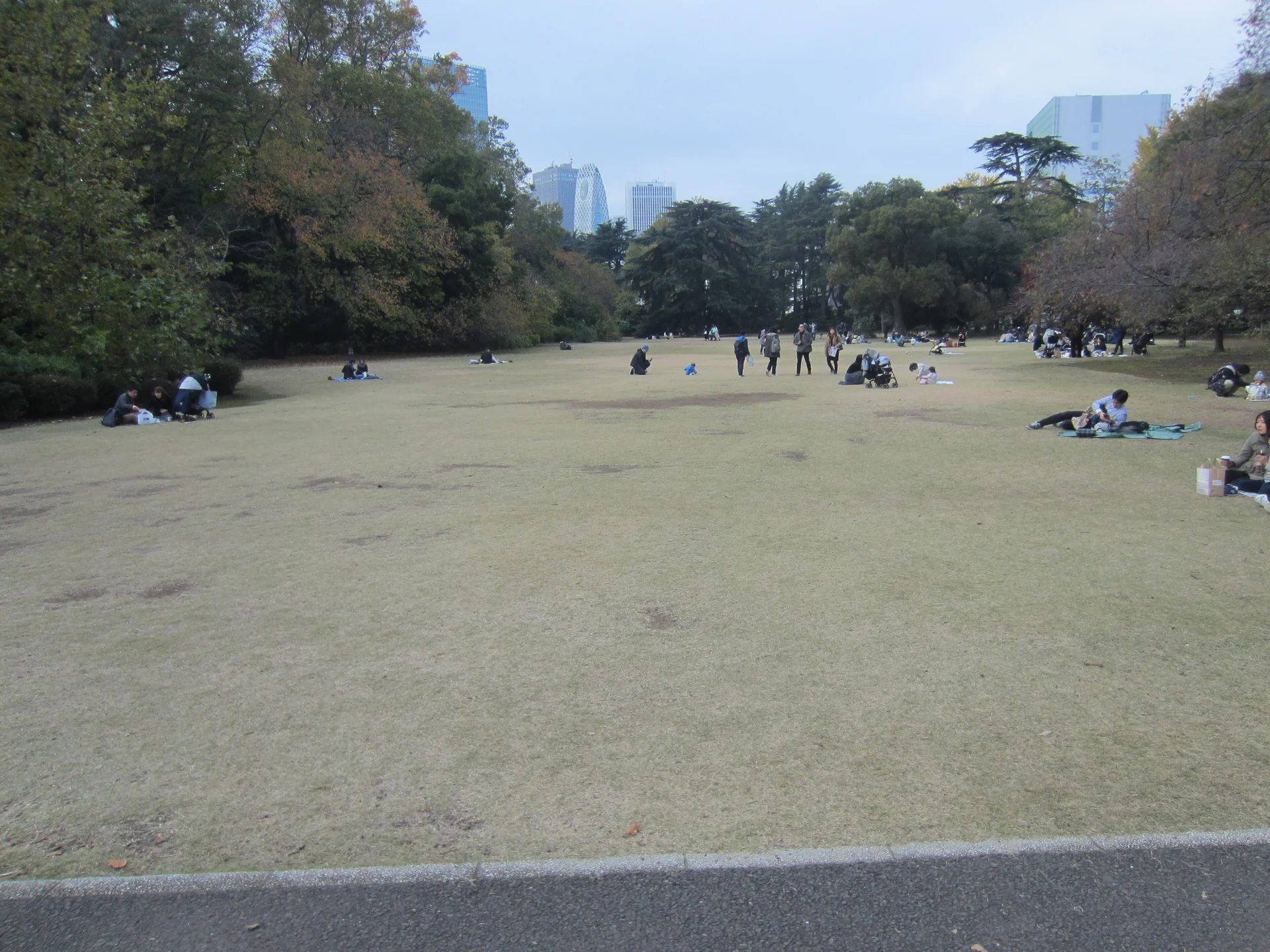
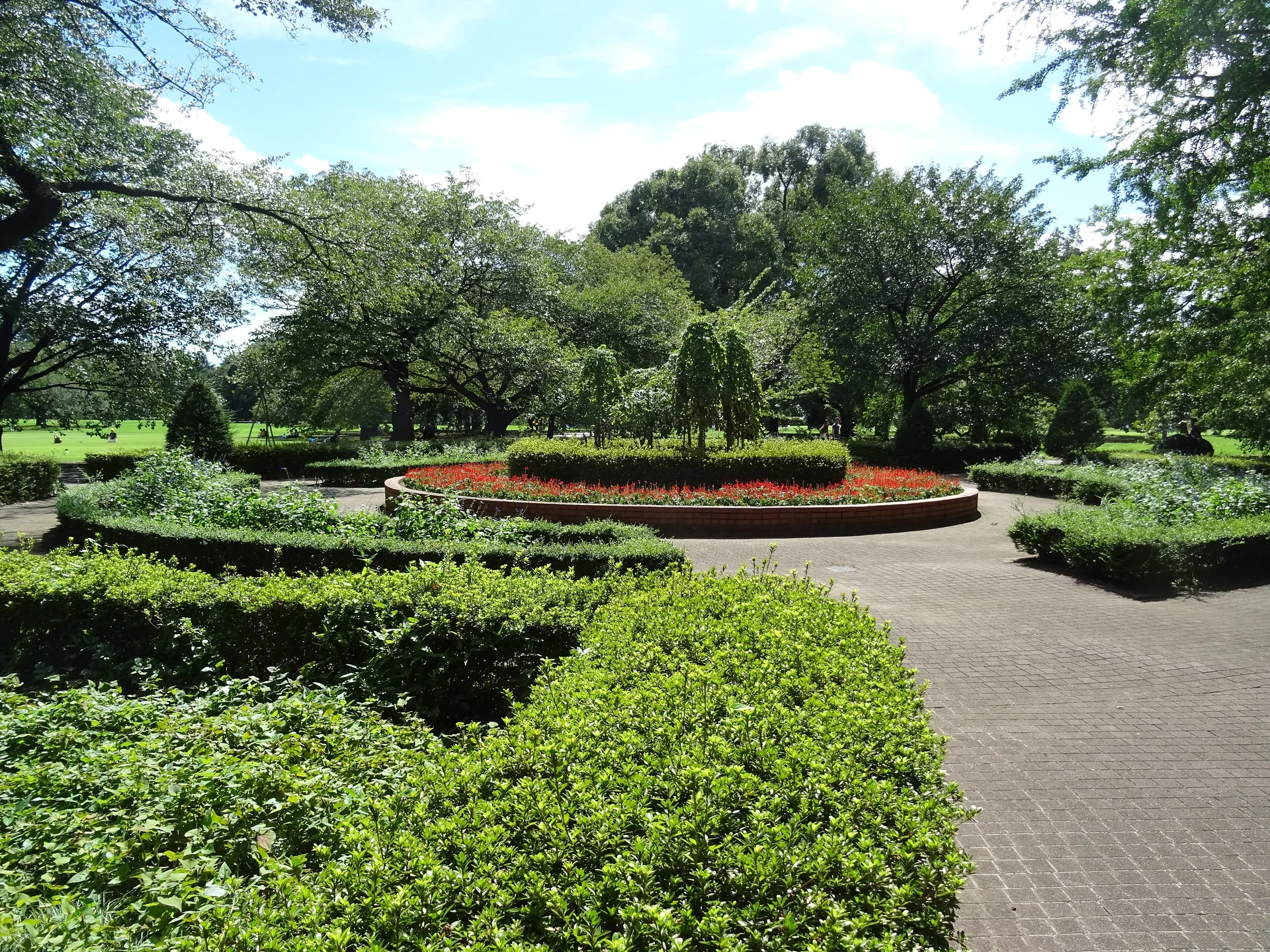
A useful approach is to choose one waterside section, one open area and a place to sit, then use the garden map to connect them. Couples may prefer a longer photography pause; a family may need a shorter circuit and a snack break. Neither group needs to complete the entire site to make the visit worthwhile.
Garden rules and access planning
Alcohol is prohibited, and this is not a place for a drinking picnic, drones or ball games outside the specific children’s exceptions. The official garden rules explain what may be brought in and the limits on play and photography. Stay on permitted paths, leave planting areas alone and keep shared benches available to others.
For wheels or limited walking tolerance, use the official universal design map to plan the gate, surfaces and facilities, rather than assuming every garden path is equivalent. Agree the next meeting point before anyone separates for photographs. A short, well-chosen route is easier to adapt than a promise to see every corner.
03 · THE WEST-SIDE ALTERNATIVE
See Tokyo from the Metropolitan Government observation rooms
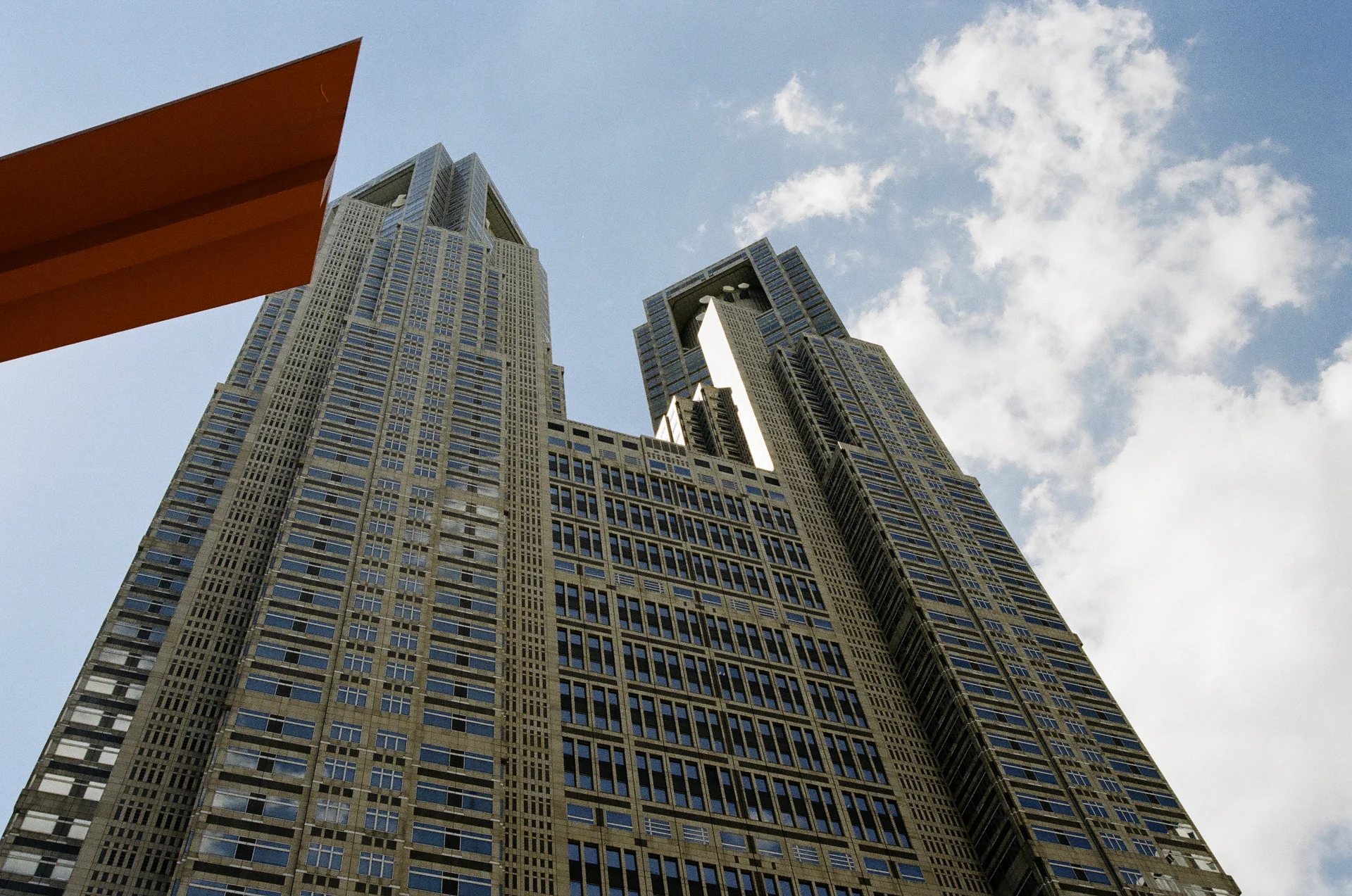
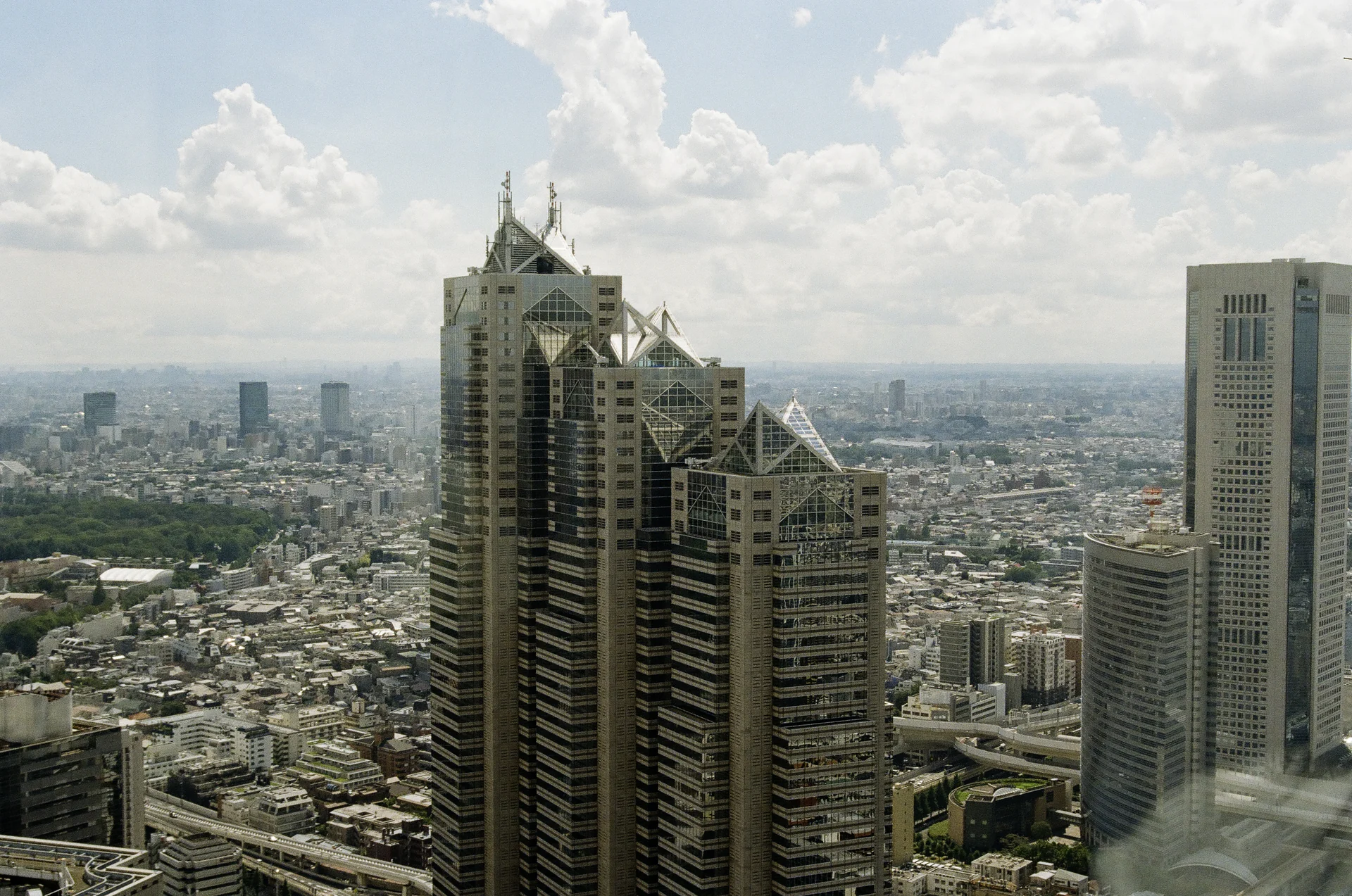
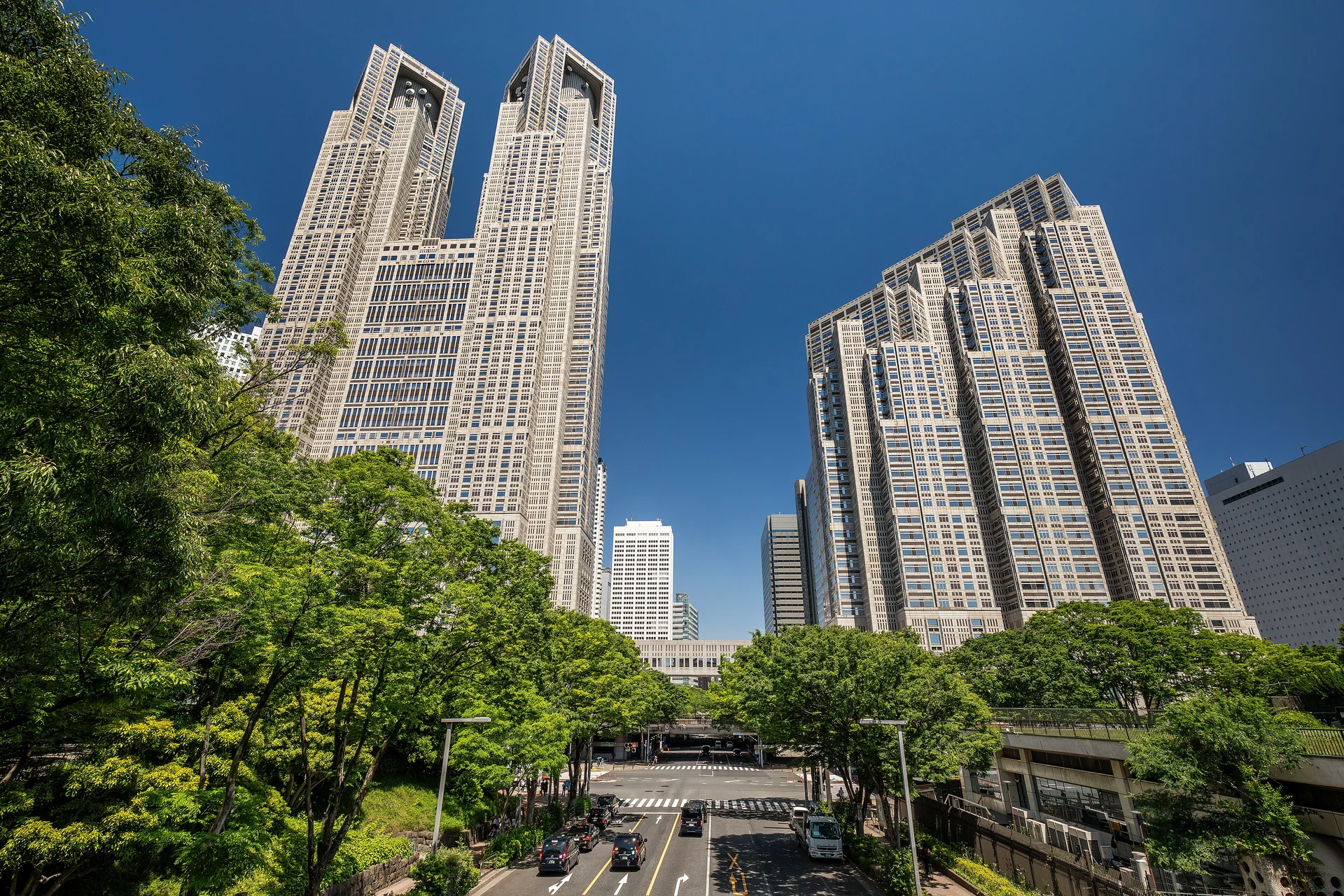
Choose the government complex if a city panorama matters more to you than a long garden walk. Seeing the district from above gives context to the towers and railway corridors you encounter at street level. Daylight and the illuminated city are different experiences; select one that fits the rest of your visit instead of waiting around solely to collect both.
Check which observation room is operating
The operator lists free observation rooms on the 45th floor of Building No. 1, reached by dedicated elevators from the first floor. Advance and group reservations are not accepted. The official observation-room guide and annual closure calendar should decide your plan.
| Observation room | Opening / last admission | Regular closure |
|---|---|---|
| South | 09:30–22:00 / 21:30 | First and third Tuesday of the month. |
| North | 09:30–17:30 / 17:00; extended to 22:00 / 21:30 when the South room is closed. | Second and fourth Monday of the month. |
When a regular closure falls on a holiday, the room opens and closes on the following weekday instead. Both rooms also have year-end and inspection closures; consult the actual calendar. Do not assume that both stay open late every day.
Keep the observation visit flexible. A queue can use up time that looked available for the park or dinner, and poor visibility can change the value of waiting. Decide beforehand which later activity you would drop. A free admission price does not make the visit free of time costs.
Night views and the outdoor light show are separate choices
The skyline from inside an observation room and a projection viewed from outside the government building are different activities. If you want the night panorama, verify the room and its last admission first. If you want a light-show evening, plan a viewing position at ground level and check the programme for your date.
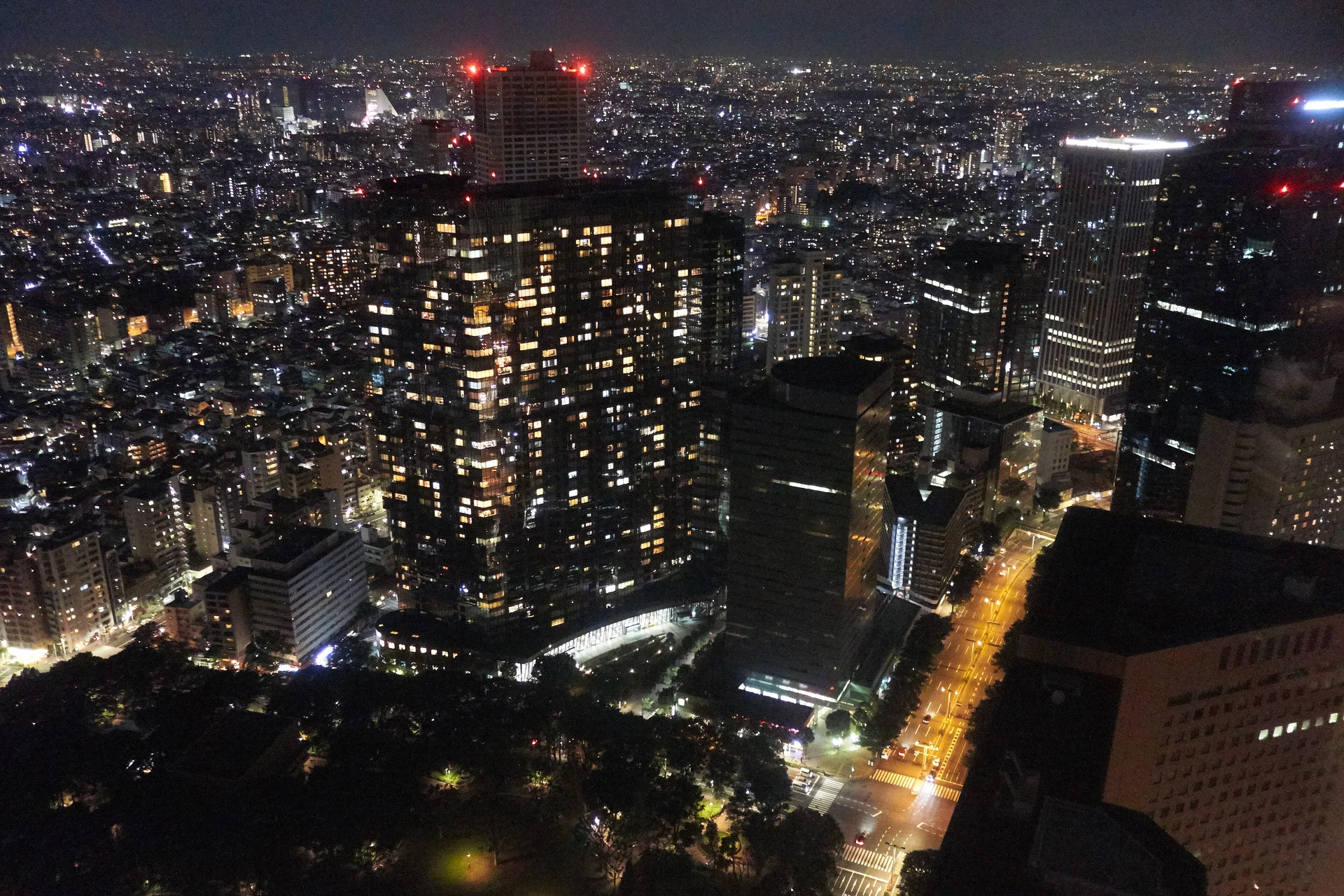
The official TOKYO Night & Light website publishes dated programmes and a daily timetable for projections on Building No. 1’s east wall. At this check, October’s displayed daily list begins at 18:00; programmes and seasonal start times change, and stormy weather can interrupt screenings. Check again on the day rather than carrying a screenshot from a different month.
If you include the show, have dinner on the west side or leave enough time to return there deliberately. A plan that puts an east-side meal between the observation deck and the show may add an unnecessary second crossing of the station area.
04 · GREEN SPACE BETWEEN THE TOWERS
Take a quieter break in Shinjuku Central Park
Central Park works naturally with a west-side visit. It is a separate place from Shinjuku Gyoen, not another name for the national garden. The park operator’s guide describes lawns, water features, woodland, play and sports areas; individual facilities have their own arrangements. Choose an appropriate part for your group instead of assuming every activity is available throughout the day.
Use this stop as breathing space: a short walk, a seated rest or a chance for children to change pace. It does not need to become a second major sightseeing circuit. If the observation queue has been long, keep the park simple; if the weather is pleasant and the deck is busy, give the outdoor stop more time.
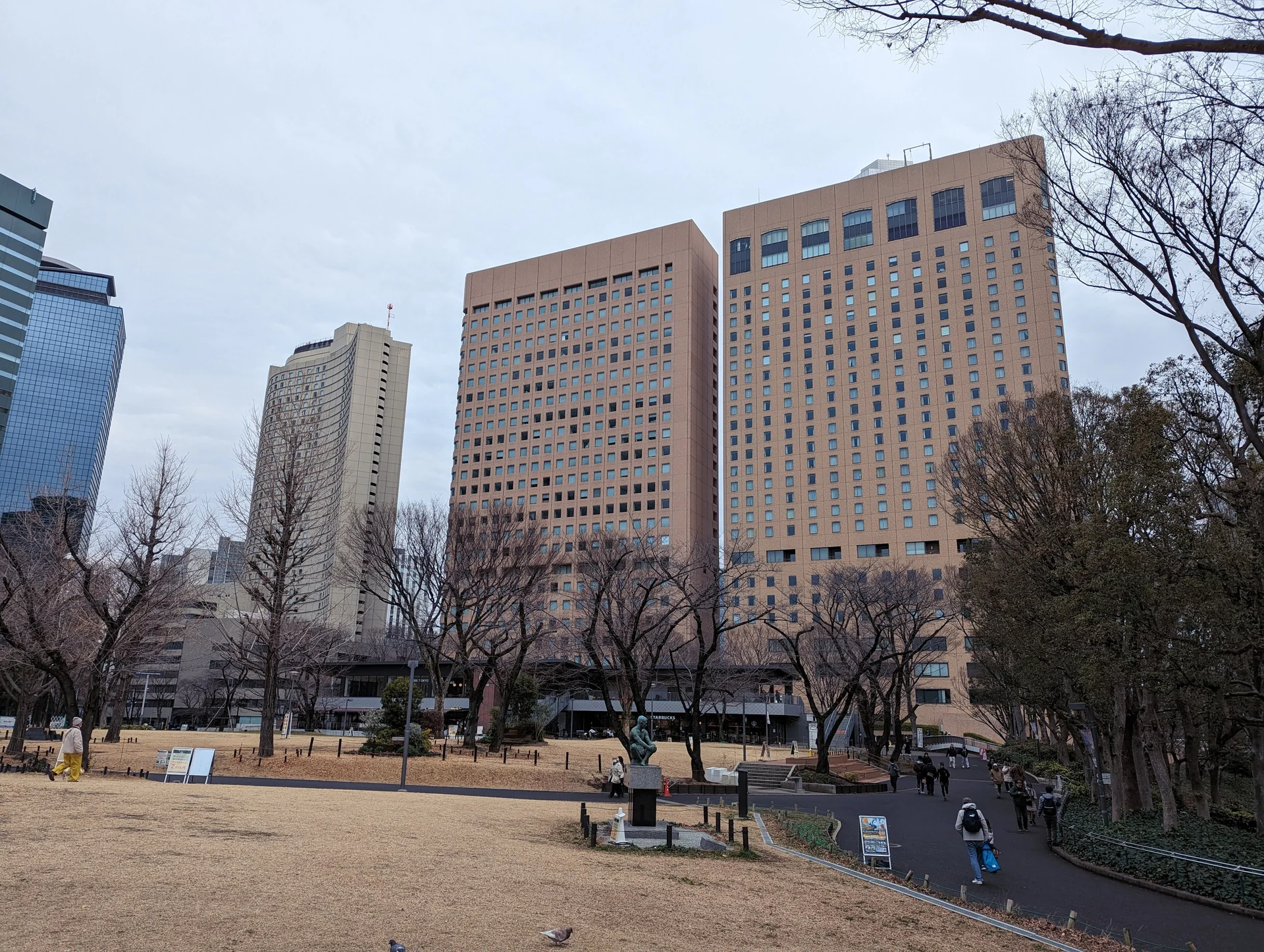
For access, the operator places the park near Tochomae Station and notes that it has no car park. If arranging a private journey, discuss a lawful nearby drop-off and the walking connection rather than assuming a vehicle can wait inside the park. Keep wheel routes, toilets and the next meal in the plan.
05 · AN EAST-SIDE PAUSE
Visit Hanazono Shrine around Shinjuku-sanchome
Hanazono gives an east-side walk a change of purpose. Approach it as an active place of worship rather than another backdrop for a nightlife photograph. Pause, follow the signs and keep the approach clear for people visiting the shrine.
The Shinjuku tourism association’s shrine listing places it at 5-17-3 Shinjuku, near Shinjuku-sanchome. It also records the rebuilding of the main shrine in 1965. Its history and religious role should not be confused with a claim that all the visible buildings are surviving Edo-period structures.
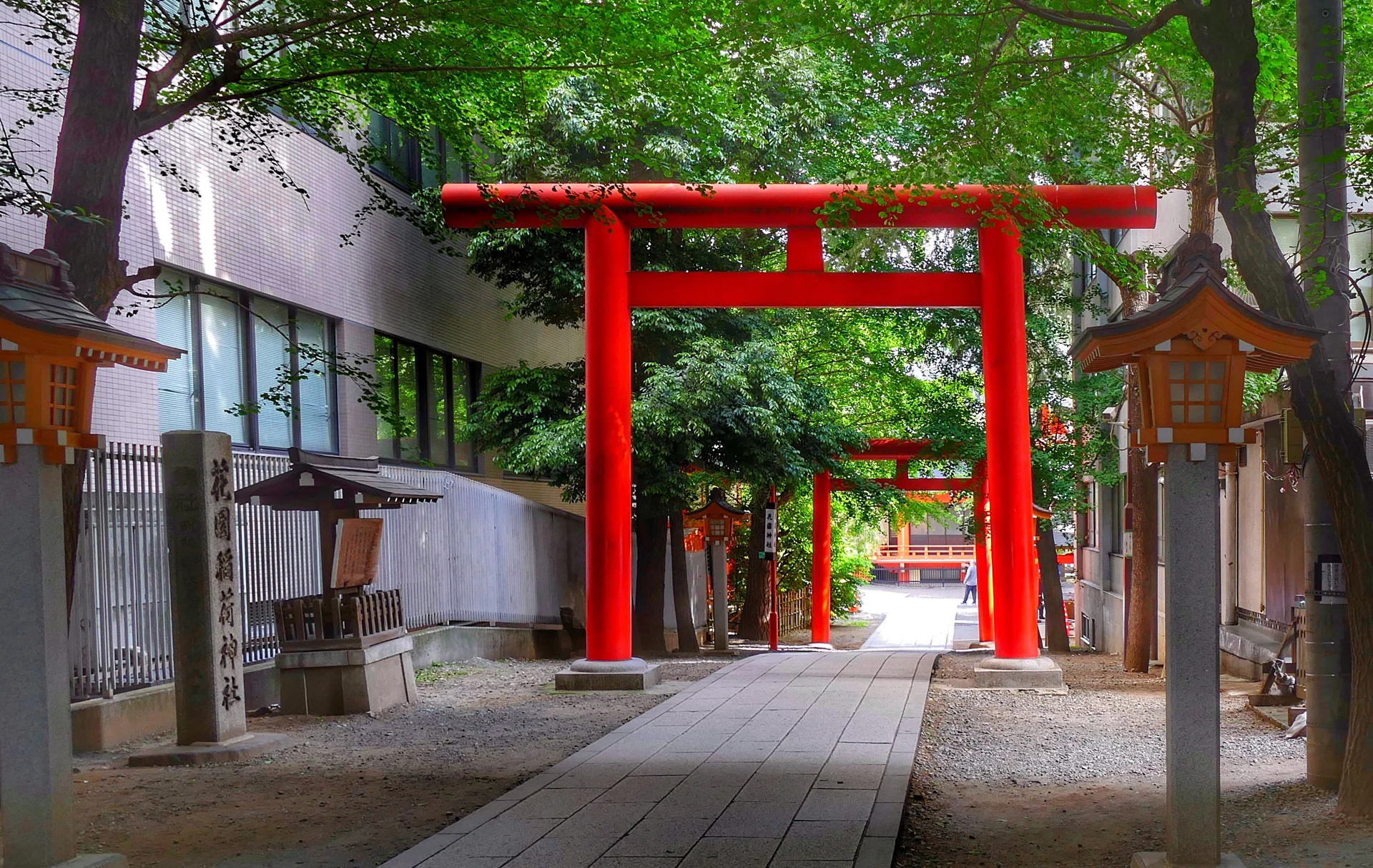
A shrine visit is a useful point to reassess the evening. If everyone is ready to stop, eat nearby and finish. If the group is comfortable continuing, choose a short public-street loop towards Kabukicho. During festivals and events, expect a different atmosphere from a quiet ordinary afternoon; do not rely on this being an empty retreat.
Ask or follow posted rules before photographing ceremonies, people or restricted spaces. If a group member would rather wait outside a worship area, agree where to meet. There is no need to turn a short, respectful visit into a staged activity.
06 · CHOOSE YOUR EVENING
Things to do in Shinjuku at night without a rushed bar crawl
An evening in Shinjuku can be a meal and a short walk under the lights. It does not have to mean a late night, a paid tour or a sequence of bars. Choose an end time that leaves a comfortable journey back, and finish while the outing still suits the group.
Kabukicho: a short public-street look
The streets north of the east-side shopping area provide the familiar bright-sign city scene. Stay with a simple route on public streets, keep your group together and avoid stopping in doorways or the main pedestrian flow. If the atmosphere is not for you, turn back towards your meal or station rather than trying to complete a checklist.
You may spot the Godzilla head above the cinema and hotel complex from street level. Do not build the visit around access to a hotel terrace: the hotel’s Japanese FAQ currently reports the Godzilla terrace closed. Older articles and different language pages may describe other arrangements. Verify with the operator if access is important to you.
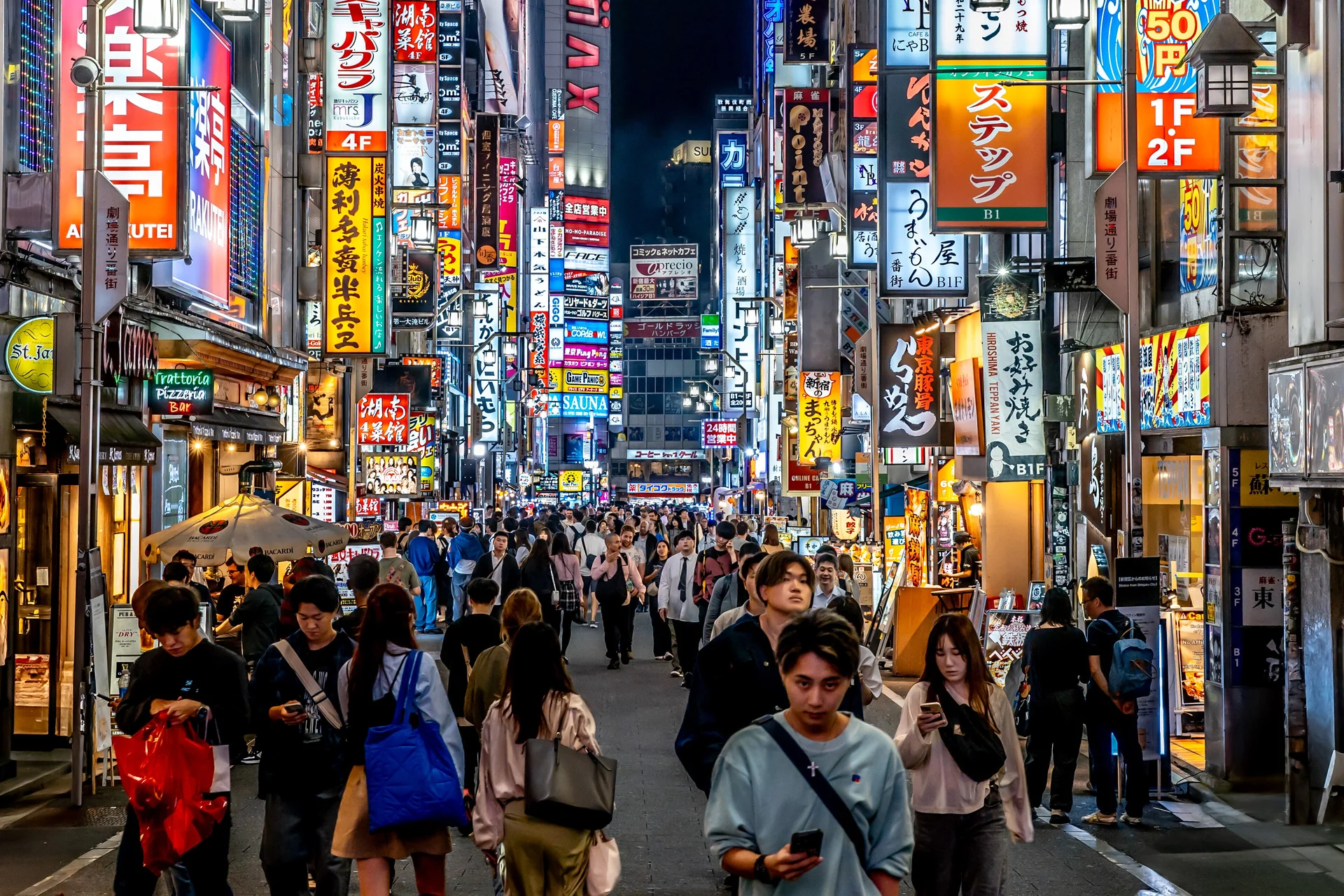
Choose venues yourself from clear menus and conditions. Do not follow someone offering an unspecified bargain into a bar or assume a street invitation defines the final bill. Keep photography courteous and your next destination clear. These are practical outing choices, not a claim that every street or venue offers the same experience.
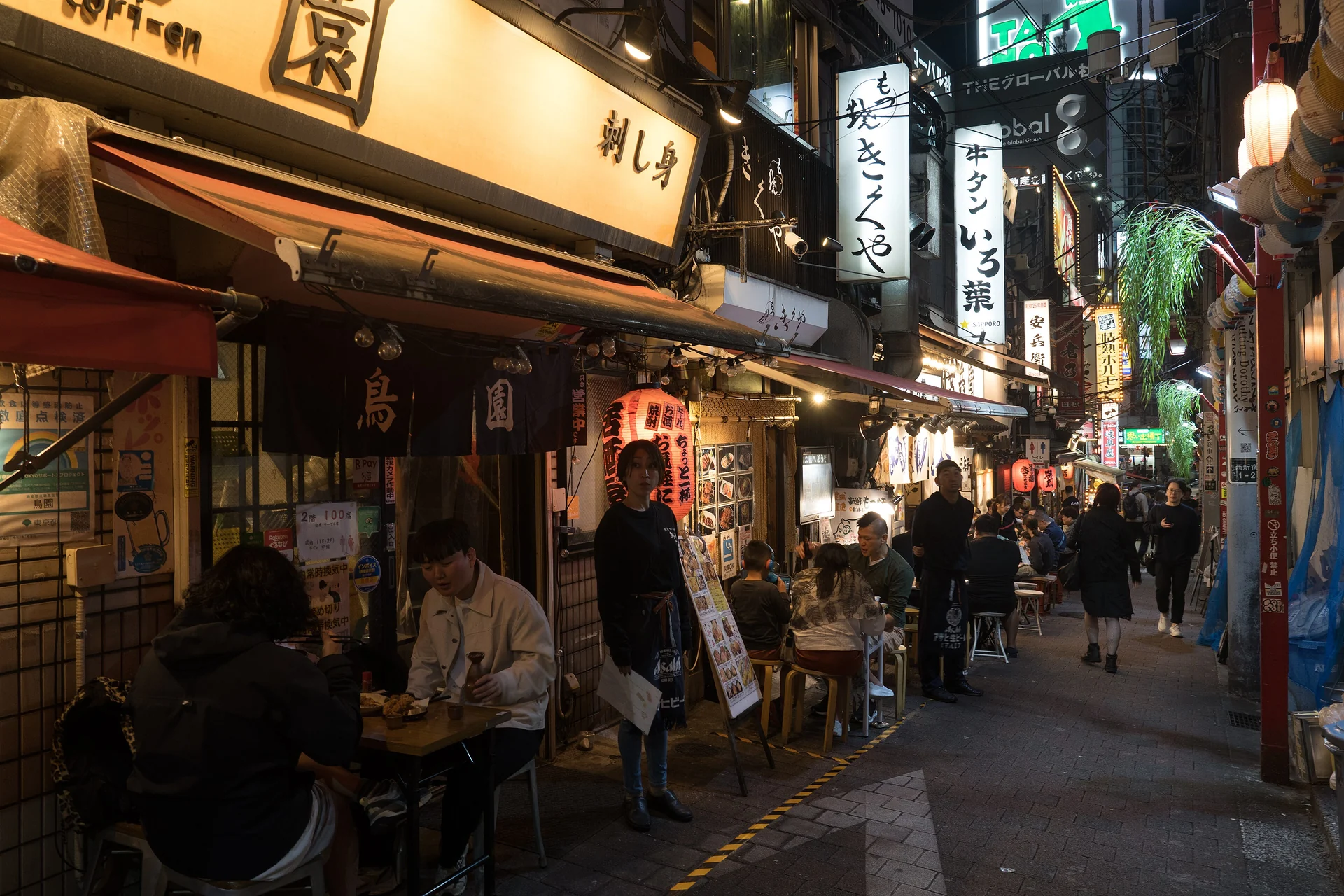
Omoide Yokocho: a meal near the northwest side
Omoide Yokocho is convenient for a west-side finish near the railway. The tourism association’s listing identifies the Nishi-Shinjuku 1-2 area and notes that opening days and hours vary by business. Treat it as a set of individual venues, not a single restaurant with one menu or admission policy.
Before sitting down, check available seats, food, drinks, any cover charge and whether the space suits your group. A tiny counter can work for two adults and be awkward for a family with a stroller. If the fit is poor, choose a larger restaurant nearby and enjoy the alley’s atmosphere without forcing it into your dinner plan.
Golden Gai: an optional bar visit with photography rules
Golden Gai is a separate cluster of small bars northeast of the station. Add it only if a bar visit is something you want, with time to understand the venue’s welcome, seating, cover charge and drink prices. A place that works for a solo adult may not suit a larger party or children.
The local association publishes permission requirements for photography in its private alley area. Do not assume that being outdoors makes every alley a public photography location. Follow signs, check the association’s instructions and ask separately before photographing inside a bar or including people. This guide deliberately does not present a staged Golden Gai alley photograph as an invitation to shoot freely.
If your aim is simply an illuminated Tokyo evening, dinner and the public-street loop above are enough. A bar district can remain an optional choice rather than a test of whether you have “done” Shinjuku.
07 · PUT A REAL MEAL IN THE PLAN
Where to eat in Shinjuku: choose the setting first
Start with the kind of meal that will make the rest of the outing comfortable. A quick bowl, a seated department-store meal and a small drinking counter solve different needs. When the whole group is tired, choosing a suitable space matters more than chasing a single fashionable dish across the station.
| Meal setting | Choose it when… | Check before ordering |
|---|---|---|
| Department-store restaurant floor | You want a seated meal and several cuisines in the same building. | Individual restaurant hours, queue, last order and seating. |
| Ramen or another focused casual restaurant | A particular dish is the priority and everyone is happy with a short menu. | Ingredients, ordering/payment system, portion and waiting time. |
| Small yokocho venue | An intimate counter or drinking-meal atmosphere is the point. | Available seats, cover charge, smoking arrangements and suitability for your party. |
| Food hall / takeaway | You want to compare prepared food or buy something to take away. | Where eating is permitted; a retail counter does not promise a dining seat. |
For a concrete east-side option, Isetan Shinjuku’s official English directory separates the Main Building’s B1 food hall from its seventh-floor restaurants, “Eat Paradise.” The published general store hours are 10:00–20:00, with restaurants listed at 11:00–22:00 and individual variations. Check the actual restaurant, especially last orders; buying food downstairs is not the same as securing a table upstairs.
If dietary requirements matter, contact a specific restaurant and ask about ingredients and preparation. Vegetarian-looking food may contain fish stock; “no pork” does not by itself establish halal suitability, and a menu label does not resolve an allergy or cross-contact concern. Get the answer you need before ordering rather than relying on this neighbourhood guide as a certification.
Keep a backup in the same area. If the first choice has a queue longer than your remaining meal allowance, move to the backup before everyone becomes hungry and impatient. For an evening photograph walk, an earlier meal can leave a more flexible finish.
08 · A ROUTE WITH ROOM TO CHANGE
A flexible Shinjuku sightseeing route from afternoon to evening
This east-side example keeps the garden before dinner and the night streets. The times are broad planning blocks, not a promise about walking speed, restaurant availability or darkness at a particular hour. Start earlier if you want a longer garden visit, and adjust the illuminated-street portion to the season.
| Suggested block | Plan | If the day changes |
|---|---|---|
| 13:00–13:30 | Arrive near the garden; orient the group, use facilities and choose your gate. | If arrival is much later, reassess the garden’s remaining open time before paying. |
| 13:30–15:15 | Explore one garden loop with water, open space and seated pauses. | Shorten the loop for heat, tiredness or an earlier facility closing time. |
| 15:15–16:00 | Leave towards Shinjuku-sanchome; take a refreshment break or browse one store. | Do not add a second long shopping circuit. |
| 16:00–16:30 | Visit Hanazono Shrine respectfully. | Follow current event arrangements; leave extra space for worshippers. |
| 16:30–18:00 | Have a seated meal in the east-side area. | Use the same-area backup if the first venue is full. |
| After the meal, up to about 19:00 | Take a short public-street look at Kabukicho, then leave from a suitable station. | Finish after dinner if the group is tired. In summer, decide whether waiting for later darkness is worthwhile. |
The order is the useful part. Garden first, meal before exhaustion, one brief evening area, then a clear finish. If the garden is closed on your date, change the outing rather than wandering around its gates. Choose the west-side route below or start later with an indoor shopping-and-food visit.
West-side alternative: views, park and dinner
Begin with the government observation room that is actually operating. Allow space for its queue, then spend a manageable period in Central Park. Return towards the station for a meal, choosing Omoide Yokocho only if an individual venue fits your group. If the projection programme is your evening priority, stay on the west side and plan the meal around its published schedule.
If you have a full day
Visit the garden in the morning, have lunch on the east side, then deliberately transfer to the west for the observation room and park. Choose one evening finish. This requires more walking, more navigation and a genuine break; it is not simply the half-day route with extra pins added.
If both the garden and a specific evening programme are essential, make them the two anchors and leave the middle flexible. Drop optional shopping or an additional bar area first. Trying to preserve every stop after a delay turns a pleasant outing into an exercise in catching up.
09 · MAKE THE ARRIVAL EASIER
Getting around Shinjuku: station, rain and family planning
Choose the arrival station for the first stop
Use the actual destination when comparing routes from your accommodation. The garden, Shinjuku-sanchome, the main Shinjuku station complex and Tochomae are different arrival targets. The route that looks shortest to “Shinjuku” may leave a long surface or underground connection to the attraction you meant.
JR East provides an official Shinjuku station map, while Tokyo Metro has a separate Shinjuku Station and barrier-free information page. Follow current signs and check the operator you are using. Do not assume an exit in one railway’s diagram is the most useful one for another line or that an old street photograph reflects today’s construction.
For meeting up, share a specific building or landmark, entrance side, floor if indoors and a map pin. “Outside Shinjuku Station” is not enough. Agree a fallback message and avoid a meeting point that leaves the whole party obstructing a busy flow of passengers.
A wet-day version
Reduce the garden and long street sections if the weather makes them unappealing. Choose an indoor meal, one shopping building and, if visibility and operations justify it, an observation room. An indoor deck does not guarantee a clear panorama. Keep the evening walk optional and use a forecast as planning help rather than a promise.
If the garden is your main reason for coming, moving the visit to another suitable open day can be better than forcing a poor-weather version. Check the closure pattern before swapping days. Put the alternative outing somewhere you will actually enjoy, not wherever happens to be closest.
Children, strollers and limited walking tolerance
Pick one main attraction and a clear meal stop. A garden plus dinner can be a complete family visit; a tower and short park stop can be another. Keep a recognisable regrouping point, and make it easy for someone to opt out of the late street loop.
Check station-to-surface lifts and attraction routes for your needs. A short distance on a map does not establish a step-free path. The government building’s access guide tells visitors needing assistance to ask security staff about elevator routes; the garden’s universal design map helps with surfaces and facilities. Confirm particular requirements with the relevant operator.
A small budget and timing checklist
- Transport from your hotel and the journey back, including the final train you intend to use.
- Garden admission if included; the observation rooms have free admission but may require waiting.
- A seated meal, drinks and any stated cover charge, rather than an assumed all-in alley price.
- Shopping, storage and optional venue charges as separate choices.
- A stop you will drop first if a queue, weather or tiredness changes the day.
10 · CHOOSE THE REST OF YOUR TOKYO DAY
Shinjuku, Shibuya or a wider private Tokyo itinerary?
Choose Shinjuku for a garden-and-evening contrast or a government-building panorama with a west-side park. Choose our Shibuya half-day route if the scramble crossing, shopping and a chosen viewpoint are your priorities. For temple streets and a different sense of place, see the Asakusa sightseeing guide.
You can combine districts, but give each a purpose and allow a real transfer and meal break. A vehicle is a separate planning choice for a wider day, luggage or specific journey needs. It does not replace walking within gardens and shopping streets, attraction entry requirements or an accompanying guide.
If you would like TokyoVia to discuss a broader day, send your hotel, date, group, luggage, walking preferences and the two places you most want to see. Specify whether you need transport, someone accompanying the walking sections, or both. Our private driver or tour guide comparison explains that distinction.
Discuss a Tokyo afternoon and evening route ↗ or browse Tokyo and nearby day-trip ideas. Vehicle category, language support, guide arrangements, availability and the full quotation require confirmation for your request. The independent Shinjuku routes above are complete starting points for visitors who prefer to explore on their own.
11 · QUESTIONS BEFORE YOU GO
Shinjuku sightseeing questions answered
What are the best things to do in Shinjuku for a first visit?
Choose either Gyoen, an east-side meal and a short evening walk, or the government observation rooms, Central Park and dinner on the west side. Choose both sides only if you have a longer day and want their different experiences.
How long should I spend in Shinjuku?
Allow roughly five to six hours for a relaxed afternoon-and-evening route on one side of the station. A meal and brief night walk can be shorter. The garden, both sides of the station, shopping and nightlife together need a substantially longer outing.
Can I visit Shinjuku Gyoen at night?
Do not plan an ordinary evening garden visit. Regular closing is seasonal, with separate last-entry times shown above. Check current official notices for any exceptional event rather than treating event access as the everyday schedule.
Are both government observation rooms open late?
No. Their regular schedules differ, and the North room’s later hours depend on the South room being closed. Check the operating room and dated calendar instead of assuming a generic closing time applies to both.
Can I enjoy Shinjuku at night without going to bars?
Yes. Have dinner and take a short public-street loop, or choose a west-side view or projection programme. A bar visit is optional, and an earlier finish may suit families or visitors with an early departure.
Are Omoide Yokocho and Golden Gai the same place?
No. Omoide Yokocho is near the northwest side of the station; Golden Gai is a separate northeast-side bar area. Their venues have individual conditions, and Golden Gai’s association publishes photography requirements for its private alleys.
Do I need to book the observation rooms?
The operator does not accept advance or group reservations. Check opening and closure notices, allow for the queue and keep the next stop flexible. This does not establish entry availability at a specific time.
Should I book a private car just for central Shinjuku?
The compact visits in this guide are mainly walking outings. Consider a private arrangement for a wider itinerary or particular journey needs. If you want someone to accompany you through attractions, confirm guide support separately.
Official sources and planning notes
Information checked 20 October 2026. Opening hours, prices, programmes, entry and access can change; consult operator notices for your date. The comparisons and route blocks are TokyoVia editorial planning suggestions. We do not claim a personal visit or guarantee queues, blooms, views or availability.
- Ministry of the Environment: garden admission, seasonal hours and closure exceptions
- Ministry of the Environment: garden rules
- Ministry of the Environment: universal design map
- Tokyo Metropolitan Government: observation-room operations and access
- Tokyo Metropolitan Government: 2026 observation-room closure calendar
- Government building visitor access and current notices
- TOKYO Night & Light: dated programmes, timetable and access
- Central Park operator: areas and facilities
- Central Park operator: access and no-car-park notice
- Shinjuku tourism association: Hanazono Shrine
- Shinjuku tourism association: Omoide Yokocho
- Golden Gai association: private-alley photography requirements
- Hotel Gracery Shinjuku: current Japanese FAQ and terrace closure notice
- Isetan Shinjuku: official English floor guide and hours
- JR East: Shinjuku station maps
- Tokyo Metro: Shinjuku Station and accessibility resources