A warm sweet, a crisp rice cracker, a savoury bite—and enough time to enjoy the neighbourhood between them.
THE QUICK ANSWER
For a first Tokyo street food outing, choose Asakusa for traditional sweets, Ueno’s Ameyoko for a lively mix of shops and savoury food, or Yanaka Ginza for a neighbourhood shopping street. Pick one main area, two or three food stops and a proper place to pause. Buy, eat where the shop permits, then continue your walk. Do not plan on festival stalls being present every day or treat every lantern-lit bar alley as a takeaway market.
Shop and official visitor information checked 28 October 2026. This is an independently researched planning guide, not an account of personal tastings. Hours and yen prices are dated references; confirm the exact shop before travelling. Model routes and spending envelopes below are editorial suggestions, not quoted tours.
01 · FIND YOUR FOOD WALK
Tokyo street food: which area should you choose?
In Tokyo, “street food” often means food sold from a permanent shop counter on a shopping street. It can also mean a festival stall, a food truck or small dishes eaten at an izakaya. Those are different plans: one is an afternoon snack, another depends on an event, and another involves ordering a seated meal.
Choose the setting before drawing up a long food list. With only half a day, one neighbourhood and a few deliberate stops usually give you more pleasure than crossing the city to tick off five dishes. If you already have a large lunch or a reserved dinner, treat snacks as optional tastes rather than another full meal.
| Area | Good reason to go | How to plan it |
|---|---|---|
| Asakusa | Traditional sweets and snacks alongside a temple-area outing. | Combine Nakamise with one or two side streets; check each branch’s opening time. |
| Ueno / Ameyoko | A mixed shopping district with counter food, fried snacks and places for a sit-down meal. | Browse between Ueno and Okachimachi; separate takeaway stops from restaurant orders. |
| Yanaka Ginza | A compact local shopping street with prepared food and small sweet shops. | Check individual closing days; leave space for residents doing everyday shopping. |
| Tsukiji Outer Market | A food-focused morning, especially if seafood is the priority. | Use our separate detailed market guide; do not assume the whole market shares one timetable. |
| Shinjuku’s bar alleys | An evening of small dishes at a particular establishment. | Check seating, drinks, cover charges and minimum orders; this is a restaurant/bar plan. |
| A festival or food-truck event | Temporary stalls and a specific event atmosphere. | Verify the organiser’s dates, trading hours and weather notices for your actual visit. |
A simple way to choose your first three bites
Give each stop a different role: one savoury food, one traditional sweet and one drink or final treat. For example, Asakusa can be a rice-cracker stop, a small dumpling order and melon bread if you still want it. In Ueno, a fried snack and a drink can be enough before a separate lunch.
Keep a flexible third stop. A queue, a sold-out tray or an unexpected shop closure should not ruin the route. Select an alternative in the same area rather than making every stop a reservation-like deadline. If you want a complete sit-down meal, our Tokyo ramen guide and sushi and omakase guide make different comparisons.
02 · SWEETS AND SIDE STREETS
Asakusa street food: Nakamise, dumplings and melon bread
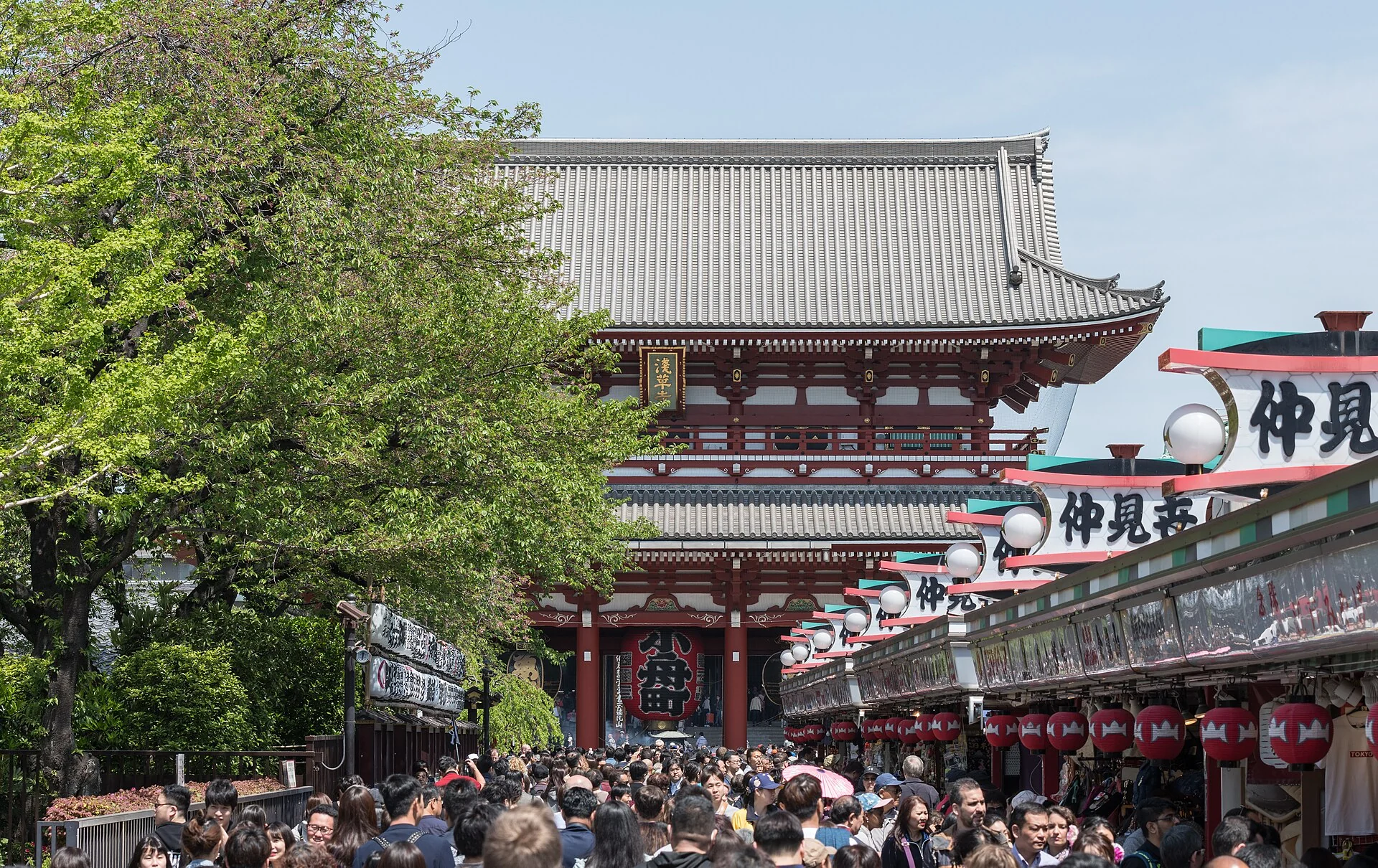
Start by distinguishing the streets. Nakamise is the approach between Kaminarimon and Hozomon, not a name for every lane around Senso-ji. Taito’s official Nakamise listing describes an approximately 250-metre street with around 90 shops, including traditional snacks and souvenirs. Shop hours and closing days vary.
Shin-Nakamise is a separate covered shopping arcade, while Nishisando lies toward the west side of the temple area. That distinction matters when finding a particular bakery or planning a rain alternative. Save the shop’s name and address, not only “near Senso-ji”. Our Asakusa sightseeing guide covers the wider temple and riverside day.
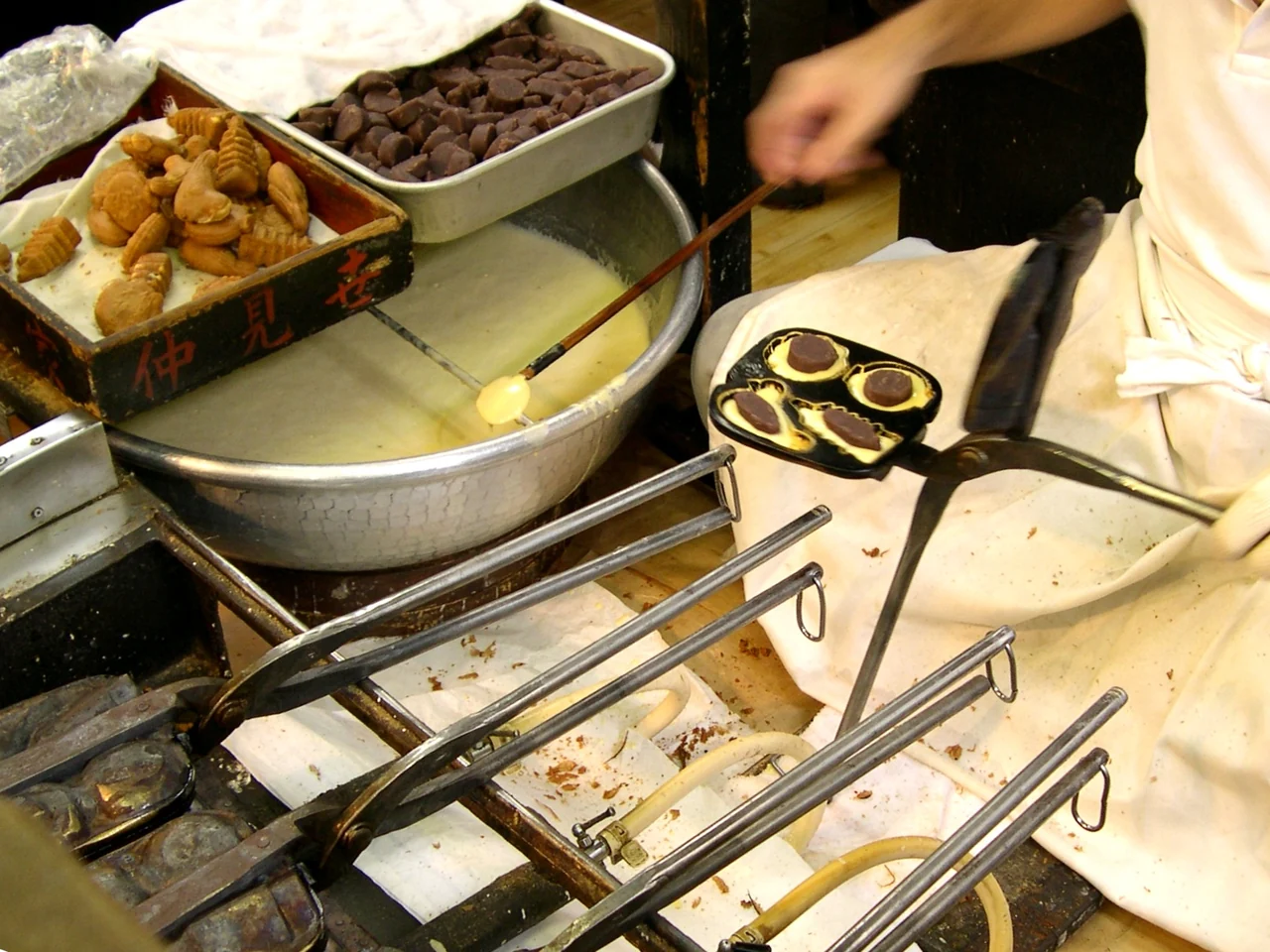
Ningyo-yaki and senbei: a small stop on Nakamise
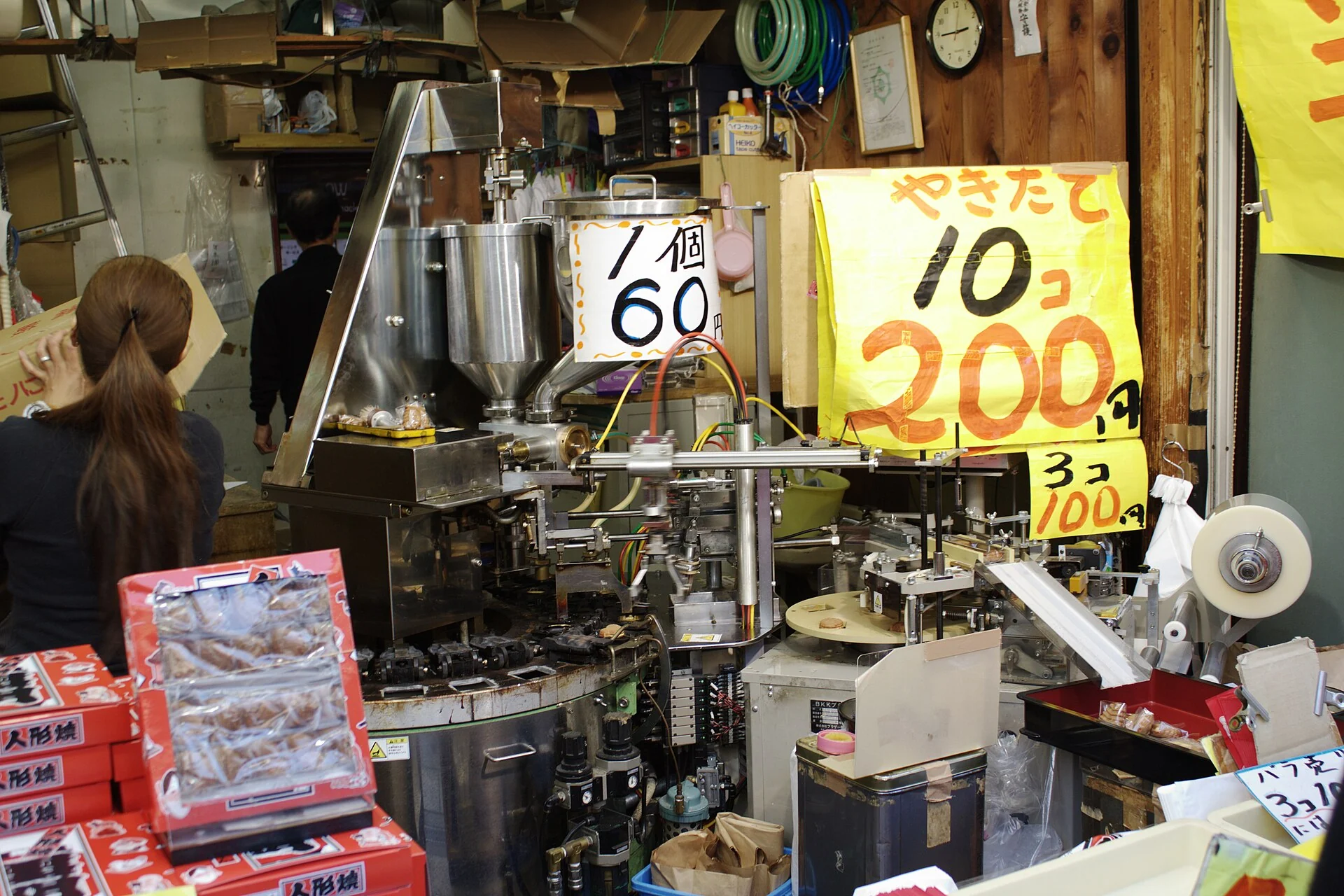
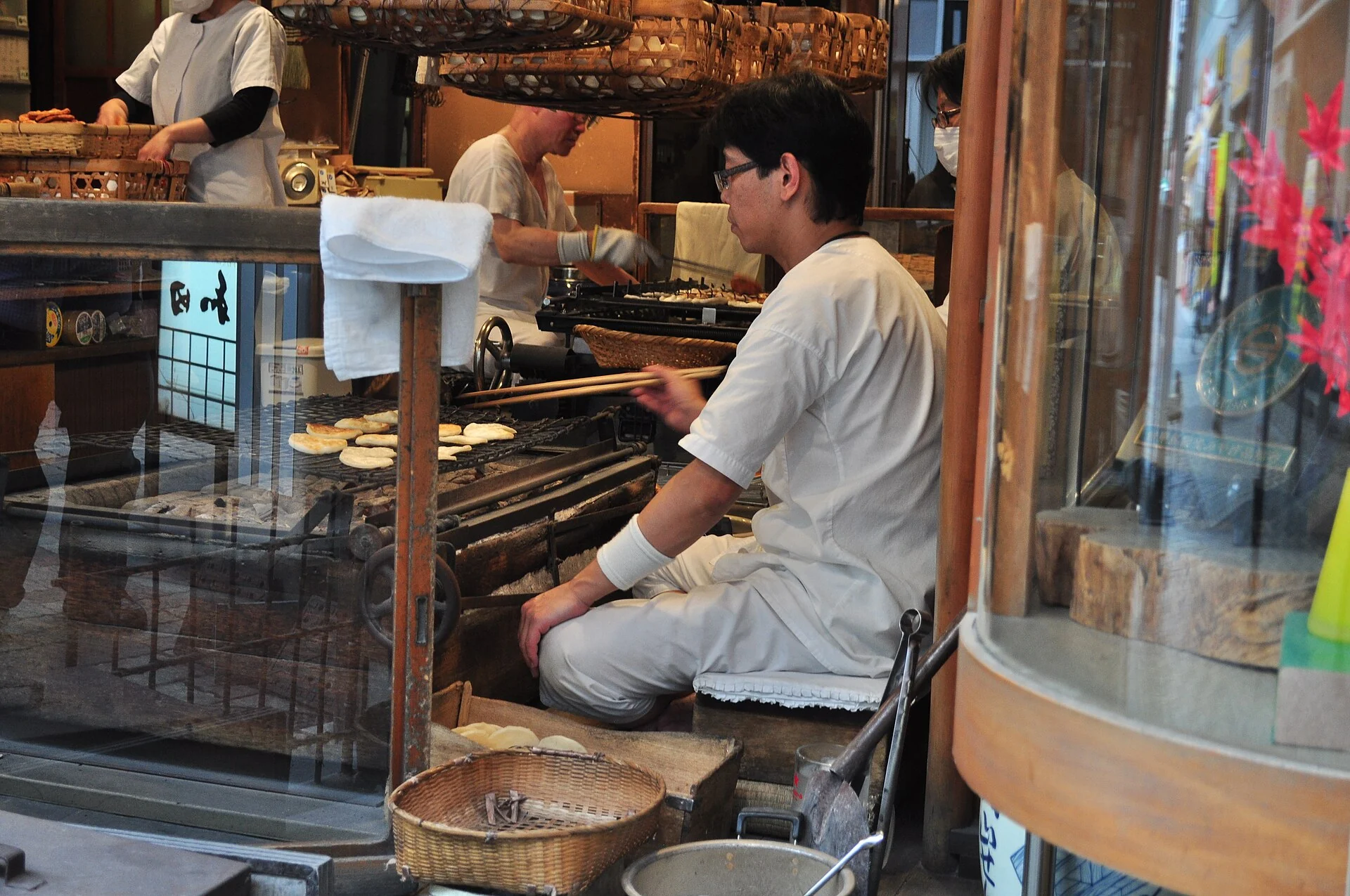
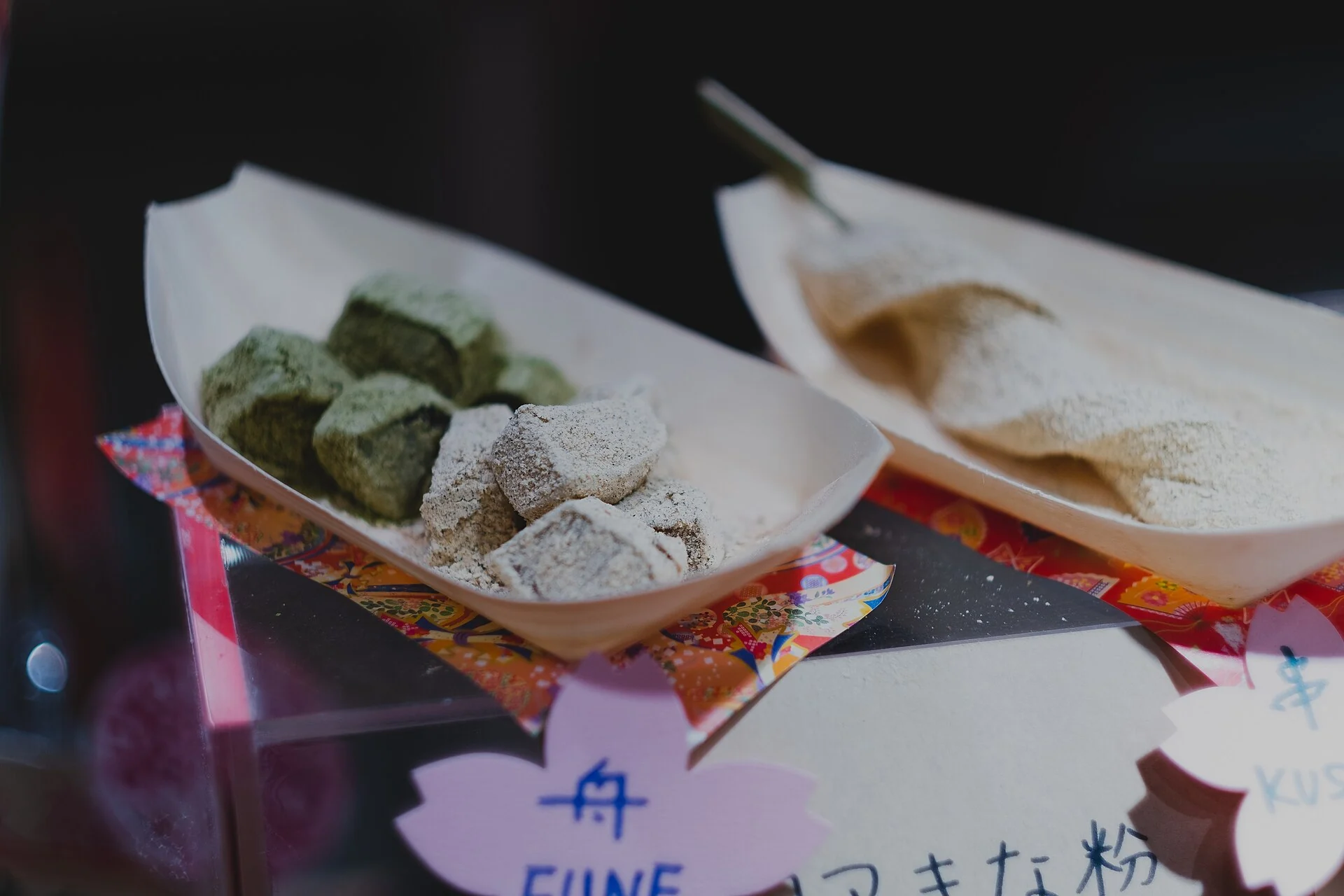
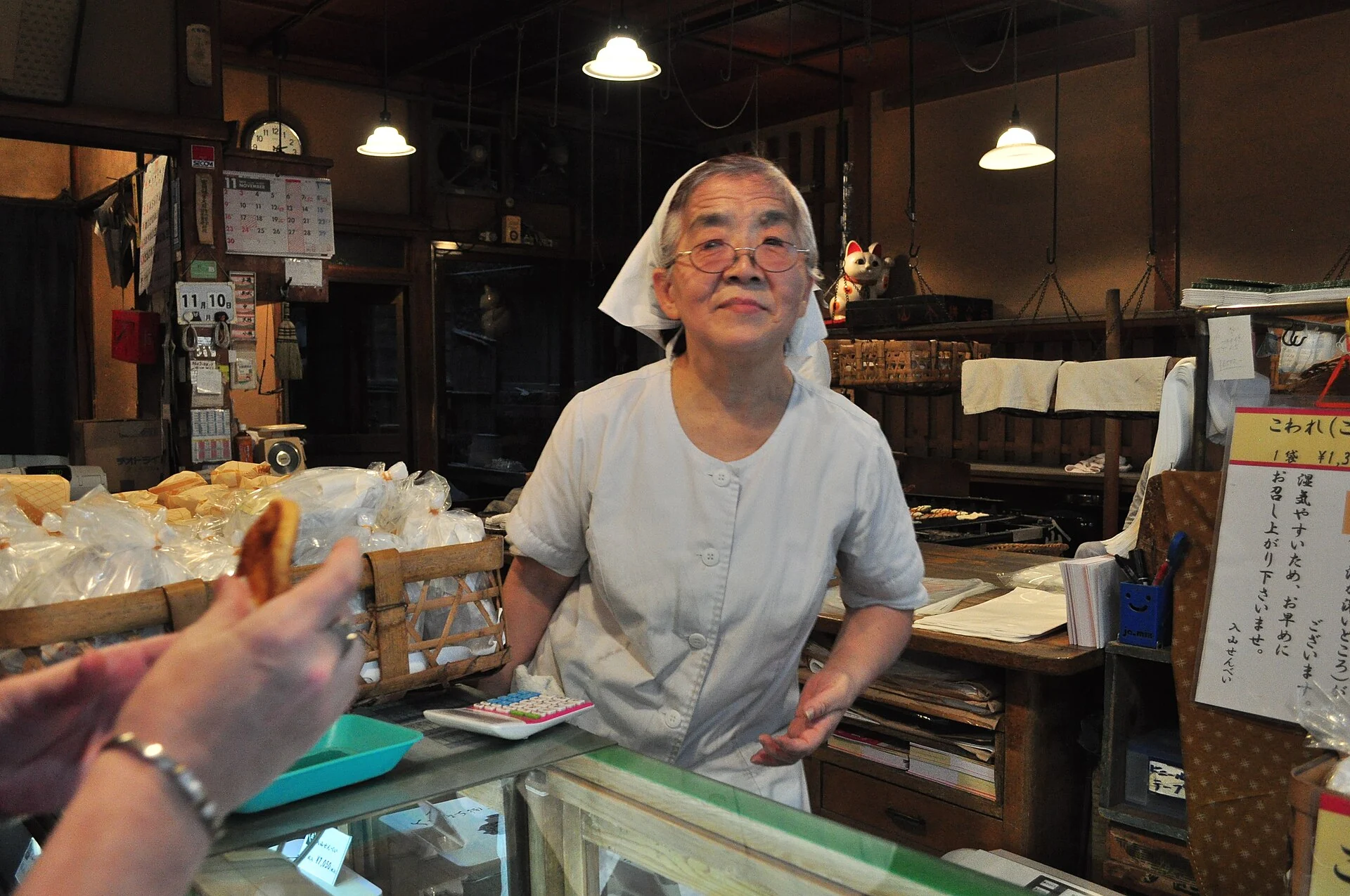
Ningyo-yaki are small moulded cakes, often with a sweet filling; senbei are rice crackers. Look at the exact item rather than assuming that every packet contains the same filling, seasoning or quantity. Decide whether you want something to eat now or a packaged gift for later.
A single freshly prepared item and a multi-piece souvenir box can have very different prices. Read the number of pieces, ask about ingredients when needed and use the shop’s indicated eating area. A counter in a photograph is not a promise of current seating. The images here illustrate the foods and setting at their source dates.
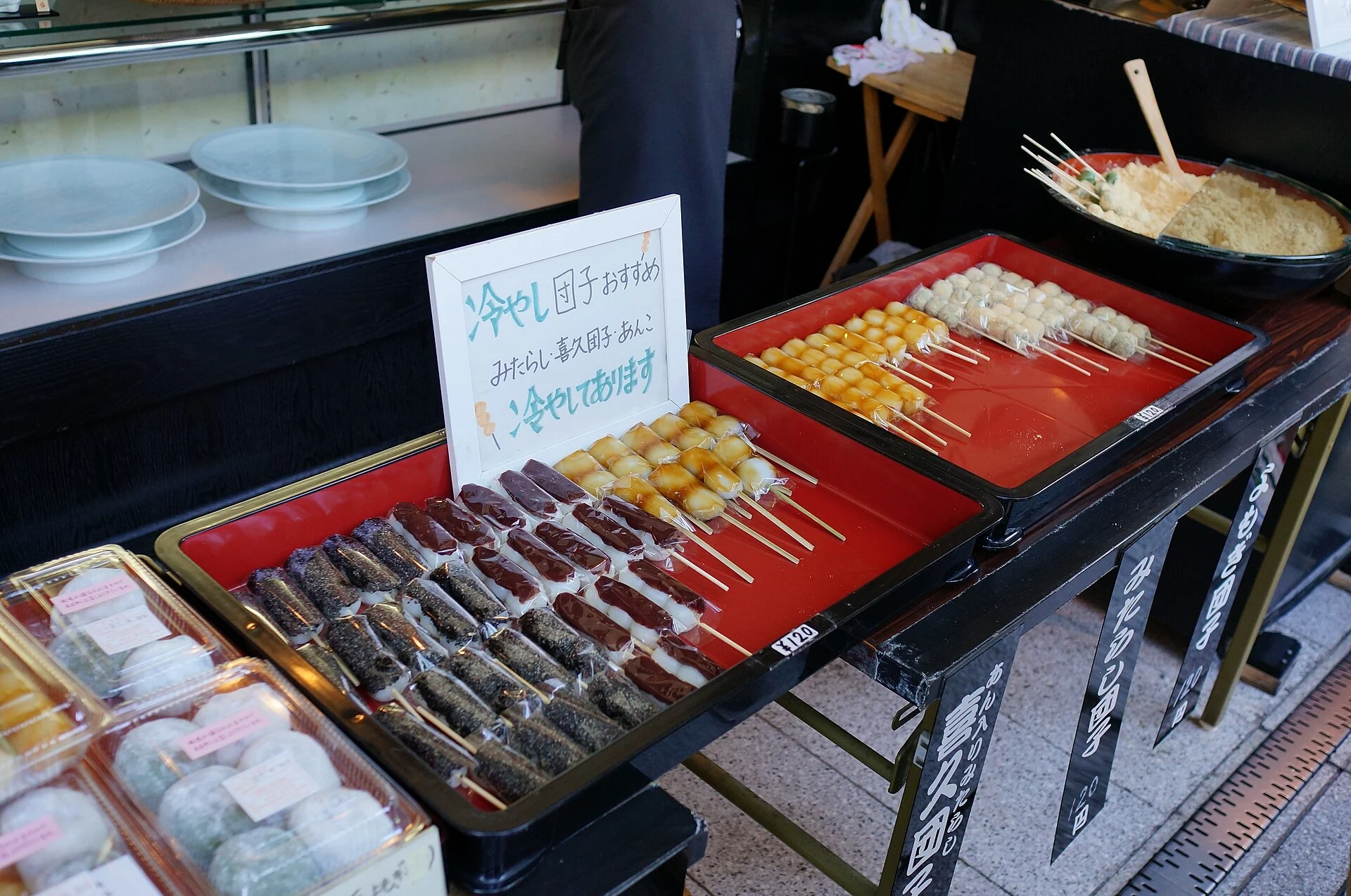
Asakusa Kibidango Azuma: an earlier named stop
The operator’s Kibidango Azuma branch listing gives the address as 1-18-1 Asakusa and hours of 09:00–19:00, with no regular closing day listed. This is the kibidango shop: the website footer also describes a different Azuma restaurant with different hours.
For an Asakusa morning, it is a useful shop to consider before the later-opening bakery below. Check the current serving size before ordering for several people, and ask where you may eat. Do not treat the unrelated restaurant’s opening time as the dumpling shop’s schedule.
Asakusa Menchi: a savoury stop with an eating space
Asakusa Menchi’s own website lists its shop at 2-3-3 Asakusa, with service from 10:00–19:00, ending earlier if sold out. It lists one menchi at ¥400 and describes a mixture of pork and Japanese beef. The operator directs customers to its adjacent eating space.
Use that space according to staff instructions rather than carrying a hot cutlet through a crowded approach. It is a substantial savoury choice, so consider sharing only if the shop permits and that works for your group. Choose another stop if you do not eat the ingredients; the name “beef cutlet” elsewhere is not enough to establish a pork-free recipe.
Kagetsudo main shop: do not schedule it for 09:00
The Kagetsudo operator’s main-shop listing gives 2-7-13 Asakusa, by Nishisando, with opening at 11:00 on weekdays and 10:00 on holidays. It closes when the jumbo melon bread sells out and lists no regular closing day. Its other shops have separate details.
This changes a practical route: an early temple visit can come first, but a weekday 09:00 bakery stop is not supported by the current main-shop page. Choose whether melon bread is important enough to shape the morning, or leave it as an optional later snack. A sold-out notice is a reason to take your nearby alternative, not to wait for a promised new batch.
Order the version shown on the current menu. Plain bread, a filled version and a drink are different purchases. If you are saving the bread for later, ask about the suitable packaging and follow the shop’s storage advice.
A workable Asakusa sequence
Walk the temple area first, then make a small Nakamise stop. Consider Menchi once it is open, and reach the Kagetsudo main shop after its published opening if that is your chosen final food. You do not need to buy at every shop on the way. Leave a pause for a drink and a place to sit instead of turning the whole morning into a moving queue.
If you start at the Tsukuba Express Asakusa station, your approach differs from the riverside Asakusa stations. Check the station and exit on your map before setting a meeting point. “Asakusa Station” alone is an imprecise instruction for a group arriving by different routes.
03 · A LIVELY MARKET DISTRICT
Ueno street food: Ameyoko snacks and a proper meal
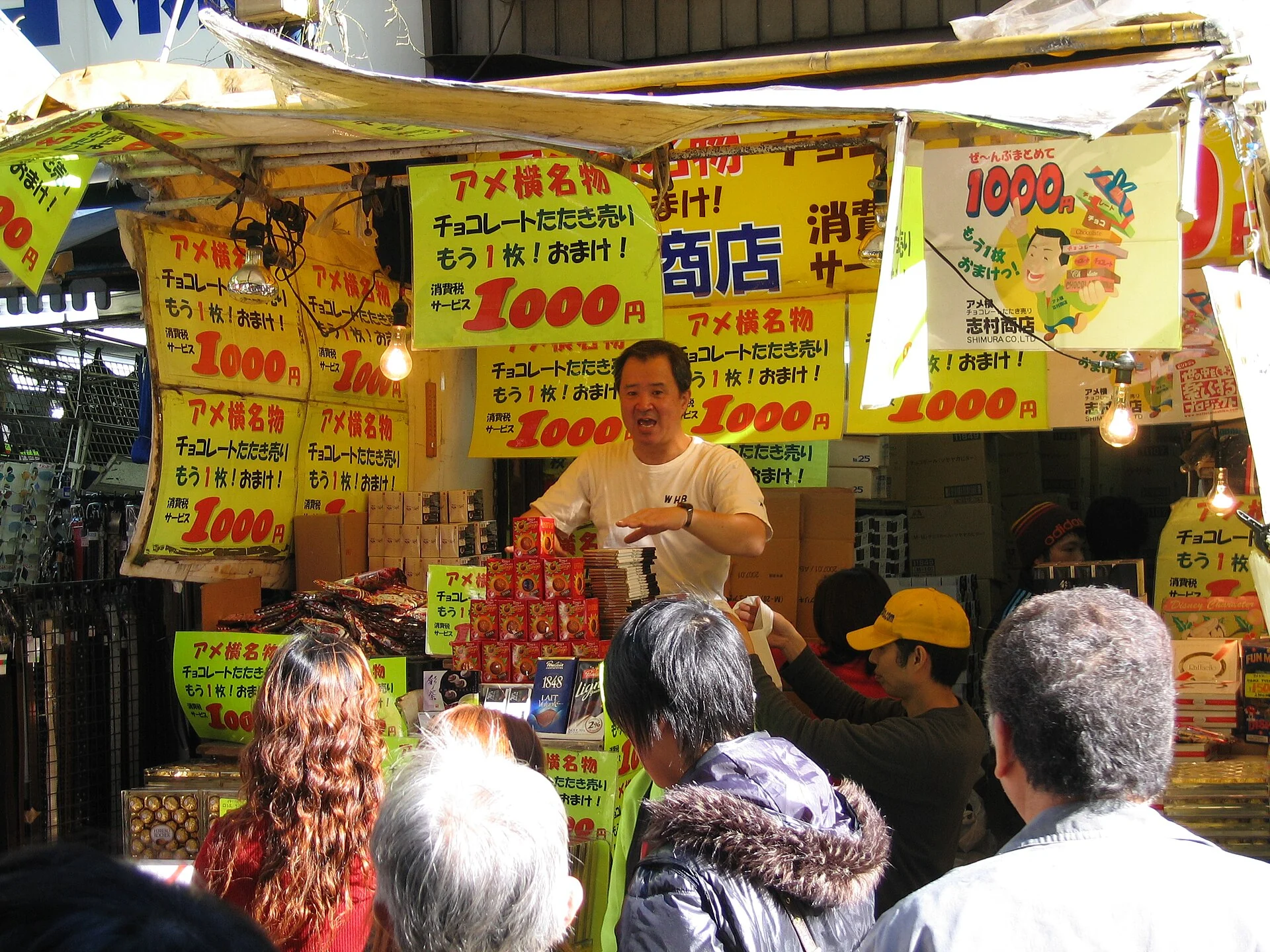
Ameyoko mixes food shopping, clothing, market counters and restaurants between the Ueno and Okachimachi areas. It is useful when your group wants a savoury snack without making the whole day about a temple visit. It is also a place to recognise the difference between an item sold to take away and a seat at a restaurant.
Start with a browse before buying. Look at where people queue, where orders are collected and where customers are permitted to eat. Some counters display raw groceries intended for cooking elsewhere. Do not assume that everything a fishmonger sells is ready to eat simply because another shop nearby serves seafood.
Niku no Ohyama: separate the counter from the restaurant
At 6-13-2 Ueno, Niku no Ohyama’s operator page lists takeaway Yamitsuki Korokke at ¥110, Yamitsuki Menchi at ¥180 and Tokusei Menchi at ¥270, all including tax. It describes takeaway, a standing-drink area and an indoor restaurant as different ways to use the business.
The shop-front section lists trading throughout the year except New Year’s Day; the indoor restaurant lists Monday closure, with possible public-holiday changes. Its restaurant lunch and dinner hours are not a clear separate timetable for every takeaway transaction. Confirm the counter’s trading on your day instead of assuming a restaurant closing time applies to it.
Takoyaki: choose the actual serving, not a photograph’s price
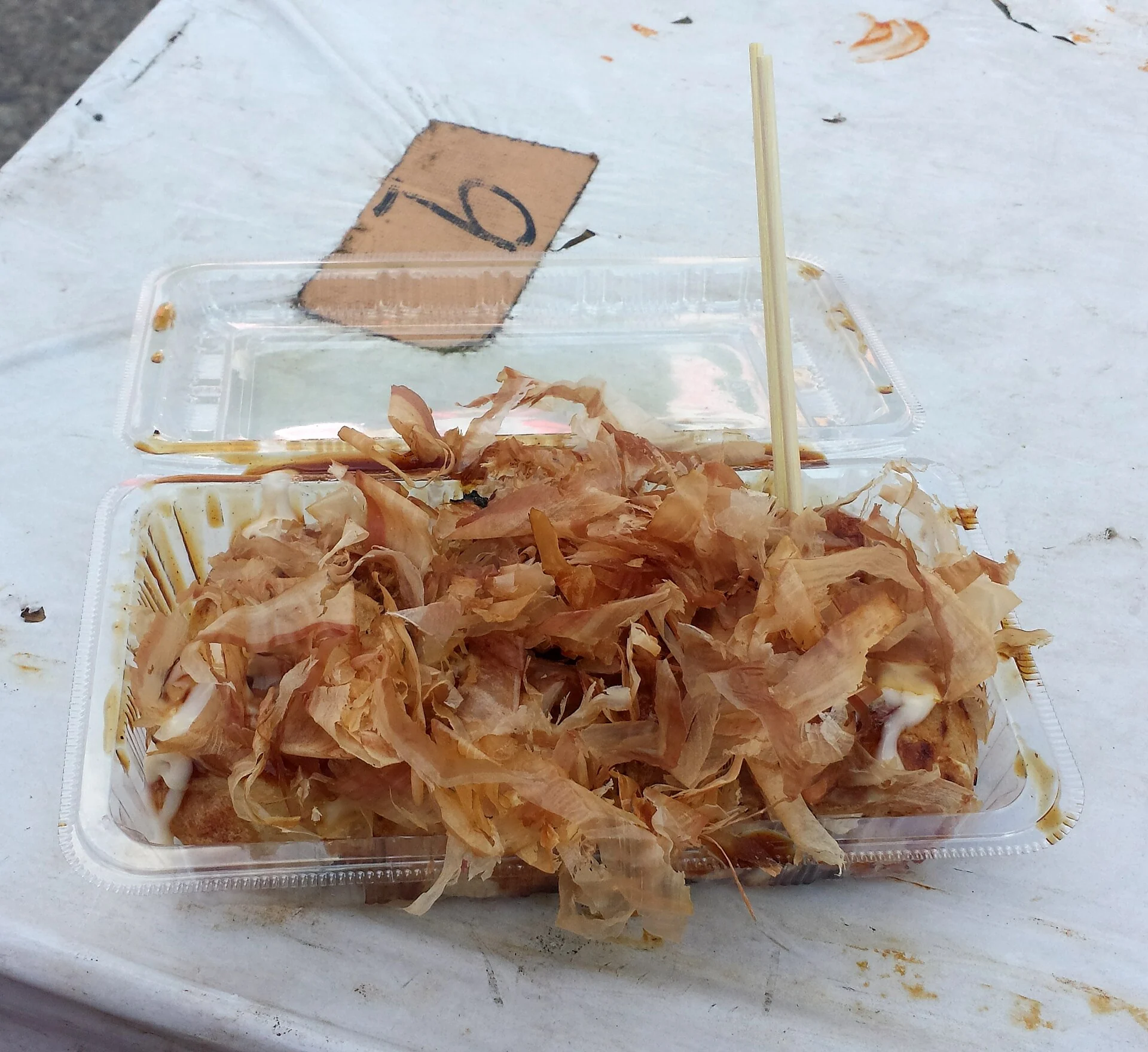
Takoyaki are hot batter balls with octopus, commonly served with sauce and toppings. Compare the portion size, toppings and current displayed total at the counter you choose. Bonito flakes, sauces or mayonnaise may affect whether an order meets someone’s requirements; omitting the visible octopus does not establish a suitable alternative.
A Ueno Park stall photograph does not mean that stall is present every day. Seasonal and event stalls need their own date check. For an ordinary day, build your plan around permanent shops you can verify and use a festival stop only if the relevant organiser confirms it.
Tea shopping at Kiminoen
For a different kind of pause, Cha no Kiminoen’s own website gives its Ueno shop address as 4-9-13 Ueno. Published hours are 10:00–18:30 on weekdays and 10:00–20:00 on weekends and public holidays, closed the third Tuesday. The site focuses on Japanese tea and its house blends.
If you are seeking a particular soft-serve flavour seen in another guide, confirm the current food counter, serving hours and price at the shop. Tea-shop opening hours do not by themselves establish that every dessert is available throughout the day. Packaged tea can also be a useful souvenir when your appetite for another snack has gone.
When you want to stay for dinner
Choose a specific restaurant or standing bar, check its menu and ask about any cover charge, compulsory starter, minimum order or seating limit before ordering. Do not occupy a table with food bought at another stall. A lantern-lit lane may be lively in the evening without every retail shop or snack counter staying open.
Keep the wider day manageable with our Ueno sightseeing guide. Museum tickets, a long park visit and a leisurely food walk all take time; decide which is the main activity rather than promising the group everything in one short afternoon.
04 · A DIFFERENT PACE
Yanaka Ginza, Tsukiji and Tokyo night-market expectations
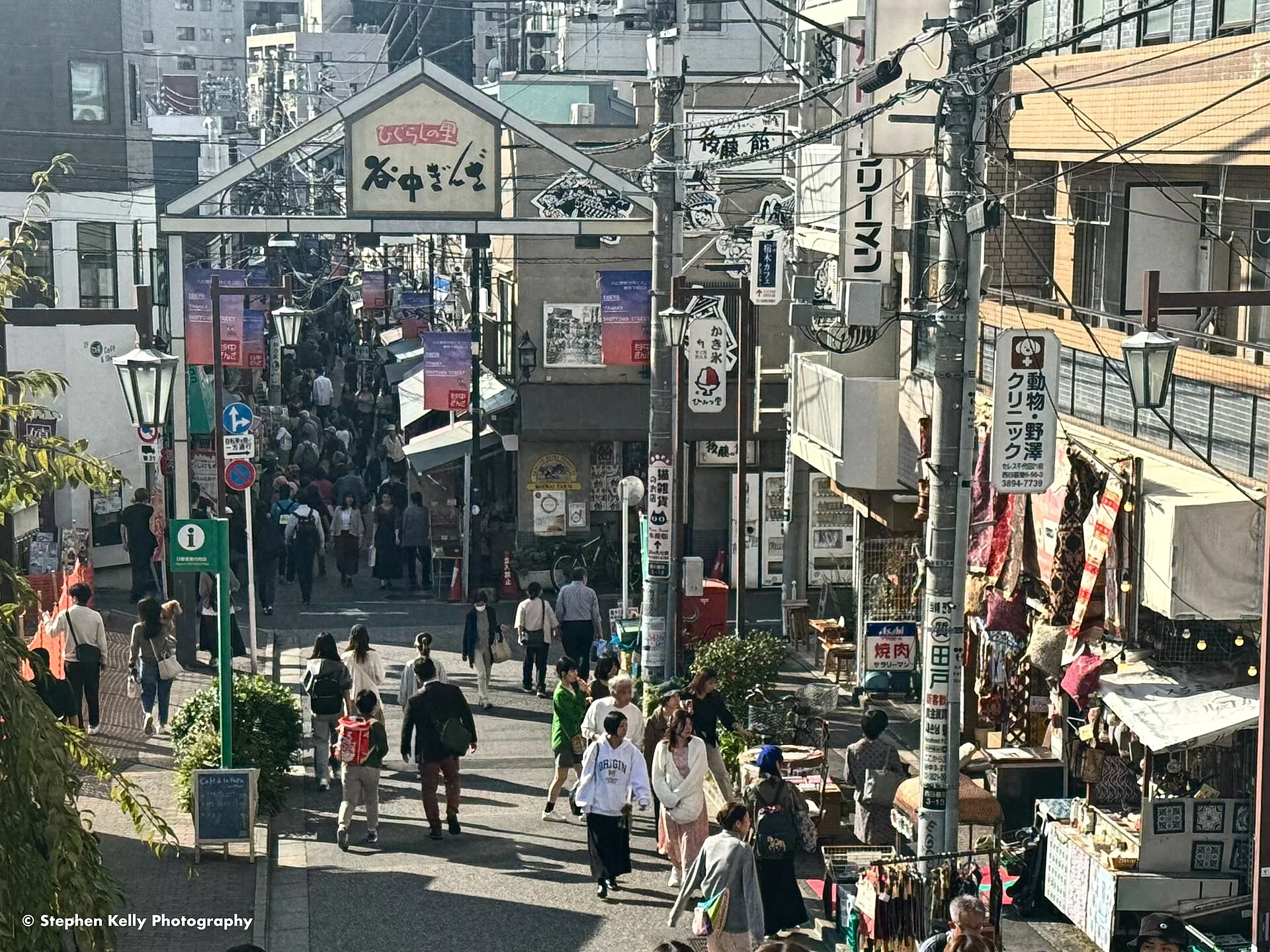
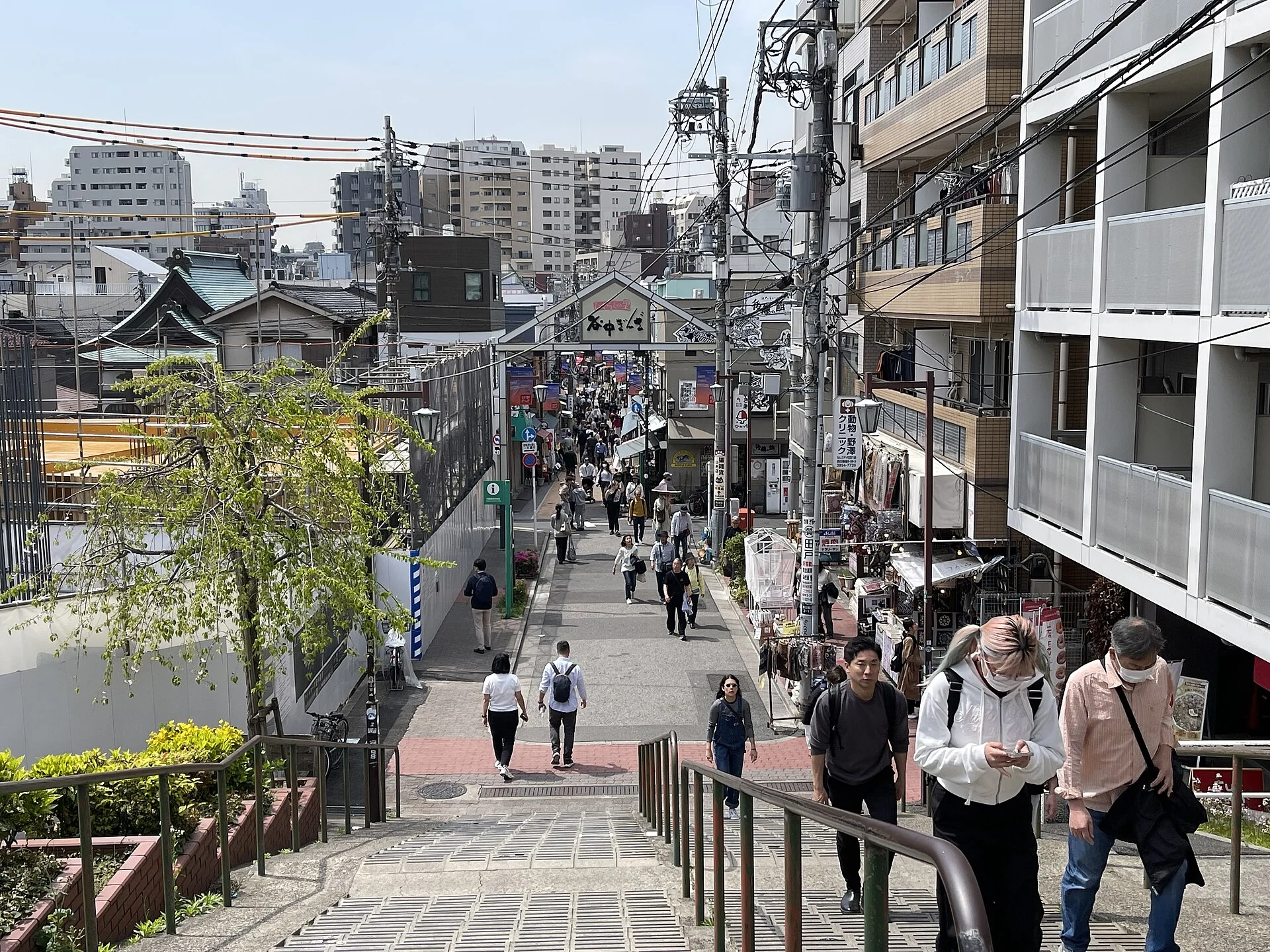
Yanaka Ginza: visit a working neighbourhood street
Yanaka Ginza’s shopping-street association presents the area as a neighbourhood shopping street, not a single attraction with one gate-opening time. Its visitor FAQ explicitly asks visitors to check hours and year-end trading with individual shops.
The association’s access page places the street about five minutes on foot from either Nippori or Sendagi station and says the shopping street has no parking. Those are published approximate walks, not step-free route guarantees. If stairs or hills matter, check the actual route rather than assuming the photographed Yuyake Dandan approach is suitable.
Two Yanaka food stops, with different planning needs
The association’s Niku no Suzuki shop profile lists 3-9-15 Yanaka, hours 10:30–18:00 and Monday/Tuesday closure. Its general directory is less definite about Tuesday closure, so confirm directly if this shop is central to your visit. The profile describes a beef menchi and animal fats used for frying; it is not a vegetarian option.
For a sweet alternative, the association’s Yanaka Shippoya profile describes cat-tail-shaped baked doughnuts at 3-11-12 Yanaka, with hours 10:00–18:00, or until 19:00 on weekends and public holidays, and irregular closing days. Check the flavour and ingredients of the item you choose rather than inferring them from its shape.
Visit with a short wish list and room to change it. Keep entrances clear, ask before taking close-up shop photographs and allow residents to finish their shopping. A local shopping street is not a closed set for a food video.
Tsukiji: give a seafood morning its own space
Choose Tsukiji Outer Market when you want food to be the main morning activity, especially seafood. Use our Tsukiji Outer Market food guide for its exact shop checks and a separate route. This article focuses on comparing neighbourhood snack outings, rather than repeating a full market directory.
Do not add a large Tsukiji breakfast simply because the afternoon is in Asakusa. Several small purchases can become a full meal before you notice. Leave one market for another day when both are priorities.
Is there a Tokyo night market?
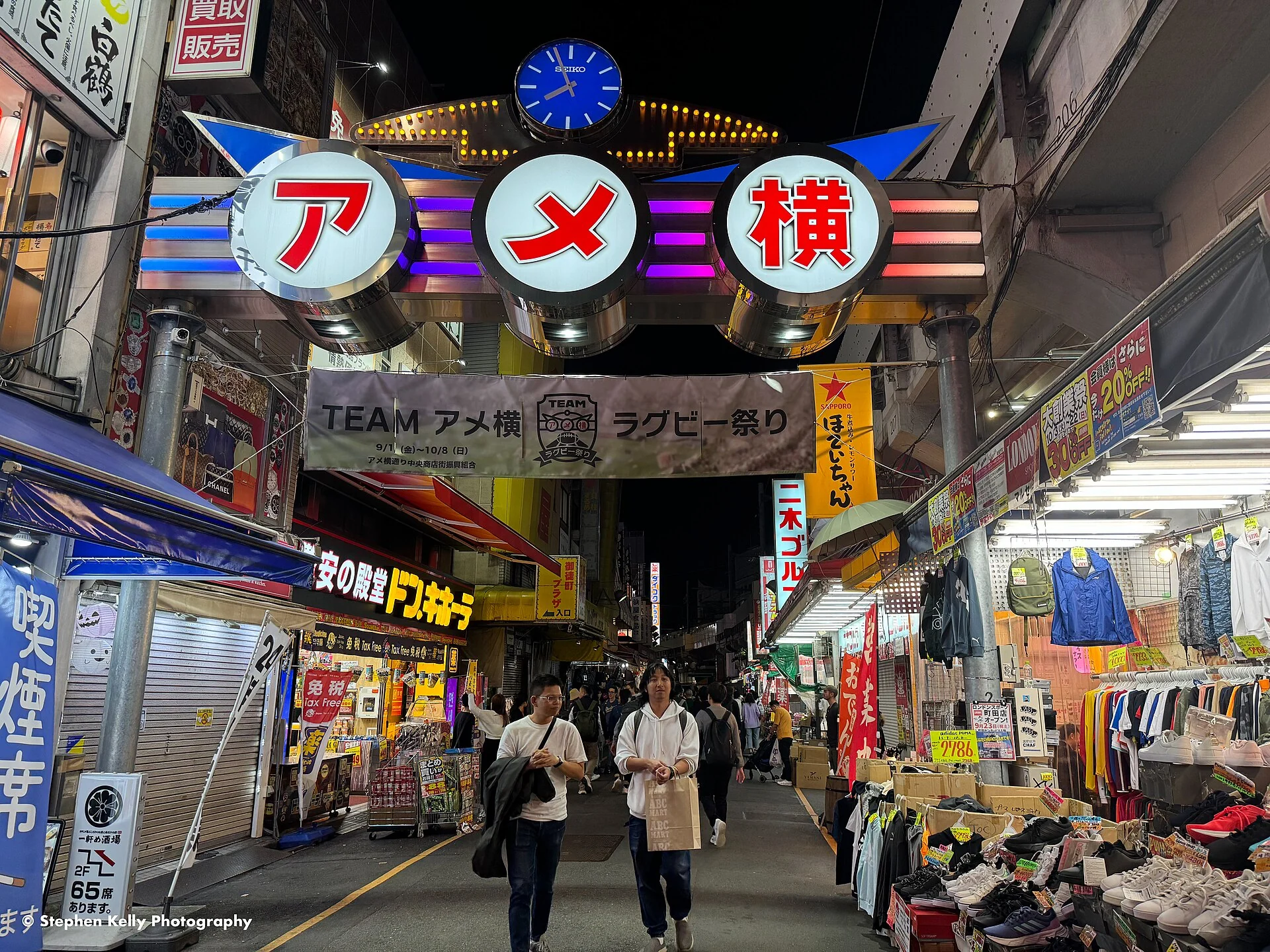
Think in terms of a particular venue or event, rather than one nightly market where all the daytime shops trade late. A shopping street, an izakaya alley and a temporary food-truck court each have different hours and ordering rules.
One specific example is TOMODACHI STREET at Asakusa Rokku Broadway. Its organiser currently lists 11:00–17:00 Monday–Thursday and 11:00–21:00 Friday–Sunday, while warning of weather-related cancellation and directing visitors to current food-truck news. Verify your date and vendors; the event’s timetable is not Nakamise’s timetable.
05 · MAKE THE ORDER COUNT
What to eat: Tokyo street food portions and budget
Learn a few food names so that the menu feels less like a guessing game. These are broad descriptions, not certified recipes. The vendor’s actual ingredients, preparation and serving size decide whether a particular item is right for you.
| Food | What to expect | Before buying |
|---|---|---|
| Ningyo-yaki | Small cakes cooked in shaped moulds, often with a sweet filling. | Ask about the filling and number of pieces. |
| Senbei | Rice crackers with different seasonings and textures. | Check sauce ingredients and whether you are buying one item or a bag. |
| Dango / kibidango | Small chewy dumplings; size, flour mix and toppings vary. | Confirm the portion, topping and a place to stop and eat. |
| Melon pan | Sweet bread with a patterned cookie-style crust; filled versions are a separate choice. | Read the current version and price rather than assuming a filling is included. |
| Menchi katsu | A breaded minced-meat cutlet. | Ask which meats are used; let a freshly fried item cool before eating. |
| Korokke | A croquette, often potato-based but with recipes that vary. | Check filling and frying oil; potato does not mean vegetarian. |
| Takoyaki | Hot batter balls normally containing octopus. | Check the order size, sauce and additional toppings. |
| Tea and a sweet | A drink or packaged tea can be enough for a final stop. | Confirm whether you are ordering a drink, dessert or product to take home. |
Build a snack budget, not a false “average meal price”
Choose a personal ceiling. For example, an editorial allowance of ¥2,000 per person might be divided into ¥1,200 for food, ¥400 for a drink and ¥400 kept unspent for an optional extra. Those numbers are a budgeting exercise, not current shop quotations or a promise of how many dishes they buy.
Use actual displayed prices to fill the envelope. Ohyama’s listed ¥110 takeaway croquette and Asakusa Menchi’s listed ¥400 item show why a single universal “street-food price” is unhelpful. They are different shops and products in different areas, not a reason to cross Tokyo for the cheaper bite. A seafood order or a large filled dessert may use much more of your allowance.
Keep transport, souvenir boxes and a seated meal outside the snack allowance. Confirm whether a displayed figure is per piece, per order or per person. Carry a payment method accepted by the individual shop and some small cash; do not assume all counters take international cards or that every business is cash-only.
How to avoid ordering too much
Buy the first order before committing to the next. A photograph may make a bun look smaller than it is, and a multi-piece order may already be enough for a group to taste. Ask before dividing food or using another person’s eating place; do not assume a seated business allows one order shared among several guests.
If someone needs a full meal at a predictable time, plan that meal first and keep the snack walk short. With children or a mixed group, agree which two stops matter most and leave the rest optional. This is often more useful than a promise to taste ten foods before lunch.
06 · STOP, EAT, MOVE ON
Street food etiquette in Tokyo, without the guesswork
JNTO’s mindful-travel guidance explains that people generally do not eat and drink on the go and that most shops do not permit outside food and drink. The useful habit for a snack walk is straightforward: buy an item, ask where to eat, finish it there or another permitted place, then continue.
Where should I eat the snack?
Use the selling shop’s designated area when one is available, following its instructions. If you are unsure, ask: “May I eat this here?” A neighbouring shop’s counter, a temple step, a doorway or a restaurant’s empty chair is not automatically an eating place. If there is nowhere suitable, choose something properly packaged to take away.
Keep food, skewers and drinks away from passers-by. Finish before moving into a dense crowd. This is practical consideration for shared space, not a claim that every street has the same legal rule. Follow signs and staff instructions at the actual place you visit.
Queues, photographs and rubbish
Join the marked line without blocking entrances. GO TOKYO’s visitor guidance asks groups to queue together rather than have late arrivals join friends ahead, and reminds diners to follow each restaurant’s rules about outside food. Keep your order ready, then move away from the payment and collection point when asked.
Ask before filming preparation or photographing staff close-up. Take your picture without holding up the next customer or placing food on another business’s property. Let a hot item cool, but do not block the collection space while arranging a long video.
Bring a small bag for your wrappers and used skewers. Ask whether the selling shop accepts its own packaging back; do not assume it does. Use a bin only for the waste it accepts and keep rubbish with you when no appropriate disposal point is available.
Allergies, vegetarian food and other dietary needs
A sweet-looking snack is not an ingredient label. Flour, milk, egg, soy, sauces, stocks, fillings and frying fats can affect suitability, and a potato croquette may contain meat. Ask about the exact product and shared equipment when that matters; choosing a plain-looking item or removing a topping does not establish safety.
Prepare a clear written explanation of what you cannot eat and distinguish an allergy from a preference. If the vendor cannot confirm the ingredients or preparation you require, choose another food. This guide does not certify any named shop as allergy-safe, vegetarian, vegan or halal. A transport booking is not dietary approval from the vendor.
Rain, stairs and tired feet
Shin-Nakamise’s official shopping-street website identifies a covered arcade, which can help reshape an Asakusa outing in rain. Covered walking does not guarantee that food counters, eating spaces or every connecting street are sheltered. A seated meal and one nearby snack may be the better plan.
With a stroller, wheelchair or shorter comfortable walking range, choose the route and a place to rest before setting a long list of shops. Check station elevators, steps and the individual premises you intend to use. A private car can shorten some transfers, but cannot remove the walking and access questions inside a pedestrian shopping area.
07 · START AT YOUR TOKYO HOTEL
Three Tokyo street food itineraries you can adapt
These are suggested activity blocks, not measured transfers, guaranteed waits or booked food tours. Start from your actual Tokyo hotel, choose transport and check the shop dates before fixing the sequence. The aim is time to taste and look around, not the largest possible list of purchases.
Model A: a relaxed Asakusa half day
| Suggested block | Plan | Adjust on the day |
|---|---|---|
| 09:00–10:00 | Leave your Tokyo hotel and travel to the Asakusa station or drop-off that suits your route. | This includes a flexible travel allowance, not a quoted journey time. |
| 10:00–11:00 | Visit the temple area and browse Nakamise; choose a small sweet or rice-cracker stop. | Keep worship and sightseeing space clear; shops have separate hours. |
| 11:00–12:00 | Consider Menchi and/or the Kagetsudo main shop after its weekday opening. | Two substantial snacks may be enough; use another shop if sold out. |
| 12:00–13:00 | Pause for a drink or a separately chosen seated meal. | Check outside-food rules; do not bring purchases into an unrelated restaurant. |
| 13:00 onward | Continue toward the riverside or return to your hotel. | Shorten the walk for weather and energy, rather than adding another distant market. |
Model B: Ueno browsing, one savoury stop and time to sit
Leave your Tokyo hotel in the late morning and travel to Ueno or Okachimachi. Browse Ameyoko before choosing a food stop. Consider Ohyama’s takeaway counter if it is trading and the ingredients suit your group, then choose a drink or another small order nearby. Confirm an eating place before purchasing.
Use the afternoon for one part of Ueno Park or a separately planned indoor activity. If you want a long museum visit, check that institution’s current ticket and closure rules first and reduce the food route. Return to the hotel before dinner, or choose a specific Ueno restaurant with its own menu and conditions. Do not assume every snack counter trades as late as the evening bars.
Model C: Yanaka’s shopping street, with a flexible finish
Start at your Tokyo hotel around late morning, allowing for the route to Nippori or Sendagi. Arrive after the shops important to you are due to open, then choose one prepared-food stop and one sweet. A Monday or Tuesday visit needs extra checking if Niku no Suzuki is the main reason for coming; Shippoya also has irregular closure days.
Spend the remaining time looking at the street’s shops rather than immediately transferring elsewhere. Return to your hotel or add a separately planned Ueno visit if everyone still has energy. Avoid promising a quick step-free connection based on a map pin: check your actual approach and comfortable walking distance.
When a private driver adds value
A food walk within one area often works well with public transport and walking. Consider a car when the wider day combines distant districts, luggage or a group that needs shorter transfers. Agree a permitted drop-off and meeting point; do not assume a vehicle can wait in a shopping lane or follow you between every counter.
For an out-of-city food and sightseeing day, keep a Kawagoe day trip or Yokohama outing as its own plan. Those destinations need a different route and time allowance from an Asakusa afternoon.
08 · BEFORE YOU GO
Tokyo street food questions, answered
Where is the best street food in Tokyo for a first visit?
Choose Asakusa if traditional sweets and a temple-area day appeal, or Ameyoko if you prefer a mixed shopping district and savoury stops. Yanaka Ginza suits a smaller neighbourhood outing. The most useful choice is the one that fits your route, appetite and required opening days, rather than an unsupported citywide taste ranking.
Can I eat while walking in Asakusa?
Make stopping to eat your default. Follow signs and the shop’s directions, and ask where you may eat before buying if it is unclear. Do not carry hot, messy food through the crowd or turn a temple entrance into a picnic spot. This guidance is about considerate use of the actual space, not a blanket claim about one law covering all Tokyo streets.
Is early morning always best for Asakusa food?
It can work for sightseeing, but not every food shop is open. Azuma’s kibidango branch lists 09:00; Kagetsudo’s main shop currently lists 11:00 on weekdays and 10:00 on holidays. Plan your named shops individually and do not rely on a universal opening time or a promise of no queues.
Are there food stalls in Ueno Park every day?
Do not base your itinerary on that assumption. Festival and temporary stalls depend on the event and date. A historical stall photograph is not evidence of daily trading. For an ordinary visit, verify permanent businesses around Ueno and Ameyoko.
How much money do I need for a snack walk?
Set a personal food-and-drink ceiling, check current portions and prices, and budget transport and a seated meal separately. The ¥2,000 example above is a spending envelope, not a required amount or a promise of a fixed number of dishes. Premium seafood and elaborate desserts can change the total quickly.
Do I need a car or guide for Tokyo street food?
Not for every outing. A compact neighbourhood walk may be straightforward independently. A food guide and a private driver serve different purposes, and neither automatically includes the other. Discuss a car when the wider route or your group’s transfer needs make it helpful; confirm a separate guide if you want food interpretation and on-foot support.
Official sources and editorial notes
Checked 28 October 2026. Shop schedules, prices, products and event operations can change. Branch-specific operator information takes priority over old general guides; conflicting Yanaka Tuesday information is identified above. Comparisons, budget envelopes and model routes are TokyoVia editorial planning, not measured waits, paid tour packages or accounts of personal visits.
- Taito tourism: Nakamise location, scale and varied shop hours
- Azuma: the specific kibidango branch and its hours
- Kagetsudo: main-shop address, weekday/holiday opening and sell-out closure
- Asakusa Menchi: ingredients, current item price and eating-space instructions
- Niku no Ohyama: takeaway prices and the distinction between counter and restaurant
- Cha no Kiminoen: Ueno address, hours and regular closing day
- Yanaka Ginza: shopping-street association
- Yanaka Ginza: shop directory, with individual days to reconfirm
- Niku no Suzuki: shop profile and ingredients; Tuesday information differs from directory
- Yanaka Shippoya: products, address and published trading times
- Yanaka Ginza: station access and no shopping-street parking
- Yanaka Ginza: no single street-wide opening schedule
- Asakusa Rokku: TOMODACHI STREET times, truck news and weather caveat
- Shin-Nakamise: the separate covered shopping arcade
- JNTO: considerate eating and outside-food guidance
- GO TOKYO: queues and restaurant rules
The images show real Tokyo food and streets at their source dates. Older images illustrate the setting or food preparation and do not establish today’s vendor, menu or trading hours. Photo provenance and rights records are retained separately.