A good market morning needs a little appetite, a few clear choices and room to change your mind.
THE QUICK ANSWER
Tsukiji Outer Market is still in Tsukiji. Visit for breakfast, small food purchases and kitchen shops; the wholesale tuna auction moved to Toyosu. For a first visit, aim for around 09:00 on a suitable trading day, choose one main meal and one or two smaller tastes, then continue toward Tsukiji Hongwanji and Ginza. Check individual shops as well as the market calendar: this is a neighbourhood of businesses, not one attraction with a single opening time.
Official information checked 24 October 2026. This is an independently researched planning guide, not a report of a TokyoVia tasting visit. Shop stock, menus, hours and queues can change. Route times and spending envelopes below are editorial choices, not restaurant quotations or reservations.
01 · GET THE PLACE RIGHT
Tsukiji Outer Market vs. Toyosu Market
A search for “Tsukiji fish market” can lead to two different mornings. The outer market is the network of food shops, restaurants and narrow lanes in central Tokyo. Toyosu is the separate wholesale-market destination associated with the auction. The outer neighbourhood stayed when the wholesale operation relocated in 2018, as the market’s own history explains.
Choose Tsukiji if your main aim is to order breakfast, compare a few small foods and browse the specialist shops. If your aim is an auction viewing, research Toyosu’s current visitor arrangements separately. An old photograph of the former wholesale floor is not a map of today’s Tsukiji visit.
| Your priority | Start with | Planning consequence |
|---|---|---|
| Breakfast and a compact food walk | Tsukiji Outer Market | Choose a meal, a short shopping loop and a comfortable finish time. |
| The wholesale tuna-auction experience | Toyosu Market | Check the current official viewing route, calendar and any application requirements. |
| Tamagoyaki, ingredients or kitchen tools | Tsukiji Outer Market | Leave time to ask questions rather than using every minute in restaurant queues. |
| Both markets in one day | Two separate visits | Allow a real transfer and verify both schedules; do not treat them as adjoining buildings. |
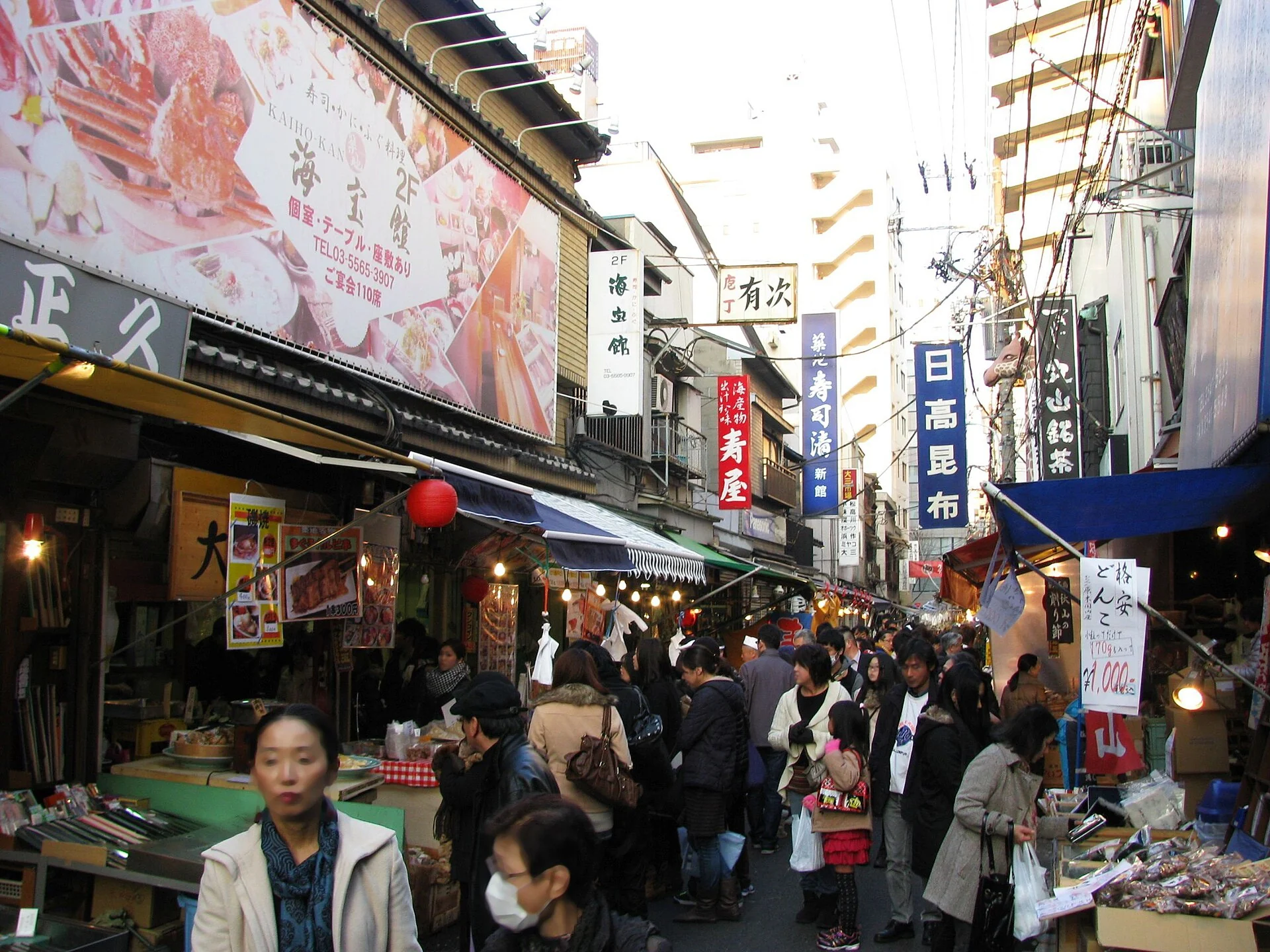
Is Tsukiji worth visiting if you do not eat raw fish?
Yes, if you enjoy food shopping or want a cooked breakfast. Build your visit around a dish that suits you: an egg preparation, a cooked rice meal, grilled food or a sweet. Someone who dislikes crowds and only wants the lowest-cost lunch may prefer a restaurant elsewhere. Tsukiji is a chance to explore a food district; it does not need to become a challenge to eat every famous item.
You can walk the public streets without buying a food tour. A guided tasting tour is a separate purchase, while a car journey is transport. Check precisely what either includes before assuming a driver will escort you through shops or explain ingredients. Our driver or tour guide comparison helps with that distinction.
02 · PICK A WORKABLE MORNING
Tsukiji fish market opening hours: when should you go?
For general browsing, use the official 09:00–14:00 public-buyer window as your starting point. Earlier hours give priority to professional buyers, and later opening is flexible. A restaurant opening before 09:00 does not mean every trading area is ready for sightseeing. Choose an earlier breakfast only after checking that particular business.
| Place or activity | Checked guidance | What to do |
|---|---|---|
| Outer-market shopping | Public-buyer window 09:00–14:00; individual schedules vary. | Aim near the start of this window rather than arriving with a long list just before closing. |
| Tsukiji Uogashi ground-floor market | Building 05:00–15:00; published all-shop hours 07:00–14:00. General visitors are advised to come after 09:00. | These are different hours for a specific facility, not a promise that every shop trades all day. |
| Plat Tsukiji information counter | Weekdays/Saturday 08:00–14:00; Sundays, national holidays and market closure days 10:00–14:00. | On a closure day, do not plan on getting counter assistance at 09:00. |
| A named breakfast shop | Its own hours and last-order or sell-out rules. | Check the exact branch and keep a second choice. |
Facility sources: Tsukiji Uogashi’s operator guidance and Plat Tsukiji’s current facility page.
Sunday, Wednesday and holiday visits
Many businesses close on Sundays and some Wednesdays, according to the official shopping guidance. This does not mean every restaurant is closed on every such date. Conversely, finding one open egg shop does not mean the full market is operating. Check the calendar for your date, then the two or three businesses that matter most to you.
The official calendar follows the central wholesale-market calendar and explicitly directs visitors to individual shop schedules. For a shopping-focused first visit, choose a normal trading day when possible. With only a Sunday available, plan a smaller food outing around confirmed openings and have another neighbourhood activity ready.
How much time should you allow?
We suggest two to three hours for an unhurried first morning, including a meal and browsing. Ninety minutes can work for a deliberately short visit; three hours can disappear quickly if your group joins several queues. These are planning allowances, not measured queue times. Set a latest departure time before choosing a line, especially if you have a museum or train reservation later.
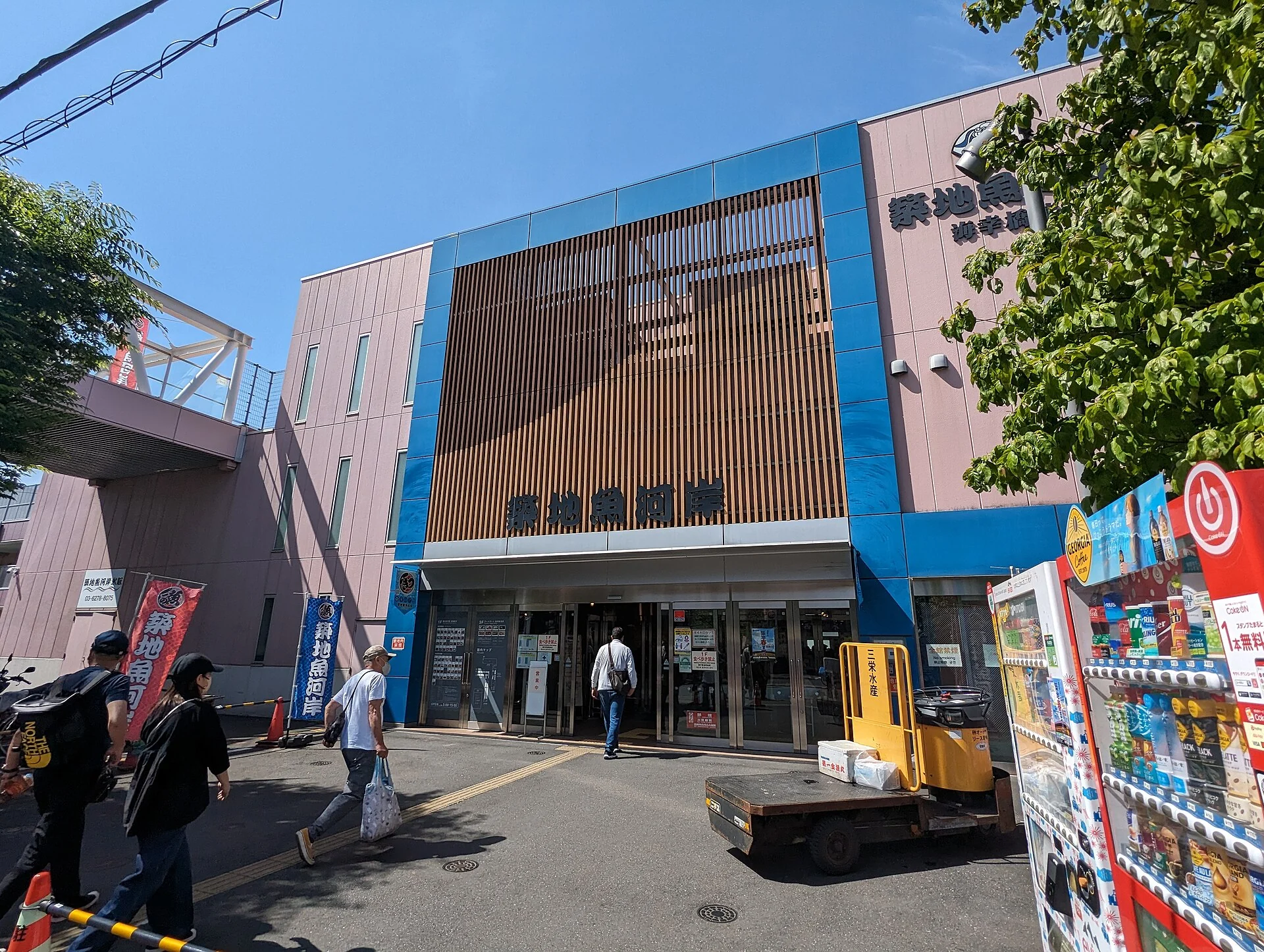
03 · CHOOSE WITH YOUR APPETITE
What to eat at Tsukiji Outer Market
Choose by the meal you want, then look at the shop. A large rice bowl and several rich seafood snacks can leave little appetite for anything else. One anchor meal, one contrasting small taste and a drink is a useful starting structure. Add more only if you still want it.
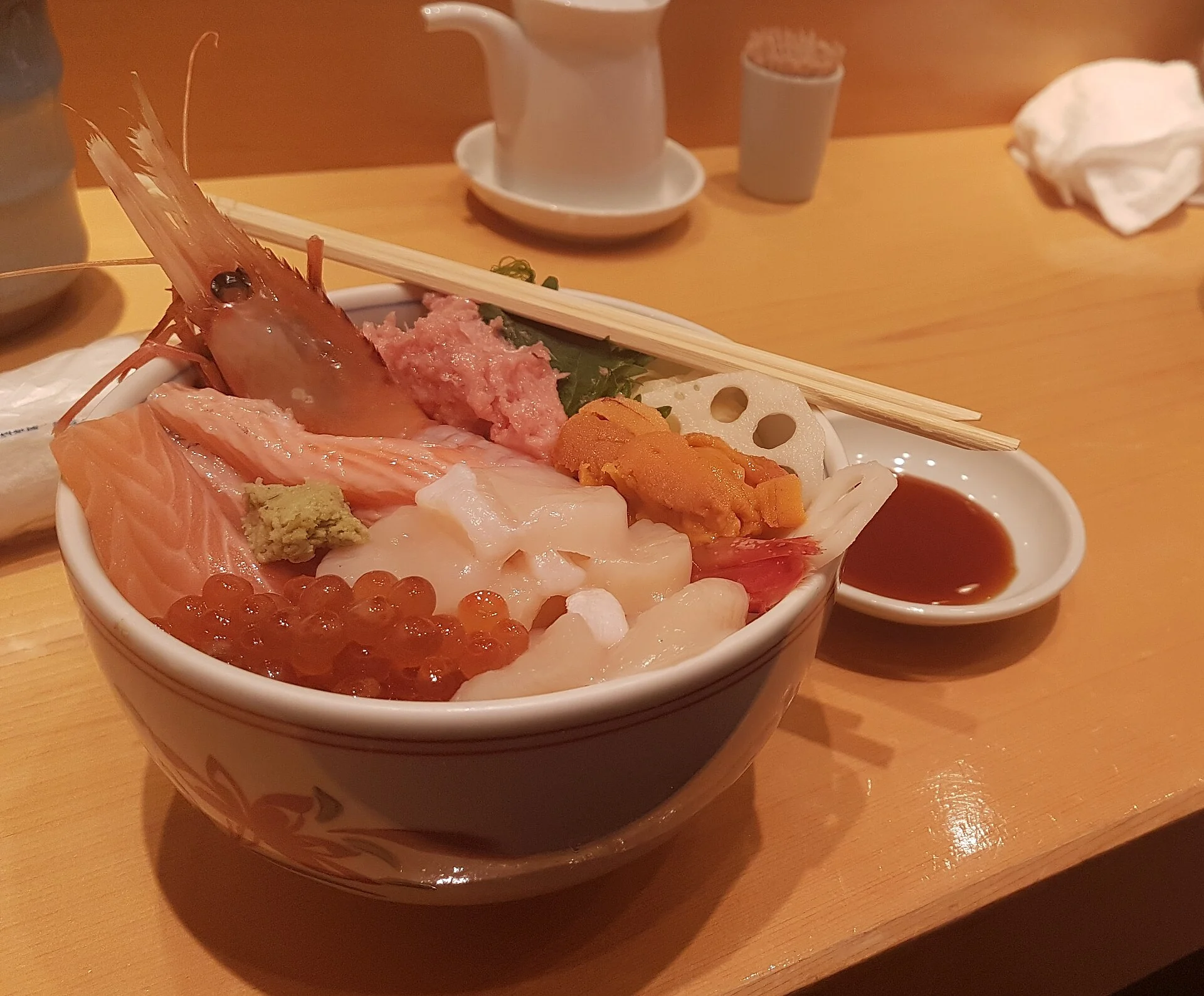
Seafood rice bowls: a complete breakfast
A seafood donburi puts several toppings over rice, making it easier to order one complete meal than to assemble a breakfast from separate stalls. Read the pictured set carefully: a photograph filled with sea urchin and premium tuna may correspond to a different price from the menu headline.
Compare the actual toppings and portion, not just the size of the display photograph. Ask whether the pictured bowl is the one you are ordering and whether soup or extras are included. If raw seafood is not your preference, look for a clearly cooked alternative rather than asking a busy kitchen to redesign a set.
Tuna sushi or sashimi: compare cuts before ordering
For a focused tuna meal, compare the lean and fattier cuts instead of assuming the most expensive selection is automatically your best choice. Sushi includes rice; sashimi is the fish without that rice portion. This simple difference matters if you are choosing between a main breakfast and a smaller tasting.
Maguroya Kurogin’s Tsukiji main-shop menu shows sushi, sashimi and bowls with combinations including akami, chutoro and otoro. Select the format and check the current price on site. If the queue has closed or the day’s stock is gone, move to your alternative instead of sacrificing the rest of the morning.
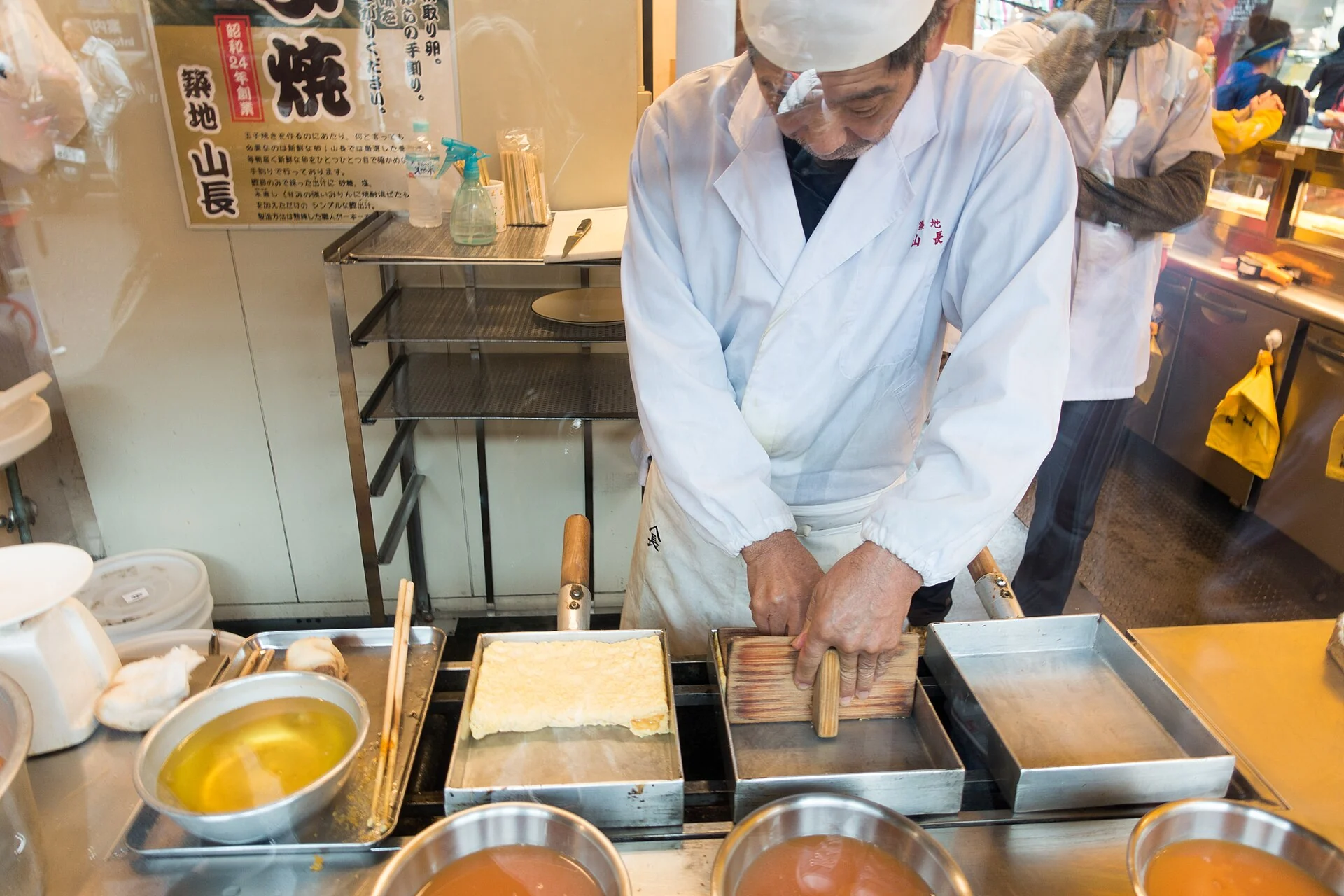
Tamagoyaki: a small taste or an egg-based meal
Rolled egg gives a different texture and flavour from a seafood bowl. It can be a good first small purchase for a group still deciding on breakfast. Check the portion: a tasting piece, a boxed omelette and an egg sandwich are different products. Ask about the recipe if ingredients matter to your party.
Shouro is an egg specialist with its main shop at 4-13-13 Tsukiji. Tsukiji Yamacho is another option in the official directory. Choose the product you want and a manageable queue; there is no need to visit every egg shop to have a worthwhile morning.
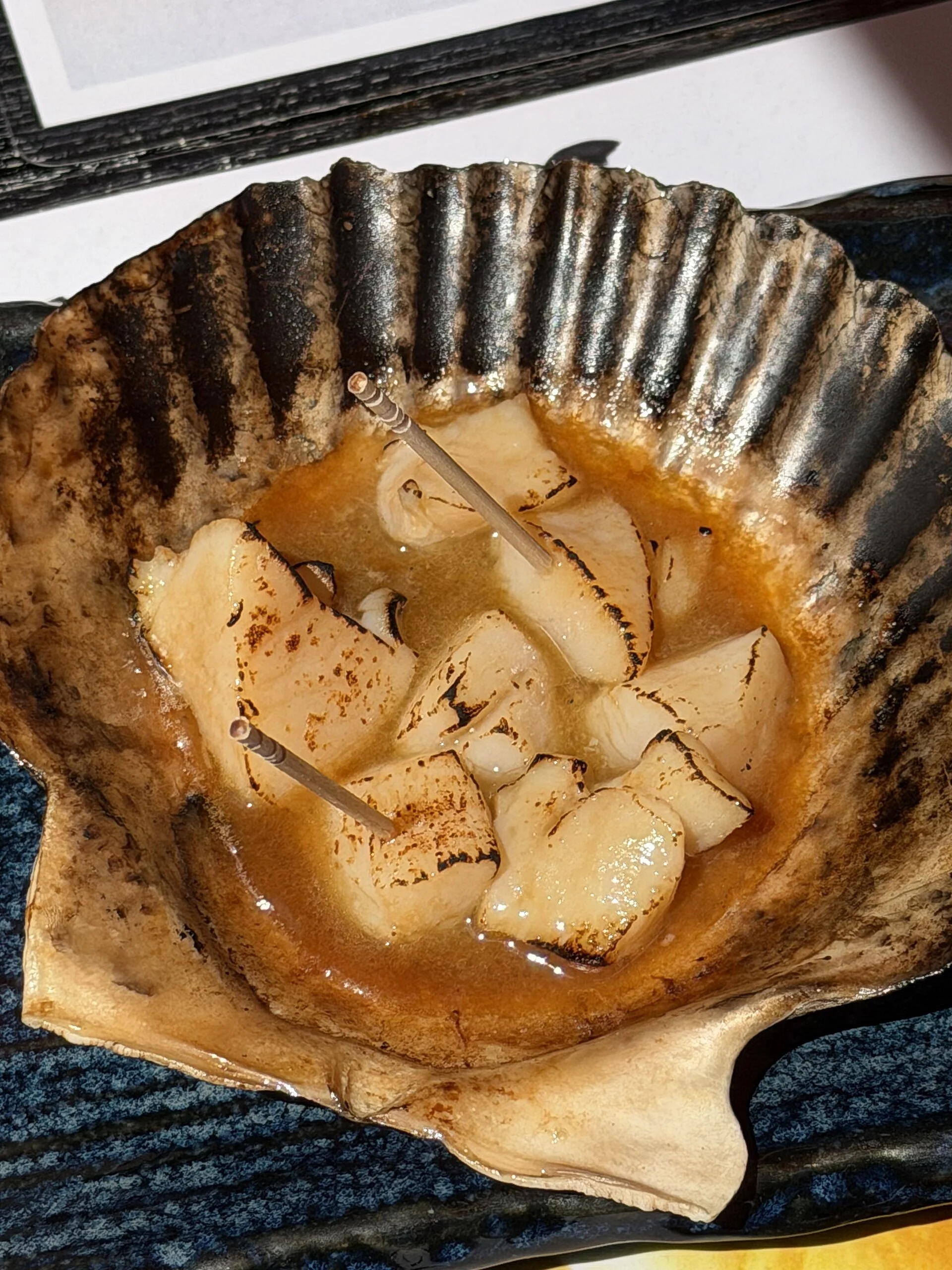
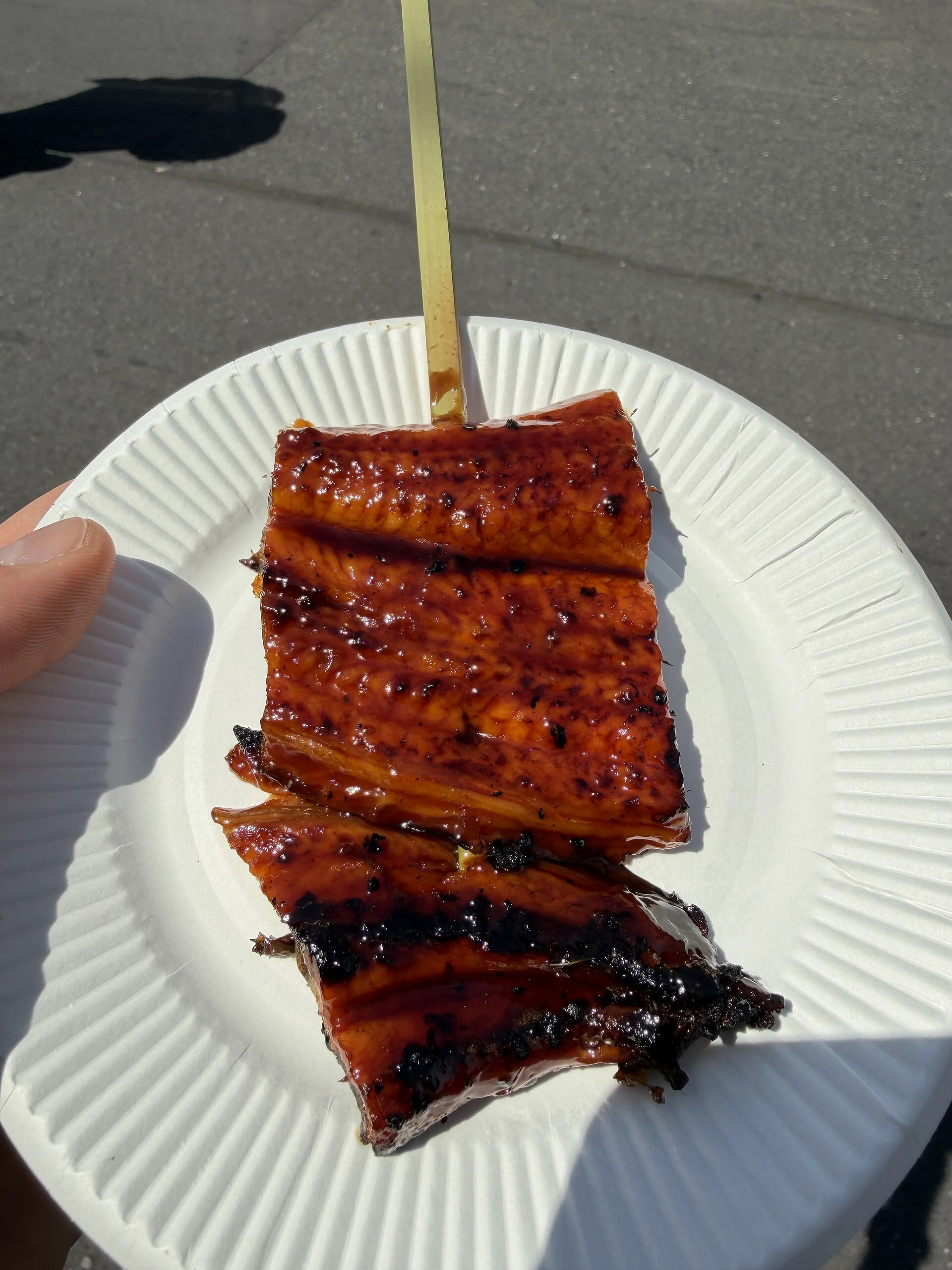
Grilled scallops and eel: look beyond the photograph
A shellfish dish or eel skewer can provide one cooked contrast to a rice meal. Before paying, check the portion, any toppings and the total charge. A plain scallop, a large mixed seafood shell and a premium topping are not interchangeable orders. Ask where you should eat it, then finish there before continuing.
“Grilled” also describes a method, not every ingredient in the sauce or every topping. If you need a fully cooked meal or must avoid particular ingredients, make that clear before the order is prepared. Do not infer the whole recipe from a display image.
Cooked rice dishes: a good alternative to a seafood crawl
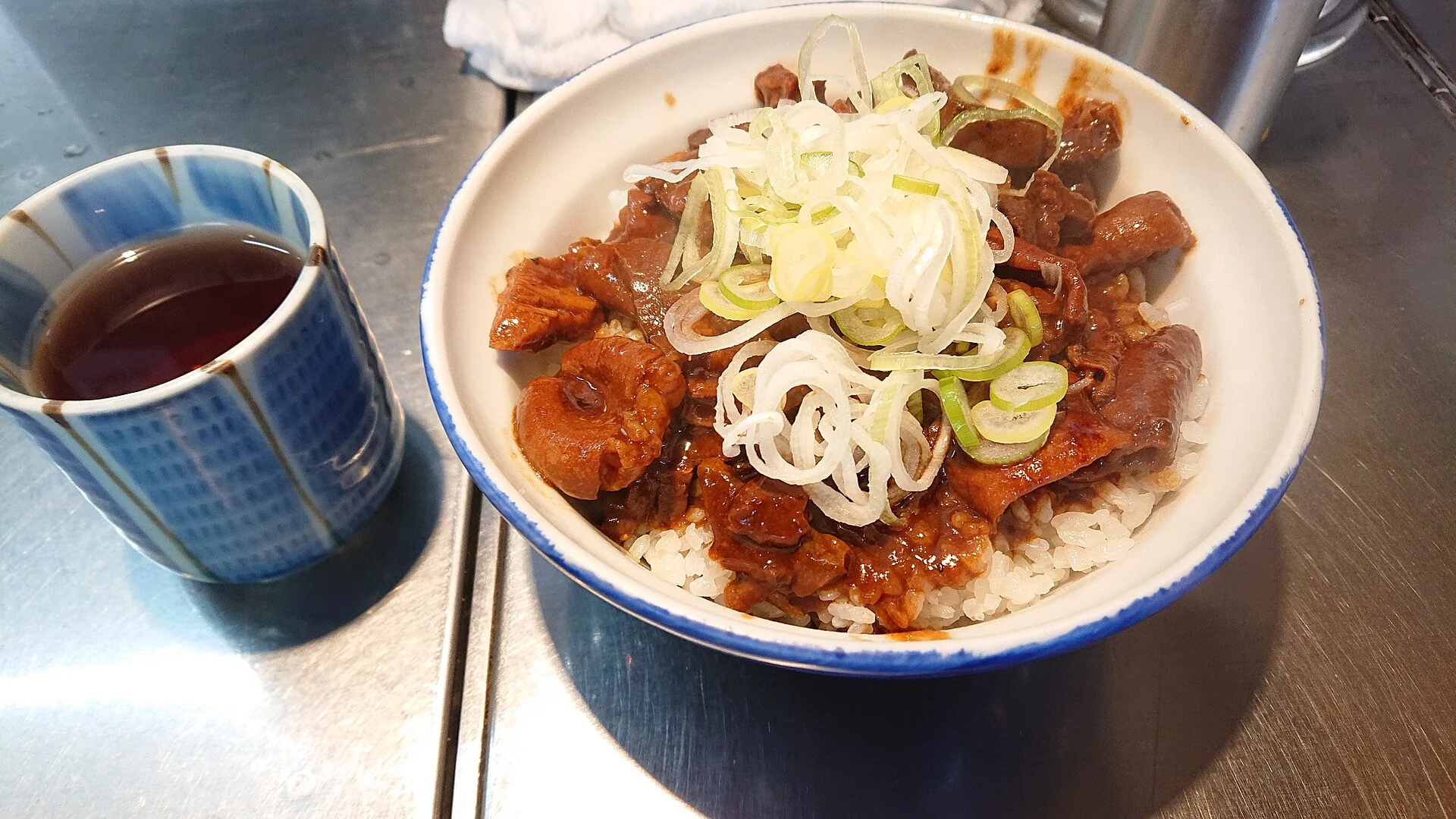
Choose a cooked bowl if your group wants a more straightforward seated meal or someone simply prefers meat to raw fish. Kitsuneya is a possible stop for visitors interested in its offal-based rice dish; it is a specific flavour preference, not a compulsory market experience. A person who dislikes offal should choose something else from the outset.
The Uogashi food-court directory also lists Torimeshi Torito Uogashishokudoten. Match the exact branch and its menu when deciding. A food-court setting can make choosing different dishes easier, but seats and openings still depend on the day; keep your group together without holding tables you do not need.
Fruit and sweets: leave room for one final choice
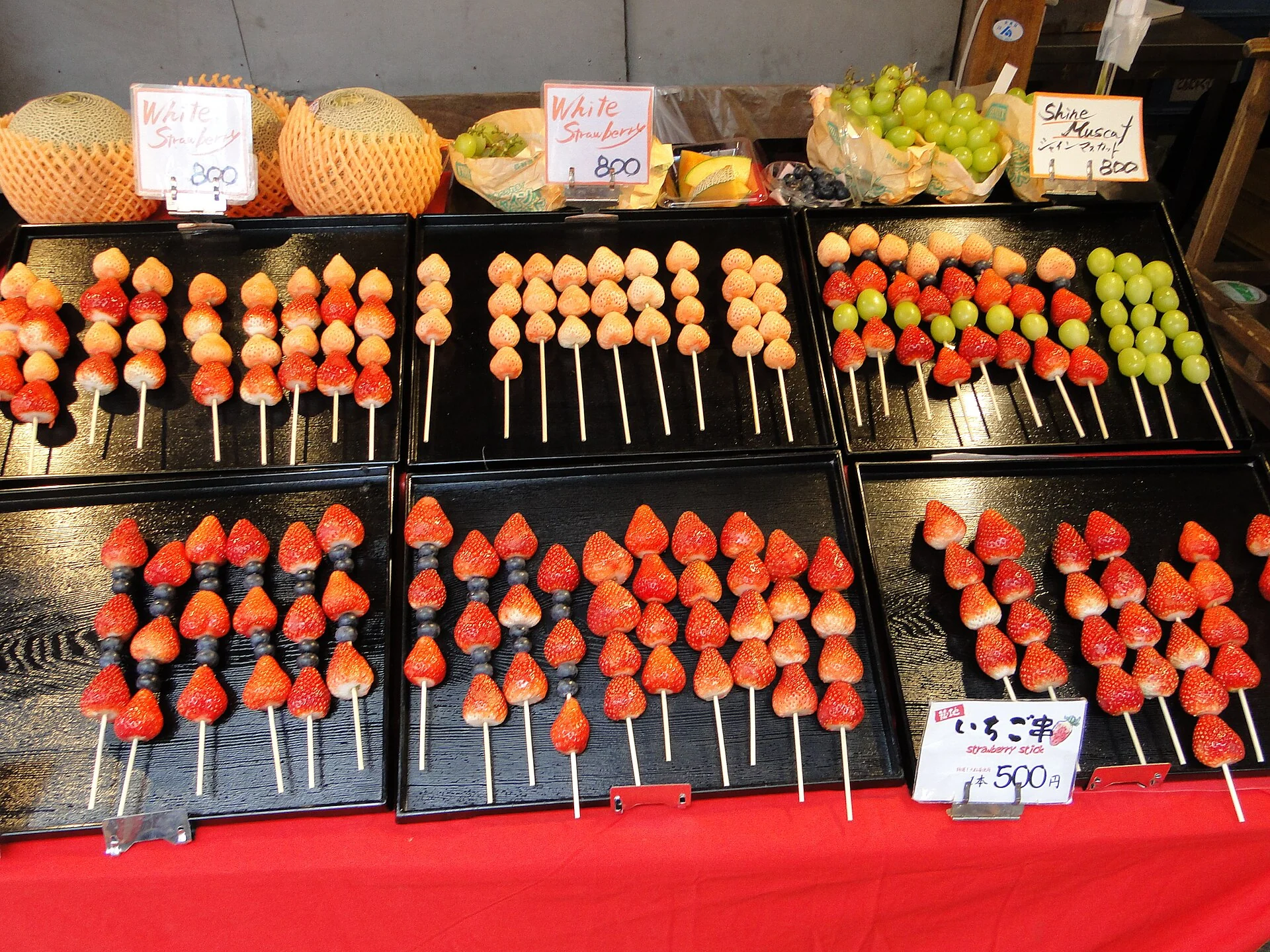
Finish with fruit, a filled sweet or a tea drink if you still have an appetite. Seasonal fruit changes, so choose what is actually offered that morning. A bright display is an invitation to look; it does not require buying the largest assortment.
Soratsuki’s own site lists its Tsukiji shop at 4-11-10 and notes that its hours can change with season and weather. Use the current product display to choose a daifuku or another sweet, and check fillings rather than assuming every item is dairy-free or made to the same recipe.
Dietary needs: ask about the whole dish
A menu name is not an ingredient list. Ask about stock, sauces, cooking ingredients and shared preparation where relevant. An egg dish may contain fish stock; a vegetable-looking item may be cooked or seasoned with animal ingredients. Do not treat an unverified shop as vegetarian, halal or suitable for an allergy.
For a strict requirement, contact a suitable restaurant before travel and bring a clear written explanation in Japanese. If a stall cannot confidently answer, choose a different meal. A planned restaurant can be more useful than hoping to resolve a complex request at the busiest counter.
04 · SAVE TWO OPTIONS, NOT TWENTY
A practical shop shortlist with official opening information
These are independently researched options, not a ranking based on a tasting visit. Pick one main meal and a backup close enough to find easily. The links identify the source and branch; hours were checked on 24 October 2026 and remain subject to change or sell-out.
| Shop and purpose | Published schedule or condition | Location and useful distinction |
|---|---|---|
| Maguroya Kurogin Tsukiji main shop — tuna | Directory: 08:00 or 08:30–12:30, while stocks last; irregular holidays. | 4-10-12 Tsukiji. Check its linked official notices and choose sushi, sashimi or a bowl. |
| Shouro main shop — rolled egg | Operator: Mon–Sat 06:00–15:00; Sundays, holidays and market closure days 07:00–16:00. | 4-13-13 Tsukiji. This is not the separate Shinten / tsukiji SHOURO branch. |
| Tsukiji Yamacho — rolled egg | Official directory: 06:00–15:30; listed as open year-round. | Check the current product and portion at the counter. |
| Kitsuneya — cooked rice dish | Official directory: 06:30–13:30; Sundays, national holidays and some Wednesdays closed. | 4-9-12 Tsukiji. Choose it for the dish, with a backup if the queue is unsuitable. |
| Torimeshi Torito Uogashishokudoten — cooked meal option | Official directory: 09:00–16:00; Sundays, national holidays and some Wednesdays closed. | 6-26-1 Tsukiji, 3F. Match the Uogashi food-court branch. |
| Soratsuki — sweets | Operator: 08:00–15:00, subject to season and weather changes. | 4-11-10 Tsukiji. Check the day’s fillings and products. |
One useful source conflict: the market’s general egg-shop directory shows a different Shouro schedule from the shop’s own current branch listing. We use the operator’s main-shop information above. Confirm again before a holiday visit rather than treating a directory summary as a reservation.
For alternatives, use the official shop directory and English area map. Save the street address as well as the English name: similar translations and multiple branches can otherwise send you to the wrong counter.
05 · SPEND ON WHAT YOU ACTUALLY WANT
How to plan a Tsukiji breakfast budget
Do not add together ten online “must-eats” and assume you have the cost of a normal breakfast. Premium toppings, several drinks and repeated snacks can become more expensive than one complete meal. Read the current menu first and decide which item matters most to you.
| Example ceiling per person | How to use it | Where to compromise |
|---|---|---|
| ¥2,000 | A deliberately light tasting visit: compare small portions and a drink against this total. | If current prices exceed it, buy fewer items; do not expect a premium seafood set within this ceiling. |
| ¥4,000 | Look for one meal that leaves room for a smaller extra. | Choose a simpler topping selection or skip the extra if the main meal uses the budget. |
| ¥6,000 or more | A self-selected allowance for a more expensive main meal or a particular premium item. | Check the actual price first; this amount is not a guarantee of any specific tuna or sea-urchin order. |
These are example limits you might set, not surveyed average prices, minimum spending requirements or shop offers. Transport and souvenirs are separate. For a family, write down each person’s main choice before ordering extras; a child’s appetite may differ, but a restaurant’s seat and order policy still applies.
Check the price in the unit being sold
Is the amount for one piece, one skewer, a set or a weight of ingredients? Are you looking at ready-to-eat food or something to take away and prepare? Confirm the total before asking the shop to cut or cook an item. You can politely decline a purchase that does not fit your budget.
Carry some yen and ask about cards before ordering. Payment methods vary between businesses. When a queue is moving quickly, decide your order before reaching the counter and keep the payment ready without blocking the next customer.
06 · ONE MORNING, A FEW GOOD CHOICES
A Tsukiji half-day itinerary from your Tokyo hotel
This is a flexible model for a normal trading day, starting from accommodation in Tokyo. The travel block depends on your hotel and chosen station. Check the day’s shop openings before setting off, and shorten the food list before shortening a fixed onward transfer.
| Time block | Plan | Decision that keeps it comfortable |
|---|---|---|
| 08:15–09:00 | Travel from your Tokyo hotel toward Tsukiji. | Leave large luggage at the hotel; allow for the station exit and your walking pace. |
| 09:00–09:20 | Orient yourself using the area map; check your main meal and backup. | Use Plat Tsukiji if open, or the saved map if the counter opens later that day. |
| 09:20–10:10 | Have one main breakfast or brunch. | Join a queue only if it fits the departure time you have chosen. |
| 10:10–10:35 | Choose one smaller food or drink. | Eat in the designated space, then continue without food in your hands. |
| 10:35–11:05 | Browse an ingredient or kitchen shop, or make a short Uogashi visit. | After 09:00 is the appropriate general-visitor period; follow facility signs. |
| 11:05–11:40 | Walk to and visit Tsukiji Hongwanji if the group wants a cultural stop. | This is an active temple; observe worship and photography instructions. |
| 11:40–12:15 | Continue toward Ginza and choose a cafe or shopping stop. | This is a generous walking and orientation block, not a guaranteed journey time. |
Keep a 90-minute version ready
Arrive at about 09:00, use the first fifteen minutes to orient yourself, allow roughly forty minutes for one meal, then spend twenty minutes on one shop or small taste and fifteen minutes returning toward your exit. If the main queue is too long, use your backup immediately. Skip the temple and Ginza extension rather than trying to squeeze a full half-day into the remaining minutes.
Change the plan when the day changes
In rain, favour a confirmed indoor meal and a shorter loop, while checking that the facility is trading that day. In heat or with tired children, take a seated break and reduce the number of stops. Uogashi offers an indoor option, but it is not an all-day substitute for every closed street shop.
With a fixed afternoon booking, work backwards from its location and arrival requirement. If you are combining Tsukiji with a separate Toyosu visit or timed attraction, check that site’s current access and leave a transfer block. Do not describe them as next door simply because both appear in a Tokyo food itinerary.
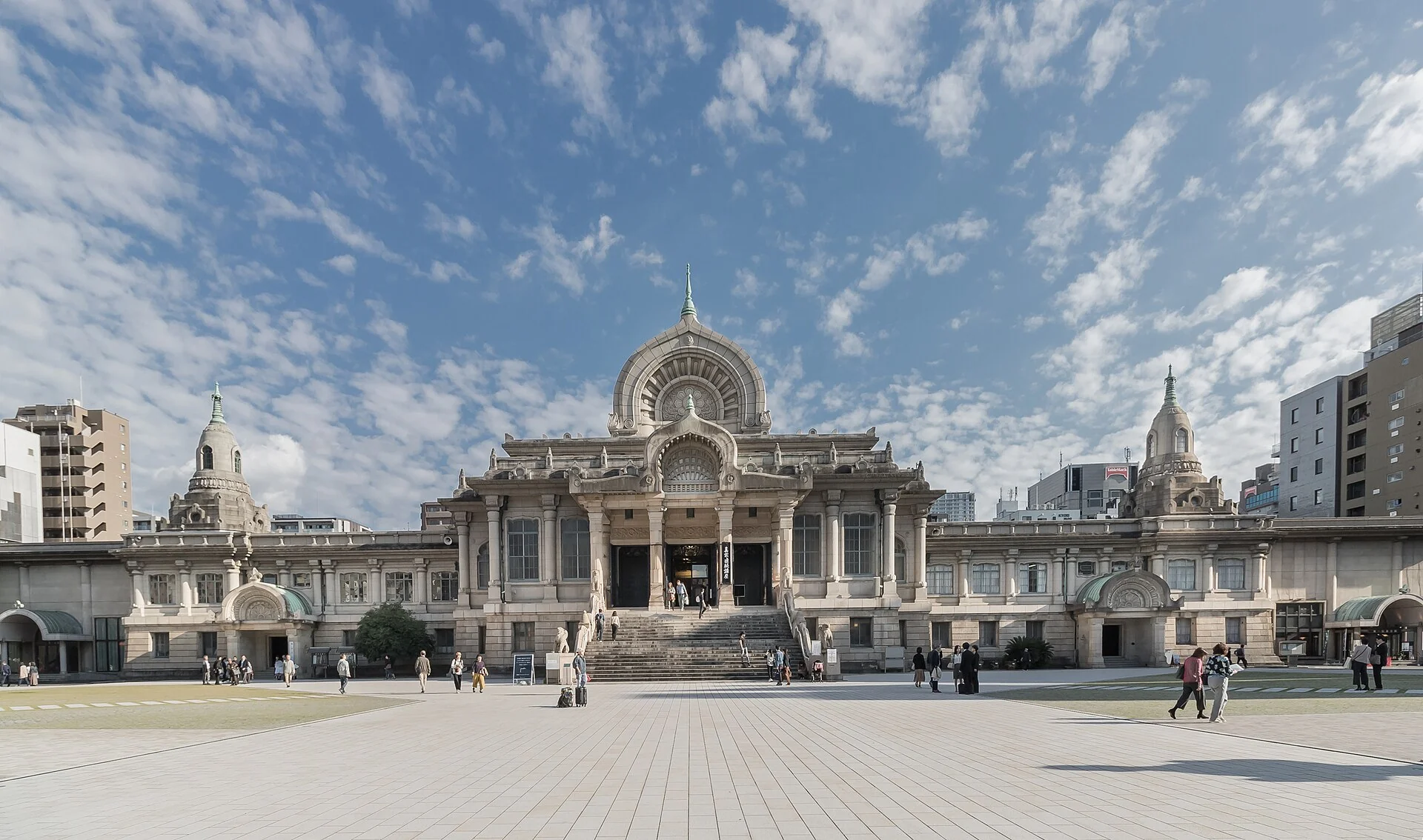
Tokyo’s official accessibility guide lists free entry and main-hall visiting from 06:00 until after the evening service around 16:00. Its facility details are dated January 2026. Check notices if a ceremony or special event affects your plan. Its South Asian-inspired exterior offers a different setting from the food lanes; it is a place of worship, not an overflow picnic area.
Combine with one further neighbourhood
Ginza is the natural walking continuation for a central Tokyo morning. If the larger day is about traditional streets, continue later to Asakusa with a proper transfer. For an evening view, choose one observatory using our Tokyo Tower or Skytree comparison. Trying to add every distant district after a substantial breakfast rarely improves the day.
IF TSUKIJI IS ONE STOP IN A LARGER DAY
Build the rest of Tokyo around your morning.
A simple Tsukiji–Ginza outing is easy to plan independently. If you want hotel transport and several districts in one private itinerary, share your walking pace, meal preferences and other stops. Ask separately about an accompanying guide or restaurant assistance if you need it.
Discuss my Tokyo routeSee the Tokyo model itineraries. A market breakfast is usually better kept on a Tokyo city day than squeezed before a long Mount Fuji outing or Kamakura day trip.
07 · FIND THE RIGHT ARRIVAL POINT
How to get to Tsukiji Outer Market
The official access guide identifies Tsukijishijo on the Toei Oedo Line, Tsukiji on the Tokyo Metro Hibiya Line, and Higashi-ginza on the Hibiya and Asakusa lines. Choose the station that makes sense from your hotel, then check its exit map. The nearest street entrance, Uogashi and a particular breakfast shop are different endpoints.
For Uogashi specifically, the operator quotes about two minutes from Tsukijishijo Exit A1 and five minutes from Tsukiji Exits 1 or 2. Add time for the station interior, crossings and slower walking. These named-exit estimates are not necessarily a step-free route; use the current station map if lifts are important.
Arriving by taxi or private car
Agree a legal drop-off and a clear return meeting point on an appropriate road. The food lanes themselves are a walking visit. A vehicle can help with a larger multi-stop day, but it does not remove the time needed to navigate the market or wait for a table. Confirm parking, waiting and any guide service in the actual arrangement.
If you are choosing a vehicle for a day that continues across Tokyo, our Private Sedan, Private Van and Private Big Van guide covers the questions to ask. A reference vehicle image is not a promise of a particular model or luggage capacity.
Leave the airport bags before breakfast
The narrow lanes are much easier with a small day bag. Plan hotel storage or another confirmed solution rather than relying on a free locker at arrival. After a flight, keep the breakfast flexible; immigration, baggage collection and travel to the city can consume the opening window. See our Haneda arrival guide or Narita arrival guide before adding a market stop.
08 · A FOOD DISTRICT, NOT JUST A BREAKFAST
Ingredients, knives and another side of Tsukiji
Leave a small part of your visit for something beyond ready-to-eat food. Compare a useful kitchen item, ask about a tea you would actually brew at home, or look at how a specialist presents an ingredient. This is a more interesting souvenir plan than buying the first oversized food box you see.
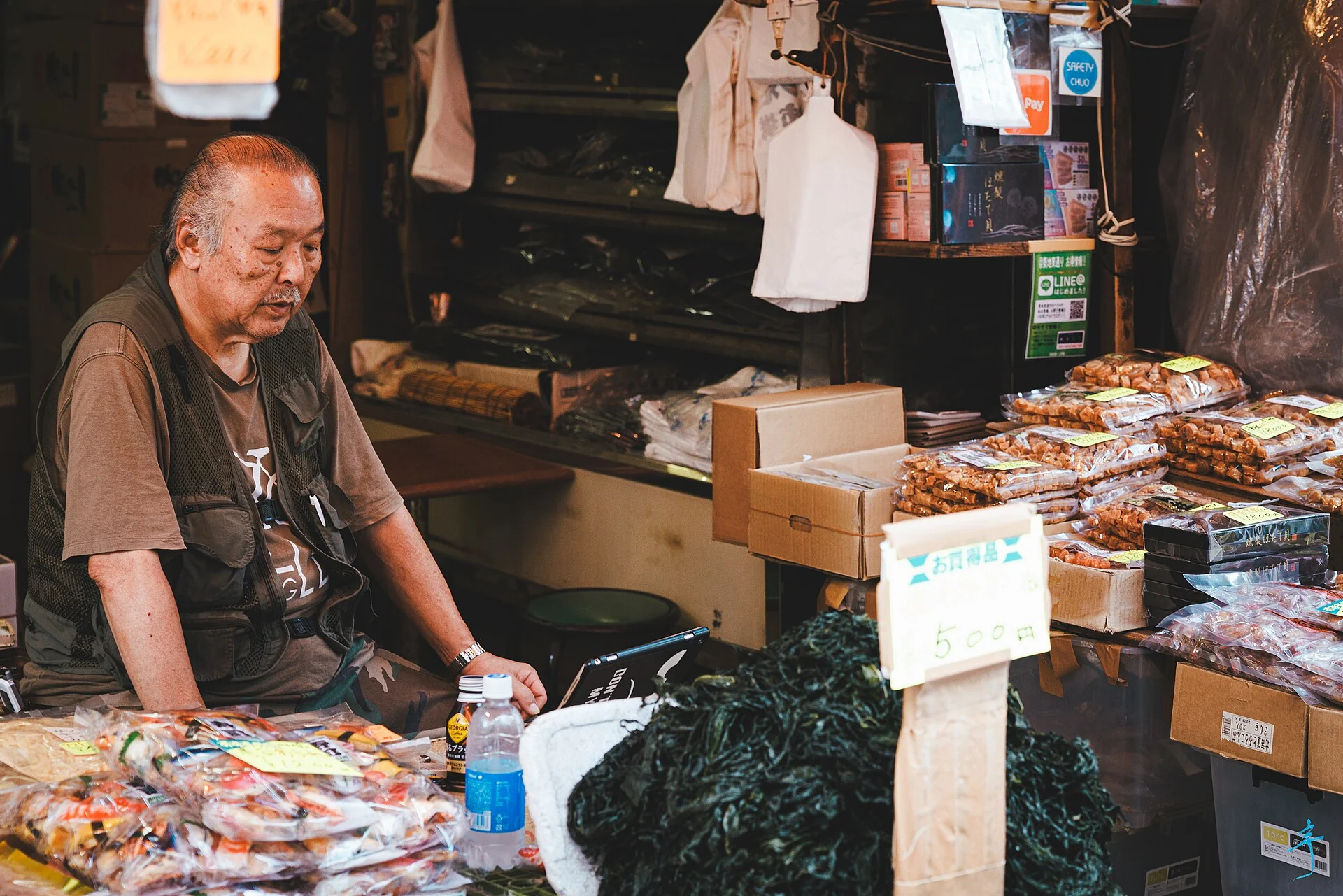
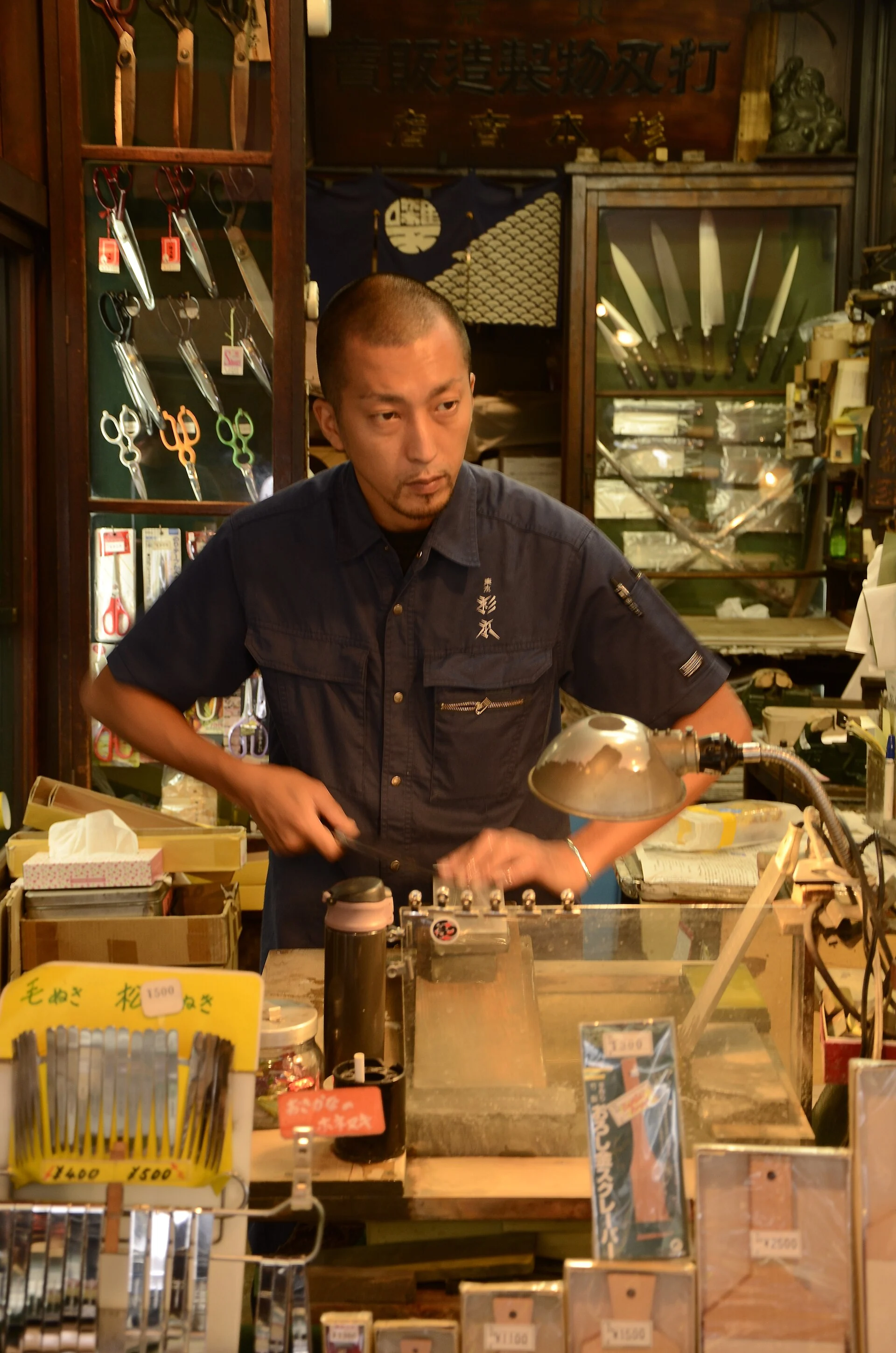
Buy for your kitchen and your journey home
For a knife, discuss its purpose, care and safe packaging rather than judging by blade length. For packaged ingredients, read storage and expiry information before buying a quantity that will sit in a warm hotel room or suitcase. Consider the rest of your trip, not just the moment at the counter.
Food-import and baggage rules differ by destination and airline. Check the official rules for the country you are entering before buying animal products, fresh produce or other restricted items; a sealed retail package does not by itself establish permission. Check the airline’s packing rules for a blade before purchase as well.
Use Namiyoke as a respectful optional stop
Namiyoke Shrine sits at 6-20-37 Tsukiji and is closely associated with the area’s community. Add a short, respectful visit if it fits the group’s interests. Keep food put away, avoid obstructing worshippers and follow current signs. A small cultural pause works better than treating every quiet corner as a place to spread out purchases.
09 · MAKE SPACE FOR THE PEOPLE WHO WORK HERE
Visitor etiquette, children and practical facilities
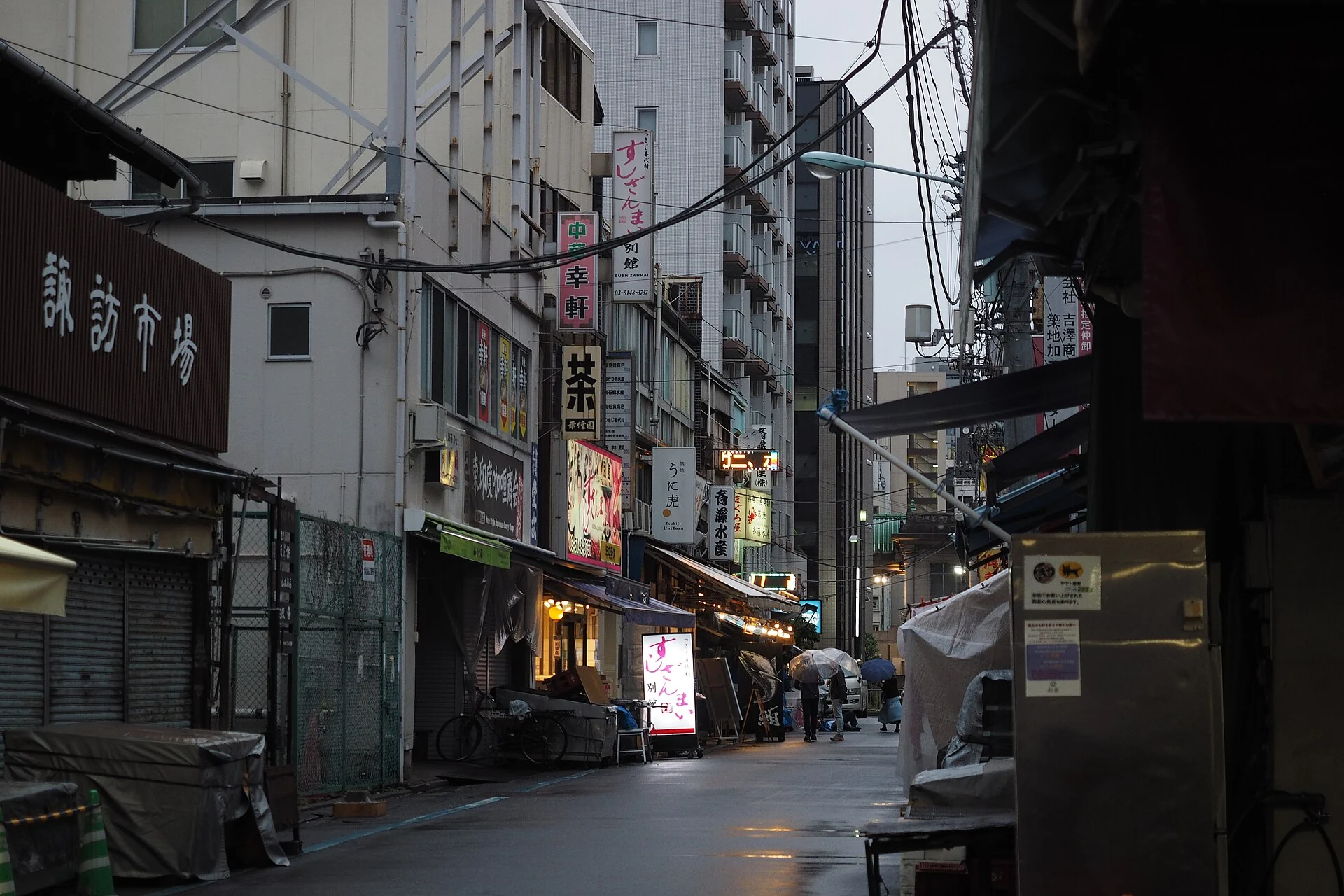
Before entering a tight lane, check that everyone in your party knows the next meeting point. Keep the walking group compact and step aside to read menus. If you lose someone, return to the agreed landmark rather than stopping the whole lane to search on your phone.
- Eat in the space indicated by the seller. Finish before moving to the next stop; do not block a neighbouring shop.
- Ask before photographing a business or its staff. Respect no-photo signs and keep cameras out of customers’ way.
- Leave products for the shopkeeper to handle. Point or ask instead of touching food.
- Keep orders and payments ready. Bargaining is not the normal shopping practice here.
- Take responsibility for packaging. Follow the seller’s disposal instructions; carry anything you cannot dispose of appropriately.
These points follow the market’s visitor-manners guidance and the practical demands of a working shopping district. Stay in small numbers around counters; a large travel party can split into agreed smaller groups.
Facilities and help at Plat Tsukiji
The information centre provides maps, English assistance and coin lockers. Its published facility information also lists an ATM and currency-exchange machine. The older general shopping FAQ says there is no exchange counter inside the market; use the dedicated facility information and carry some yen in advance rather than depending on a machine being available.
Ask staff about the nearest suitable toilet and today’s accessible route. A facility having useful services does not mean every shop entrance or market lane is easy for a wheelchair or stroller. For a small child, prefer a short loop and one comfortable meal over repeated queues. Avoid bringing a large stroller into congested lanes where a practical alternative is available.
10 · BEFORE YOU GO
Tsukiji Outer Market: frequently asked questions
Did Tsukiji fish market close?
The former wholesale market moved to Toyosu in 2018. Tsukiji Outer Market stayed in its central Tokyo neighbourhood, with food shops and restaurants. For an auction visit, research Toyosu rather than following an old Tsukiji wholesale-market address.
What is the best time to visit Tsukiji Outer Market?
For a first general shopping visit, aim around 09:00 on a normal trading day. This fits the published public-buyer window and leaves time before afternoon closures. An earlier breakfast needs a specific confirmed restaurant, not the assumption that every area opens to visitors at dawn.
Is Tsukiji open on Sunday?
Some shops and restaurants operate, while many businesses close. Check your essential stops individually. Shouro’s own main-shop schedule is one example of a Sunday opening; it does not establish that the rest of the market is trading normally.
Do I need a ticket or a food-tour booking?
You do not need to buy a food tour to walk the public shopping streets. Meals, guided activities and any separately booked experiences are purchases with their own terms. Confirm a restaurant’s booking policy directly instead of assuming every popular counter accepts reservations.
How many foods should I plan to try?
Start with one main meal and one or two smaller choices. Adjust to your appetite and budget. A list of ten dishes is a menu of possibilities, not a sensible compulsory order for one person.
Can I visit Tsukiji after lunch or at night?
Individual restaurants may open later, but the main market shopping experience is a daytime visit. For a later meal, choose a particular confirmed business. Do not arrive in the evening expecting the same range of open ingredient shops and breakfast counters.
Can children or people who dislike raw fish enjoy it?
Yes, with suitable food choices and a shorter route. Choose a confirmed cooked meal or an egg-based option, explain any ingredient requirements before ordering, and avoid committing everyone to a long queue for a dish only one person wants.
Should I add Ginza or Toyosu afterwards?
Ginza is the simpler nearby continuation for this model morning. Toyosu is a separate destination that needs its own current plan and a transfer. Choose by the experience you want, rather than trying to collect two market names in a rushed schedule.
Official sources and planning notes
Checked 24 October 2026. Shop-operated pages take priority where a directory summary conflicts; reconfirm for your date. Food choices, spending envelopes, queue alternatives and route durations are TokyoVia editorial planning, not guaranteed prices, availability or a claim of personal visits.
- Outer-market history and the wholesale relocation
- Market calendar, public-buyer hours and visitor manners
- Shop closures, payments and shopping guidance
- Plat Tsukiji: opening hours, maps and facilities
- Official English area map, 2026 edition
- Rail and bus access guide
- Tsukiji Uogashi: building, shop and visitor schedules
- Shouro: main-shop and branch hours
- Shouro: Japanese branch listing and holiday caveats
- Tsukiji Yamacho: official market directory entry
- Kurogin: Tsukiji main-shop products
- Kurogin: trading window and sell-out conditions
- Kitsuneya: branch, hours and regular closures
- Torimeshi Torito: Uogashi food-court branch
- Soratsuki: address and variable opening schedule
- Tsukiji Hongwanji: official visitor guide; check current notices
- Tokyo official accessibility guide: Hongwanji facility information dated January 2026
- Namiyoke Shrine: location and current notices